
In today’s baby care market, “safe” is no longer enough.
For parents, especially those in mid-to-high income markets, diaper choices are increasingly emotional and value-driven. Concerns around sensitive skin, redness, allergies, and long-term comfort are shaping purchasing decisions more than ever. For brand owners and distributors, this shift opens a clear opportunity: skin-friendly baby diapers positioned as premium products.
However, skin-friendliness is not something that can be achieved through marketing language alone. It must be built—layer by layer—through OEM customization, from raw materials and structural design to quality control and compliance testing.
In this article, New EcoCare shares how B2B buyers can use baby diaper OEM and private label manufacturing to create genuinely differentiated, skin-friendly products that stand out in competitive premium segments.
Table of Contents
1. Why “Skin-Friendly” Has Become a Premium Market Signal
Across Europe, the Middle East, East Asia, and emerging urban markets, parents are paying closer attention to what touches their baby’s skin for 24 hours a day. Diapers are no longer viewed as disposable necessities—they are now considered wearable skin-contact products.
From a B2B perspective, this trend creates three important realities:
Consumers are willing to pay more for diapers designed for sensitive skin
Retailers increasingly demand clear differentiation, not generic SKUs
Certification, materials transparency, and comfort claims influence shelf placement
This is why many private label brands are moving away from standard OEM diapers and toward skin-focused customization strategies.
2. What “Skin-Friendly” Really Means in OEM Manufacturing
In OEM diaper production, “skin-friendly” is not a single feature. It is the result of multiple technical decisions working together.
a) Surface Materials That Touch the Skin
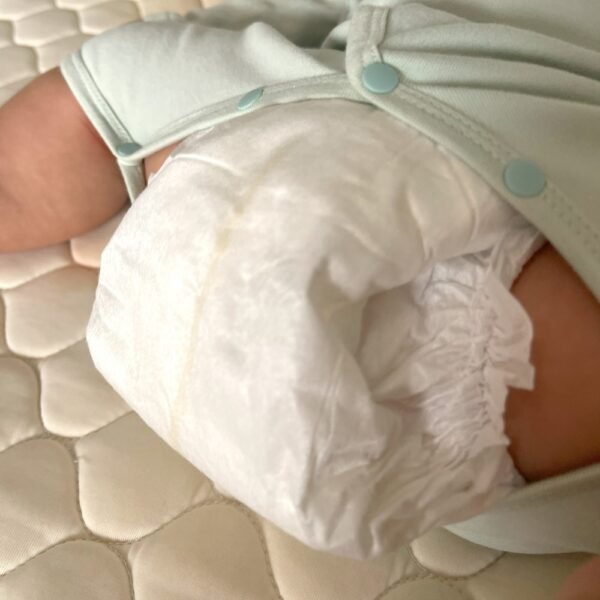
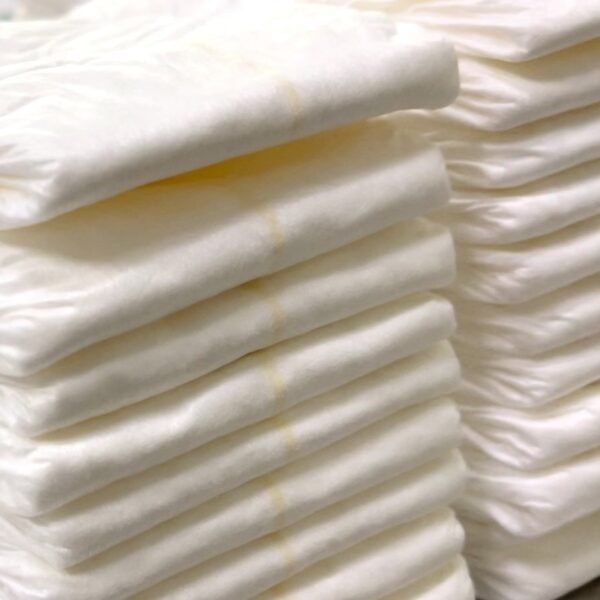
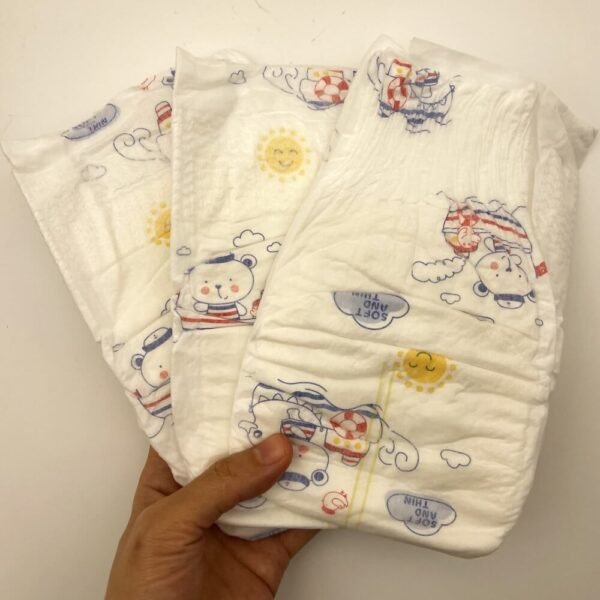
The top sheet is the first and most critical layer. Skin-friendly OEM customization may include:
Ultra-soft nonwoven topsheets with low friction
Plant-based or cellulose-blended fibers for a natural touch
Breathable perforation patterns to reduce humidity buildup
For B2B buyers, working with an experienced baby diaper OEM supplier allows flexibility in fiber selection, softness level, and texture design, rather than relying on off-the-shelf materials.
b) Breathability and Moisture Management
Many diaper rashes are caused not by liquid leakage, but by trapped moisture and heat.
Through OEM customization, brands can optimize:
Air-permeable back sheets
Balanced absorbent core density to reduce rewet
Improved airflow channels without sacrificing absorption
These structural details are rarely visible to consumers—but they are strongly felt by baby skin.
c) Absorbent Core Design for Sensitive Skin
Premium skin-friendly diapers often use lower gel concentration near the surface and better liquid distribution layers.
OEM manufacturers can adjust:
SAP-to-pulp ratios
Core thickness zoning
Liquid diffusion speed
This ensures fast absorption while keeping the surface dry, which is essential for babies with eczema-prone or reactive skin.
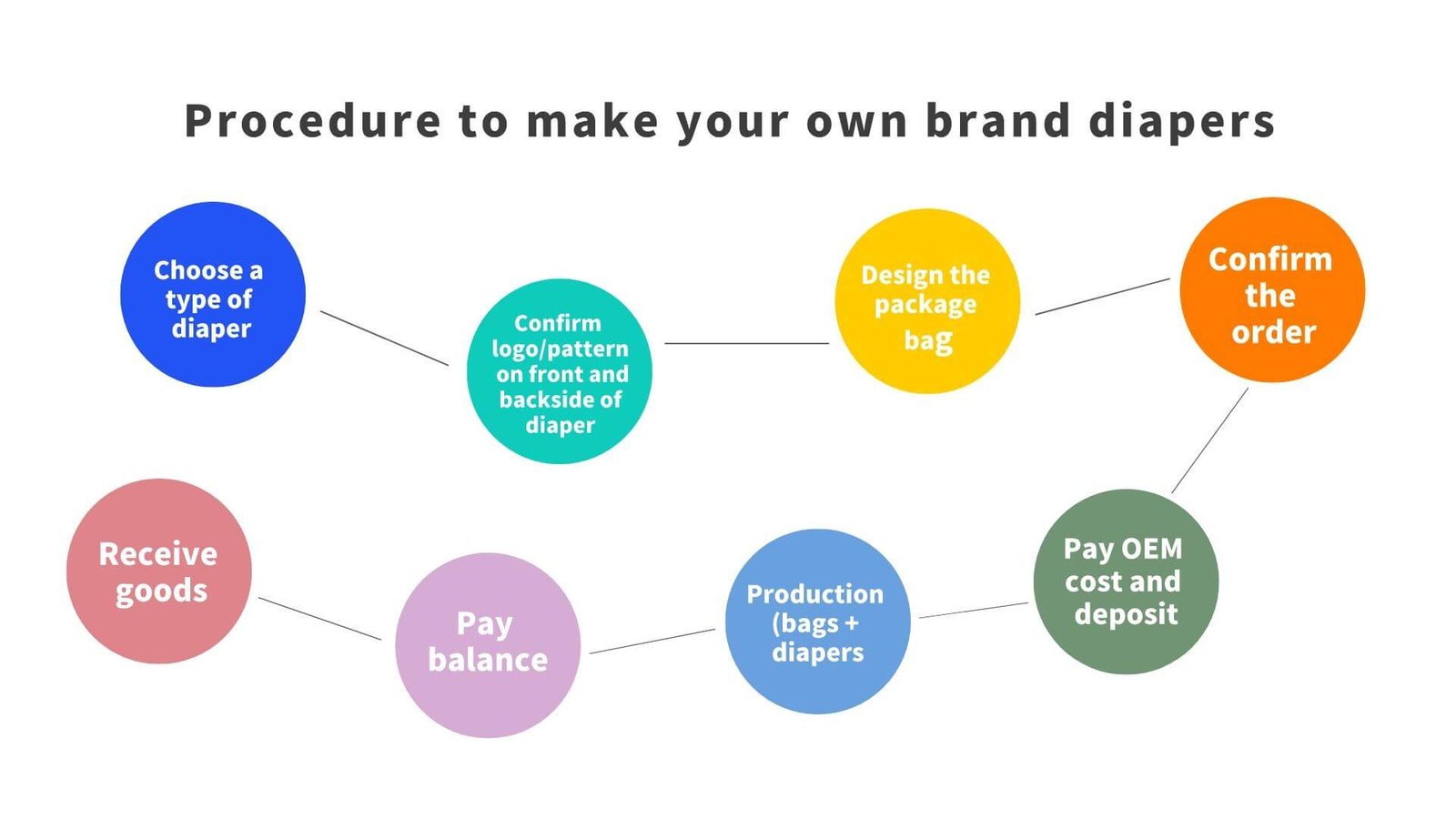
3. OEM Customization as a Brand Differentiation Tool
One common mistake B2B buyers make is assuming OEM equals standardization. In reality, the right OEM partner enables controlled differentiation at scale.
Through private label baby diaper manufacturing, brands can customize:
Skin-contact layers (topsheet & cuffs)
Waistband elasticity for reduced pressure marks
Lotion-free or additive-free designs
Hypoallergenic adhesive systems
These customizations allow brands to build a clear premium identity, even when competing in crowded markets.
4. Certifications and Testing That Support Skin-Friendly Claims
In premium segments, skin-friendly claims must be supported by verifiable testing and compliance.
An experienced baby diaper OEM factory can assist with:
Dermatological safety testing
Material traceability documentation
Regional compliance for EU, Middle East, and Asia
Hypoallergenic positioning support
For private label brands entering new markets, this support reduces regulatory risk and shortens time to launch.
5. How OEM Suppliers Help Translate Market Needs into Technical Solutions
Skin-friendly differentiation does not start on the production line—it starts with market understanding.
At New EcoCare, OEM projects typically begin with discussions around:
Target market (premium, mass-premium, niche sensitive-skin segment)
Retail positioning and price expectations
Consumer pain points (rash, redness, overnight dryness, softness)
From there, technical teams translate these needs into material combinations, structural adjustments, and production parameters.
This is where true OEM value exists—not just manufacturing, but problem-solving.
6. Private Label Strategy: Avoiding “Over-Engineering”
While premium buyers expect better quality, over-complicating a diaper can increase cost without improving user experience.
A good OEM partner helps brands strike the right balance by:
Prioritizing skin-impact features over unnecessary add-ons
Designing cost-efficient premium upgrades
Offering modular customization options
This approach allows private label brands to enter the premium market sustainably, without pricing themselves out of distribution.
7. Communicating Skin-Friendly Value to Buyers and Consumers
OEM customization also supports clear communication, which is essential for Google search, AI search, and retail negotiations.
Skin-friendly diapers are easier to market when the product itself supports claims such as:
Gentle on sensitive skin
Breathable and dry-touch design
No unnecessary additives
Designed for long wear comfort
These messages resonate with both distributors and end consumers, improving conversion across channels.
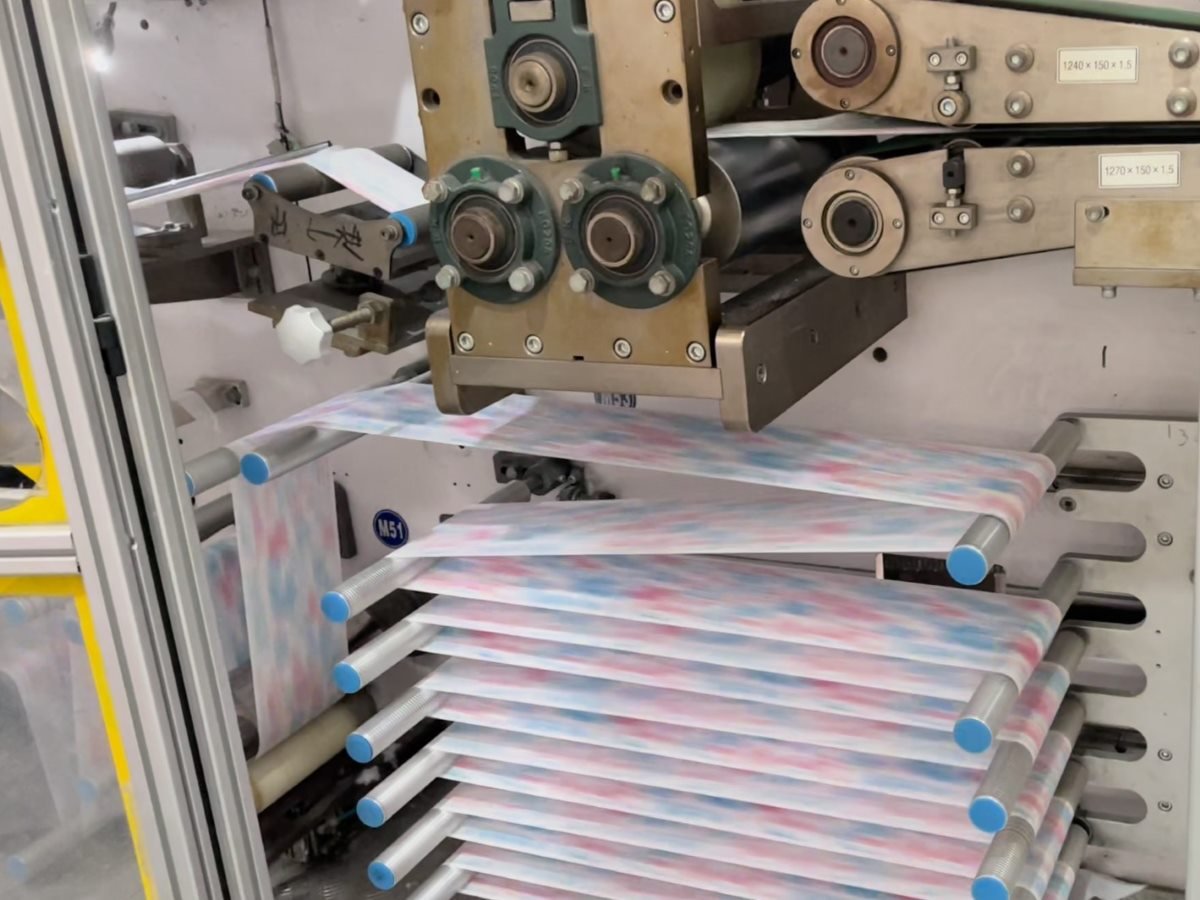
8. Why OEM Experience Matters More in Premium Segments
Not all diaper manufacturers are suited for premium skin-friendly projects.
Experienced OEM partners offer:
Stable raw material sourcing
Consistent softness and performance across batches
Process control that protects delicate materials
Long-term formulation stability
For B2B buyers, this consistency protects brand reputation—especially in markets where returns and reviews carry high weight.
9. Building Long-Term Brand Value Through OEM Collaboration
Premium skin-friendly diapers are rarely a one-time project. They evolve as:
Consumer expectations rise
Regulations tighten
Competitors improve
OEM partnerships that allow continuous optimization help brands stay ahead without constant supplier switching.
At New EcoCare, long-term OEM cooperation focuses on refinement—not just repetition.
10. Final Thoughts: Skin-Friendly Is a Strategy, Not a Slogan
Entering the premium baby diaper market requires more than attractive packaging or higher pricing. True differentiation comes from thoughtful OEM customization that genuinely improves skin comfort and safety.
For B2B buyers looking to build private label brands with long-term value, skin-friendly diaper design offers a powerful entry point—especially when supported by the right OEM manufacturing partner.
At New EcoCare, we believe premium positioning starts at the factory level, where material choices, structure, and process discipline come together to create diapers that parents trust and babies feel.

 English
  Spanish
  Russian
  Arabic
  German
  French
  Italian
  Portuguese
  Greek
Greek