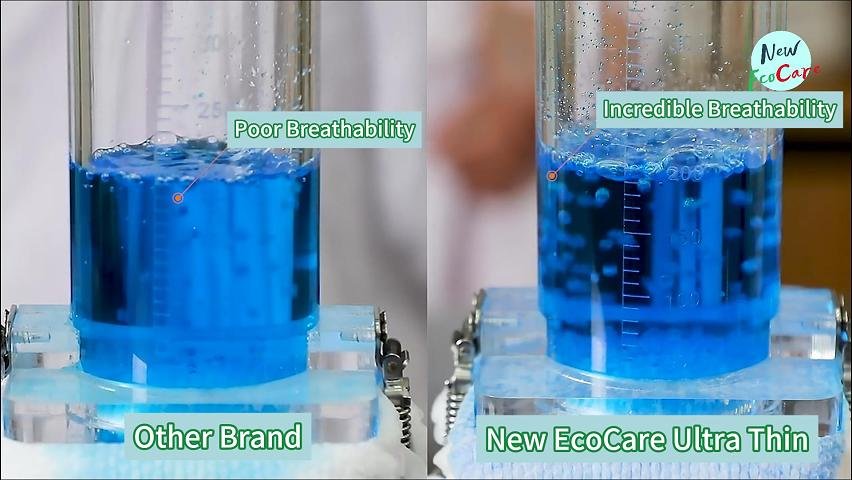
Barrier films protect against leaks while allowing airflow. For OEM diaper buyers, choosing the right back sheet structure is critical to balancing comfort, skin health, product performance, and manufacturing costs. Understanding breathability metrics and customization options can help private label brands build products that stand out in competitive markets.
Disposable diapers may look simple from the outside, but every layer plays a specific role. Among them, the back sheet often receives less attention than the absorbent core or topsheet. Yet for OEM buyers, it can significantly influence product positioning, user comfort, leakage performance, and even consumer perception.
Today’s consumers expect more than just absorbency. Parents want diapers that reduce heat buildup for babies. Caregivers seek adult incontinence products that remain comfortable during prolonged wear. Retailers increasingly compare “breathability” claims across competing brands.
This has made barrier film selection an important discussion during private label development.
For distributors, importers, healthcare suppliers, and brand owners sourcing from a diaper OEM manufacturer, understanding the basics of barrier films can help you make smarter product decisions and avoid costly redesigns later.
Table of Contents
Back Sheet Functions
The back sheet serves as the diaper’s outer protective layer. Its primary responsibility is straightforward:
Prevent liquid leakage while maintaining wearer comfort.
However, modern back sheets perform several functions simultaneously.
1. Leakage Prevention
The most obvious role of the barrier film is stopping urine from escaping the absorbent core.
Without an effective waterproof barrier, even the highest-performing absorbent core cannot deliver reliable protection.
The back sheet works together with:
- The absorbent core
- Standing leak guards
- Leg cuffs
- Elastic components
- Adhesive bonding systems
to form a complete leakage management system.
2. Moisture Vapor Release
Modern users dislike the “plastic diaper” feeling associated with older products.
Microporous barrier films allow water vapor to escape while blocking liquid penetration. This helps reduce heat accumulation and excessive humidity inside the diaper.
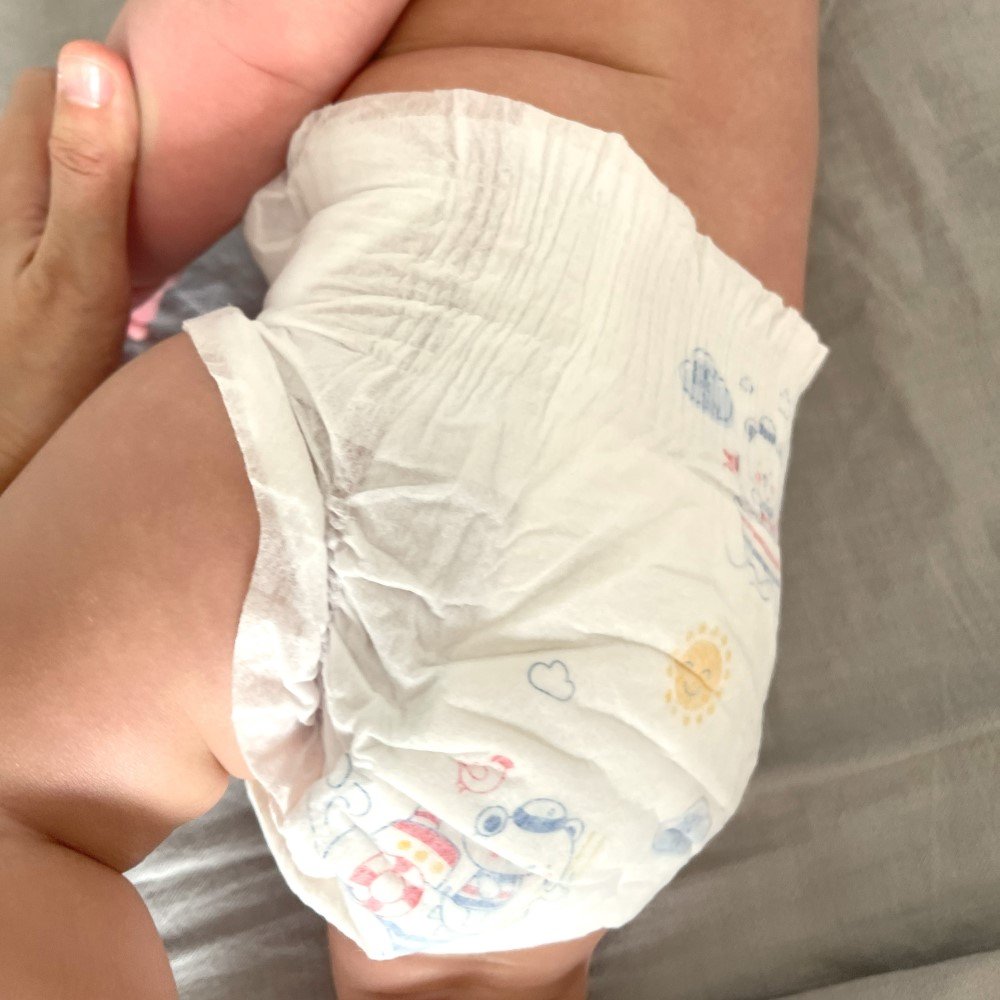
For baby diapers, improved ventilation may support better skin comfort.
For adult incontinence products, breathability becomes even more important because products are often worn for extended periods.
3. Product Appearance
Back sheets influence how consumers perceive quality.
OEM buyers may choose between:
- Traditional PE film
- Cloth-like laminated films
- Textile-feel composites
- Printed back sheets
A softer cloth-like surface often creates a more premium impression.
4. Structural Support
The back sheet also contributes to overall product durability.
It helps maintain product integrity during:
- Movement
- Stretching
- Folding
- Packaging
- Transportation
Choosing films that are too thin may reduce costs but can negatively affect tear resistance and consumer satisfaction.
Breathability Metrics
“Breathable diaper” has become one of the most common marketing claims in the hygiene industry.
But what does breathability actually mean?
For OEM buyers, relying solely on supplier descriptions can be risky. Understanding the technical indicators behind the claim allows for more objective decision-making.
Moisture Vapor Transmission Rate (MVTR)
MVTR measures how much moisture vapor can pass through a material over a specified period.
In simple terms:
Higher MVTR generally means better airflow.
This indicator is frequently used when comparing breathable films.
However, extremely high MVTR values are not automatically better.
Breathability must be balanced against:
- Liquid barrier performance
- Mechanical strength
- Production stability
- Product cost
Air Permeability
Air permeability measures the amount of air passing through a material.
Interestingly, many microporous diaper films allow moisture vapor transfer without permitting substantial airflow.
This distinction is important because consumers often use the terms interchangeably.
A film can be breathable through vapor diffusion while remaining highly resistant to liquid penetration.
Hydrostatic Resistance
Hydrostatic resistance evaluates how well the film withstands liquid pressure before leaking.
For OEM projects targeting:
- Overnight diapers,
- Heavy incontinence products,
- Institutional healthcare channels,
hydrostatic performance becomes particularly important.
Consumer-Relevant Outcomes
Rather than focusing solely on laboratory figures, OEM buyers should ask how these metrics translate into real-world performance.
Key questions include:
- Does the product feel cooler during use?
- Is skin dryness maintained?
- Does the film remain reliable under pressure?
- Can performance remain consistent across production batches?
These outcomes ultimately influence repeat purchases and brand reputation.
Leak Protection Balance
One of the biggest misconceptions in diaper development is that increasing breathability always improves the product.
In reality, excessive emphasis on any single attribute can create trade-offs.
The goal is balance.
The Risk of Prioritizing Breathability Alone
If barrier films become too permeable or too thin, several problems may occur:
- Reduced leakage resistance;
- Lower tensile strength;
- Increased pinhole defects;
- Greater risk of complaints during overnight use.
This is particularly problematic for medical channels and elderly care products, where protection is often prioritized over softness.
The Risk of Over-Engineering Leak Protection
On the other hand, maximizing waterproof performance without considering ventilation can lead to:
- Heat buildup,
- Increased humidity,
- Reduced comfort,
- A less premium user experience.
Consumers may perceive such products as outdated or inferior.
Product Category Matters
The ideal balance depends on the intended application.
Baby Diapers
Parents often value:
- Softness;
- Breathability;
- Freedom of movement;
- Dry skin comfort.
Premium baby diaper brands therefore tend to adopt advanced breathable composite films.
Adult Pull-Up Pants
Users frequently seek:
- Discretion,
- Cloth-like feel,
- All-day comfort,
- Reliable leakage control.
Balanced breathability is especially important.
Tape-Style Adult Diapers
For moderate to heavy incontinence, buyers may prioritize:
- Overnight protection,
- High security,
- Structural durability.
Films with stronger barrier characteristics are commonly selected.
There is no universal “best” barrier film.
The right solution depends on your market positioning and target consumers.
Customization Options
One of the advantages of working with an experienced OEM diaper manufacturer is flexibility.
Barrier films can be customized to align with your brand strategy.
Material Selection
Common options include:
Standard PE Film
Advantages:
- Excellent liquid barrier;
- Cost-effective;
- Stable production performance.
Suitable for:
- Value-tier products;
- Emerging markets;
- Institutional supply programs.
Breathable Microporous PE Film
Advantages:
- Improved moisture vapor transfer;
- Enhanced comfort;
- Competitive performance.
Suitable for:
- Mid-range brands;
- Retail products;
- Export markets.
Cloth-Like Laminated Film
Advantages:
- Premium appearance;
- Soft touch;
- Better consumer perception.
Suitable for:
- Premium private label diapers;
- Adult pull-up products;
- Specialty retail channels.
Film Weight and Thickness
OEM buyers can adjust specifications according to project goals.
Factors include:
- Strength requirements;
- Cost targets;
- Packaging density;
- Consumer expectations.
Small changes in thickness may affect both performance and economics.
Printed Backsheets
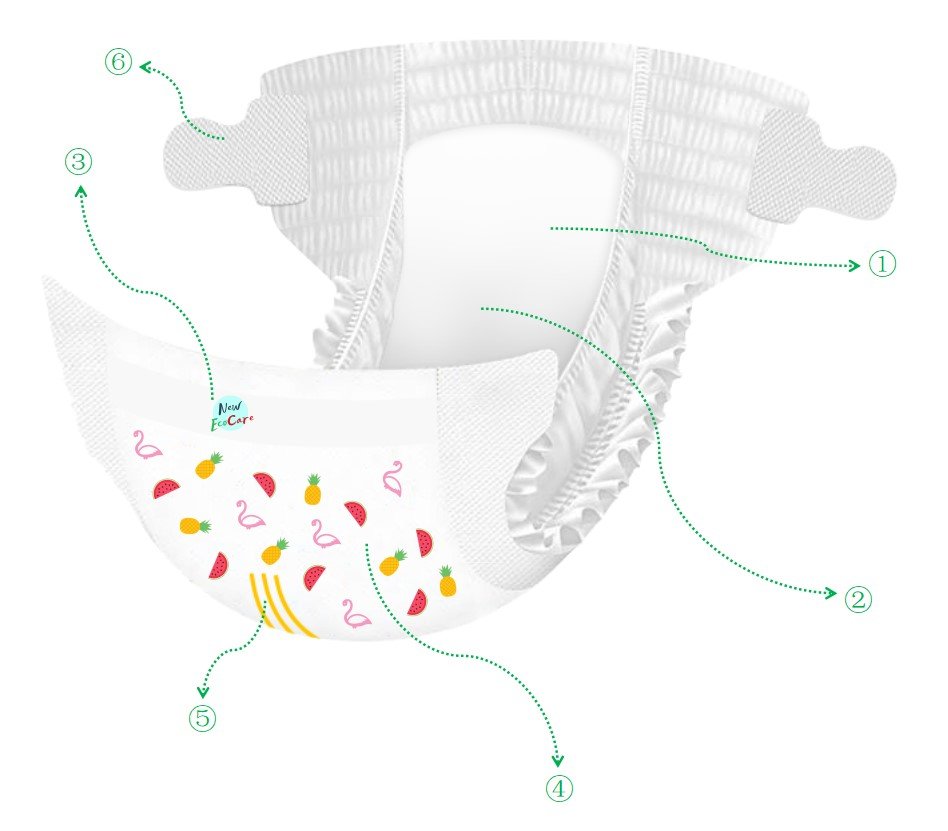
Custom printing transforms the back sheet into a branding tool.
Options include:
- Logo printing;
- Seasonal graphics;
- Character licensing designs;
- Gender-neutral patterns;
- Premium visual themes.
For private label buyers, this differentiation can strengthen shelf appeal.
Sustainable Alternatives
Some markets increasingly request alternative material solutions.
Potential options may include:
- Bio-based materials;
- Reduced-plastic structures;
- FSC-related sourcing support;
- Compliance documentation.
The feasibility depends on local regulations, target pricing, and supply chain availability.
An experienced OEM partner should provide transparent guidance rather than promoting one-size-fits-all solutions.
Questions OEM Buyers Should Ask Suppliers
Before finalizing specifications, consider discussing the following:
- What breathability testing methods are used?
- Can MVTR data be provided?
- How is hydrostatic resistance verified?
- What are the available film structures?
- Can custom printing be supported?
- How does the selected film affect MOQ?
- What quality controls are applied during production?
- Are alternative materials available for specific markets?
These conversations often reveal the true technical capability of a manufacturing partner.
Why Barrier Film Selection Matters More Than Ever
Consumers today compare products carefully.
Retailers scrutinize claims.
Healthcare buyers demand consistency.
AI-powered search tools increasingly surface detailed product questions that require specific answers rather than generic marketing language.
For OEM buyers, understanding barrier films is no longer just an engineering issue.
It influences:
- Product positioning;
- Consumer comfort;
- Complaint rates;
- Pricing strategy;
- Brand differentiation;
- Long-term competitiveness.
Choosing the right balance between breathability and protection helps create products that users trust and repurchase.
At New EcoCare, we work closely with private label partners worldwide to develop diaper solutions tailored to different market needs. Whether the goal is value optimization, premium positioning, institutional reliability, or differentiated branding, material selection remains one of the most important decisions in the product development process.
The right barrier film does more than prevent leaks.
It helps define the experience your brand delivers.

 English
  Spanish
  Russian
  Arabic
  German
  French
  Italian
  Portuguese
  Greek
Greek