
When developing private label wet wipes, choosing the right fabric and liquid formula is only part of the process. Another important question is how well the finished product will maintain its quality during storage, transportation, and use.
Unlike dry hygiene products, wet wipes contain a liquid component that creates additional challenges for product preservation and quality management. If the preservation system is unsuitable, packaging is compromised, or the product is exposed to inappropriate storage conditions, its quality may deteriorate before the printed expiration date.
For brands, importers, and distributors, understanding wet wipes shelf life is therefore an important part of product development.
At New EcoCare, we work with B2B customers on wet wipes OEM and private label projects, including product specifications, formulation, materials, and packaging. In this article, we explain the factors that influence shelf life, the main types of microbial testing, and what buyers should discuss with their manufacturing partners before mass production.
If you are still exploring wet wipes product development, our Wet Wipes Knowledge Center brings together practical information on wet wipes materials, formulations, manufacturing, quality control, packaging, and OEM customization. It is a useful starting point for brands and buyers looking to understand the key considerations before developing their own wet wipes products.
Inhaltsübersicht
1. Why Shelf Life Matters in Private Label Wet Wipes
Shelf life refers to the period during which a product is expected to maintain its specified quality and performance when stored under the recommended conditions.
For wet wipes, this involves more than keeping the sheets moist. The liquid formula must remain stable, the preservation system must continue to provide appropriate microbial protection, and the packaging must maintain its intended protective function.
These considerations are particularly important for:
Baby wet wipes, especially products intended for everyday infant care.
Sensitive-skin wipes with specific formulation requirements.
High-water-content wet wipes.
Wet wipes containing botanical extracts or other functional ingredients.
Large retail packs that may be stored for extended periods before being sold or used.
A product that looks normal when it leaves the factory may not necessarily remain in the same condition after several months of warehouse storage or international transportation.
For private label brands, an unsupported expiration date can create unnecessary quality risks, customer complaints, and potential product losses.
The objective is not simply to print a longer expiration period. It is to establish a shelf life supported by appropriate product evaluation and testing.
2. What Determines the Shelf Life of Wet Wipes?
There is no single factor that determines wet wipes shelf life. It depends on how several parts of the finished product work together.
2.1 Water Quality
Water is usually the main component of wet wipes lotion, particularly in water-based products.
The quality of the water used during manufacturing matters because microorganisms introduced through water or the production process can affect the finished product.
Purification systems, controlled water handling, and appropriate production hygiene help reduce potential contamination risks.
However, using purified or EDI water does not automatically guarantee that finished wet wipes will remain microbiologically acceptable throughout their shelf life.
Buyers should therefore look beyond the water specification and ask how the manufacturer controls the microbiological quality of the complete product.
2.2 Preservative System
Wet wipes provide a moist environment, which can support microbial growth if the formulation does not have adequate protection.
A suitable preservation system helps control the growth of microorganisms during storage and, where applicable, after the package has been opened.
The choice depends on several factors, including:
Formula composition and water content.
Product pH.
Intended application and target users.
Compatibility with other ingredients.
Packaging format and intended use.
A preservative system should be evaluated as part of the complete formulation rather than selected based only on its ingredient name or concentration.
For buyers developing preservative-free or minimalist formulas, additional attention should be given to the evidence supporting the proposed microbial-control approach.
2.3 Formula Composition
The ingredients in wet wipes can influence product stability.
For example, botanical extracts, skin-conditioning ingredients, humectants, and other functional components may interact with one another or affect the overall formulation.
Changes in pH, color, odor, or physical appearance may indicate that a formula is not maintaining its original characteristics.
This is why formula evaluation should consider both the initial product quality and how the formula behaves over time.
For more information about ingredient selection, see our article: How to Choose the Right Wet Wipes Formula for Your Private Label Brand.
2.4 Substrate Materials
The wipe fabric is another part of the finished product.
Different nonwoven materials can interact differently with the liquid formula. Their absorbency, liquid retention, fiber composition, and physical properties may influence how moisture is distributed and maintained within the package.
For example, a bamboo-based substrate and a conventional spunlace nonwoven may require different product evaluations when used with a particular formula.
Material selection should therefore be considered together with the liquid loading and preservation strategy.
Explore how to select the right wet-wipe substrate for different brands and applications.
2.5 Packaging Integrity
Packaging protects wet wipes from external contamination and helps prevent moisture loss.
A poorly sealed package may allow the liquid to evaporate, causing the wipes to become dry. Damaged seals or compromised packaging can also affect product protection.
The packaging material, sealing performance, opening design, and resealing function should all be considered during product development.
A good formula cannot compensate for packaging that fails to maintain its intended protective function.
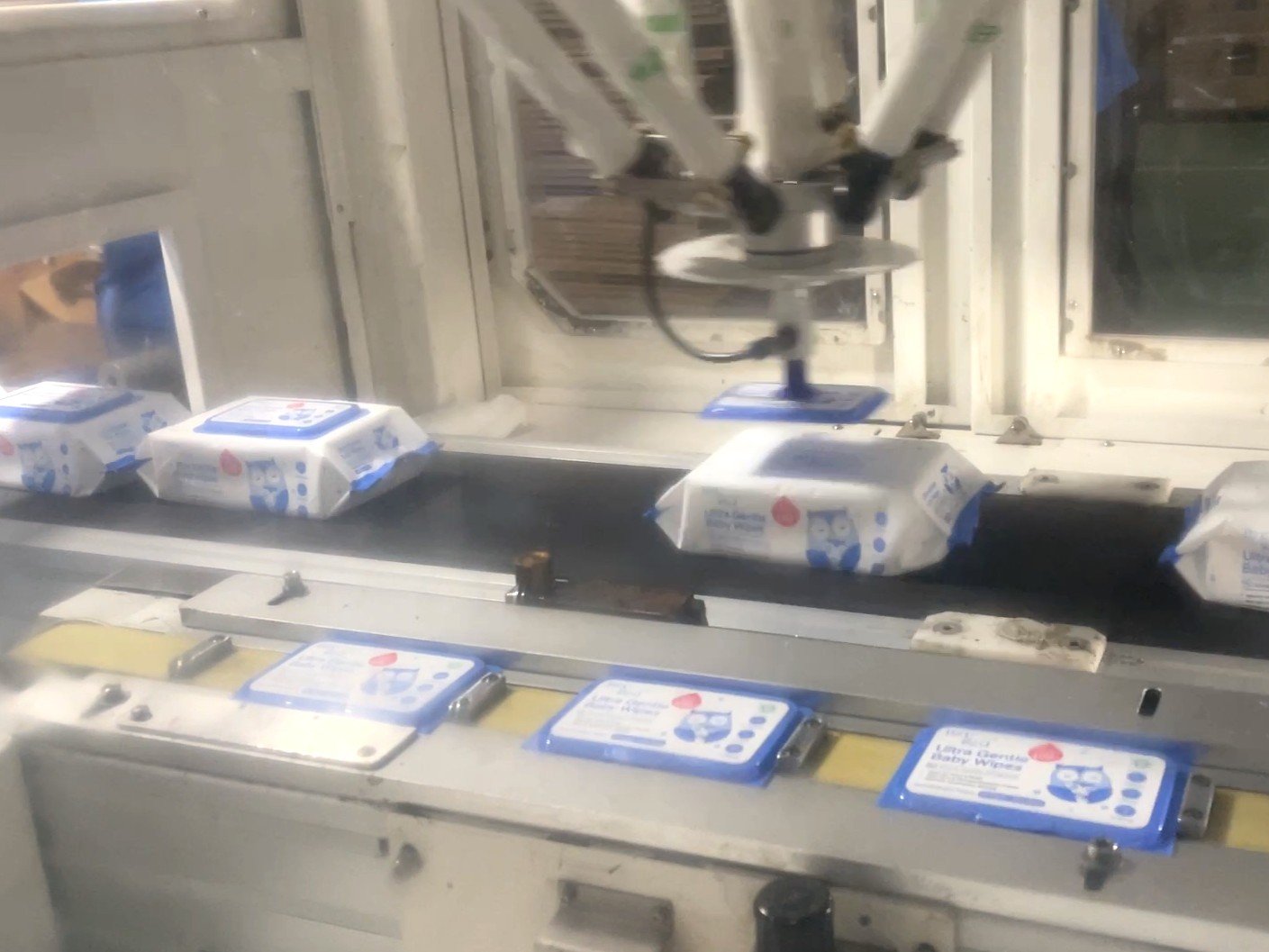
3. What Is Microbial Testing for Wet Wipes?
Microbial testing evaluates the presence and quantity of microorganisms in a product.
For wet wipes, this is especially important because the finished product combines a nonwoven substrate with a water-based liquid formula.
Unlike testing a liquid formula alone, testing an impregnated wipe can present additional challenges. Microorganisms may be distributed across the substrate and liquid, so the sampling and recovery method needs to be suitable for the complete product.
One relevant international reference is ISO 21322:2020 – Cosmetics – Microbiology – Testing of impregnated or coated wipes and masks.
This standard provides guidance on enumerating and detecting microorganisms in impregnated or coated products, including wipes, where the product structure creates particular sampling and testing challenges. Read the ISO 21322 standard information.
For buyers, the important point is that microbial testing should be designed for the actual finished wipe, not automatically treated as equivalent to testing the lotion separately.
Microbial evaluation generally serves two different purposes:
Microbiological limits testing: Checks whether the product meets the agreed microbiological quality requirements.
Preservative efficacy testing: Evaluates whether the preservation system can control microbial growth under defined challenge-test conditions.
Both may be relevant, but they answer different questions.
4. Common Microbiological Tests for Wet Wipes
The exact testing program depends on the product category, intended use, target market, and applicable requirements.
For cosmetic-type wet wipes, several commonly referenced microbiological tests include the following.
4.1 Total Aerobic Microbial Count
This test evaluates the number of aerobic microorganisms present in a sample.
It is commonly used to assess the general microbiological quality of a finished product.
For cosmetic products, ISO 21149:2017 provides guidance on the enumeration and detection of aerobic mesophilic bacteria.
Results are generally expressed as colony-forming units per gram (CFU/g) or another appropriate unit, depending on the validated testing method.
The result helps determine whether the product meets its specified microbial limits.
4.2 Yeast and Mold Testing
Yeasts and molds are another important group of microorganisms to monitor.
They may enter a product through raw materials, manufacturing environments, or other contamination routes.
ISO 16212:2017 provides guidance on the enumeration of yeast and mold in cosmetic products.
Monitoring these microorganisms helps assess whether the product meets the agreed microbiological quality requirements.
4.3 Specified Microorganisms
Some microorganisms require specific attention because of their potential relevance to product safety.
Depending on the product category and applicable requirements, testing may include organisms such as:
Escherichia coli (E. coli)
Staphylococcus aureus
Pseudomonas aeruginosa
Candida albicans
The applicable test organisms and acceptance criteria should be determined according to the product’s intended use and relevant microbiological standards.
For cosmetic products, ISO 17516:2014 is an important reference for microbiological limits. It provides a framework for assessing the microbiological quality of cosmetic products. Buyers should confirm the applicable edition and requirements with their testing laboratory when preparing a new project.
Importantly, passing a microbial limits test does not automatically prove that a preservative system will remain effective throughout the product’s shelf life.

5. What Is Stability Testing and Why Is It Important?
Microbiological testing is only one part of wet wipes quality evaluation.
Stability testing examines whether the finished product maintains its intended physical, chemical, microbiological, and functional properties under defined storage conditions.
For private label buyers, it helps provide evidence for determining an appropriate shelf life and evaluating whether the selected packaging is suitable.
The testing plan should reflect the actual product rather than rely on one general testing schedule for every wet wipe.
5.1 Accelerated Stability Testing
Accelerated stability testing exposes a product to selected conditions, often involving elevated temperatures, to observe potential changes over a shorter period.
Depending on the product, evaluation may include:
Changes in color and odor.
Formula separation or precipitation.
pH variation.
Moisture loss.
Changes in wipe texture and strength.
Packaging deformation or leakage.
This approach can help identify potential stability problems during product development.
However, accelerated testing should not automatically be interpreted as proof of a specific number of months or years of shelf life. The relationship between accelerated results and actual storage performance needs appropriate scientific justification.
5.2 Real-Time Stability Testing
Real-time stability testing evaluates the product under defined storage conditions over an extended period.
Samples are inspected at planned intervals to determine whether they continue to meet the agreed quality specifications.
This provides more direct evidence of how the product behaves during its intended storage period.
For buyers launching a new wet wipes product, real-time testing is particularly valuable for supporting longer-term shelf-life decisions.
5.3 Packaging Compatibility Testing
Packaging compatibility testing evaluates whether the selected packaging works properly with the formula and wipe substrate.
For example, buyers should consider:
Whether the packaging maintains an effective seal.
Whether the formula causes visible changes to the packaging material.
Whether the package maintains moisture retention.
Whether the opening and resealing mechanism works properly.
Whether leakage or deformation occurs during storage and handling.
The complete product should be evaluated using the intended commercial packaging, not just a laboratory container.
The international technical reference ISO/TR 18811 – Guidelines on the stability testing of cosmetic products provides useful background for selecting stability evaluation approaches.
6. How Packaging Affects Wet Wipes Shelf Life
Packaging is sometimes treated as a branding decision, but for wet wipes it also plays an important role in maintaining product quality.
Even a well-developed formula may experience problems if the packaging does not provide adequate protection.
Three aspects deserve particular attention.
Moisture retention
The packaging should help prevent excessive evaporation during storage. If moisture is lost, wipes may become unevenly saturated or too dry for their intended use.
Seal performance
Heat-sealed edges and other closure areas should be inspected to ensure that the package remains properly closed during transportation and storage.
Opening and resealing design
For multi-use packs, the opening system should allow convenient access while helping maintain moisture after each use.
For private label projects, New EcoCare supports packaging customization according to product requirements, including packaging design, pack quantities, and opening configurations.
Buyers should evaluate the selected packaging together with the formula and substrate before confirming the final product specification.
7. What Should Buyers Request From Their OEM Manufacturer?
When evaluating a wet wipes manufacturer, buyers should look beyond the initial product sample and quotation.
A reliable OEM partner should be able to discuss the product’s quality requirements and explain how the finished wipes will be evaluated.
Before mass production, we recommend confirming the following information.
What to request | Why it matters |
|---|---|
Formula specification | Confirms ingredients and agreed formulation parameters |
Water quality information | Helps assess raw water and production controls |
Microbiological test report | Shows the tested sample’s microbial quality |
Preservative efficacy test, where applicable | Provides evidence of preservation performance |
Stability testing plan and results | Supports shelf-life evaluation |
Packaging specifications | Confirms the intended packaging structure and format |
Packaging integrity evaluation | Helps assess sealing and moisture retention |
Product shelf-life basis | Explains how the proposed expiration period is supported |
Batch identification and traceability information | Supports quality investigation and follow-up |
A few additional questions are worth asking:
Were the tests conducted on the finished wipes or only on the liquid formula?
Which testing methods and acceptance criteria were used?
Were the samples tested in the intended commercial packaging?
Were the test samples representative of the final mass-production formula?
What happens if the formula, substrate, or packaging changes after approval?
These questions help buyers understand whether the manufacturer’s quality documentation actually relates to the product they intend to purchase.
At New EcoCare, we support private label wet wipes development by coordinating product specifications, material selection, formula requirements, packaging design, sampling, and quality inspection. The relevant testing scope and supporting documentation can be discussed and confirmed according to each project’s requirements.
For more information about our manufacturing services, visit OEM Wet Wipes Manufacturing: Your Flexible Partner for Private-Label Success.
8. Best Practices for Wet Wipes Storage and Quality Management
Even after a product passes the required evaluations, storage and handling remain important.
Both manufacturers and buyers have responsibilities in maintaining product quality throughout the supply chain.
For manufacturers:
Maintain appropriate hygiene and process controls during production.
Inspect incoming materials and packaging components.
Follow approved formula and production specifications.
Check finished products according to the agreed quality plan.
Maintain batch identification and traceability records.
Store finished goods under the specified conditions.
For importers and distributors:
Store products according to the manufacturer’s recommended temperature and environmental conditions.
Avoid prolonged exposure to direct sunlight or extreme temperatures.
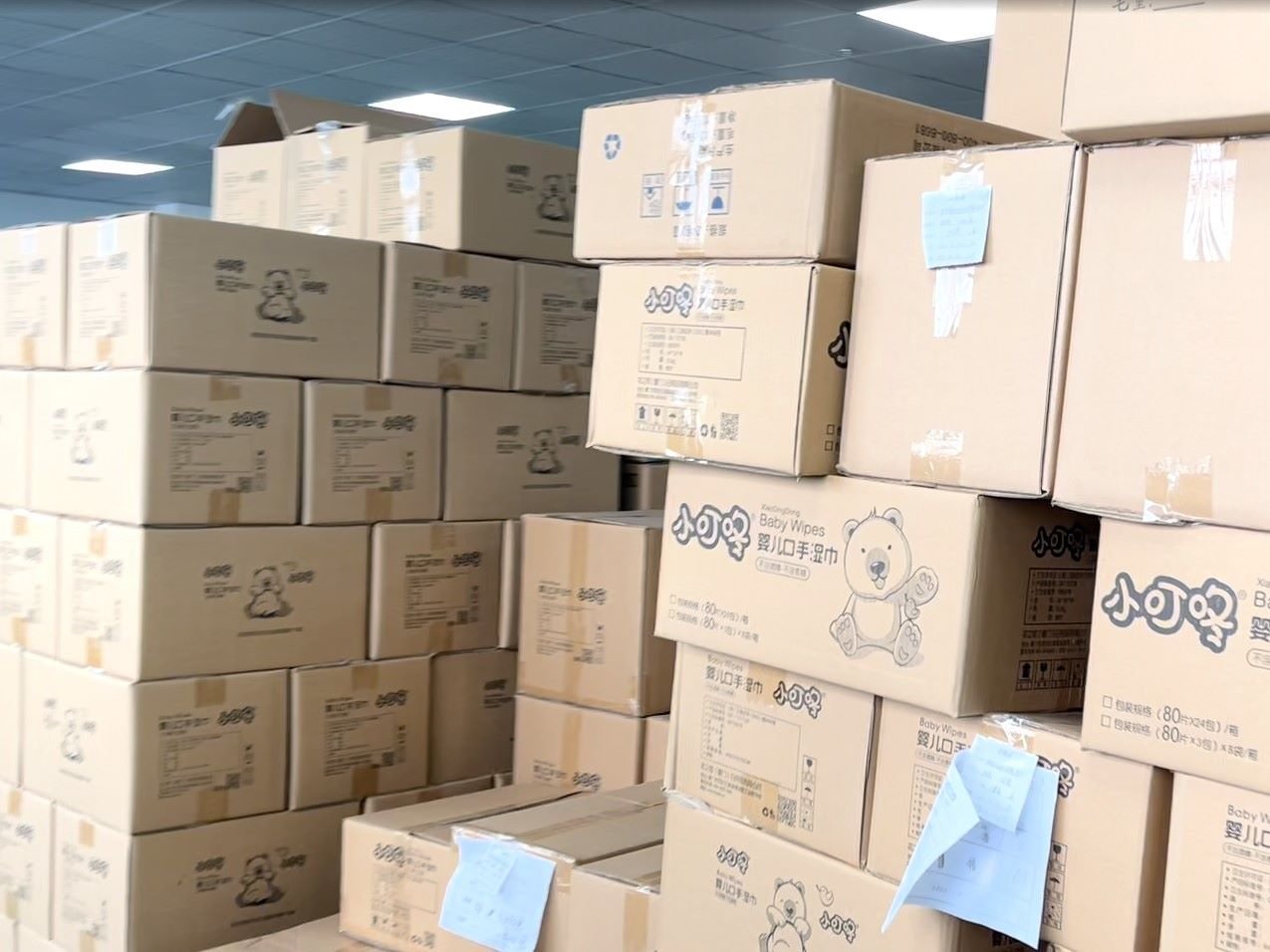
Keep cartons dry and protect them from damage.
Use a first-expired, first-out (FEFO) inventory system where expiration dates are applicable.
Monitor warehouse conditions during long-term storage.
Check packaging condition before distribution.
For end users, packages should be properly resealed after opening, and wipes should be used according to the product instructions.
Die FDA’s guidance on disposable wipes also highlights the importance of keeping containers closed and avoiding temperature extremes that may affect the product.
Explore New EcoCare Wet Wipes Products
New EcoCare supports OEM and private label development for different wet wipes applications. Explore our product options:
Baby-Feuchttücher – Water-based wipes for everyday baby care.
Bambus-Feuchttücher – Bamboo-based wipes with customizable formulas and packaging.
Schlussfolgerung
Wet wipes shelf life is influenced by the complete product system, including water quality, preservation, formula composition, substrate materials, and packaging integrity.
For private label brands, relying on an expiration date alone is not enough. Microbiological evaluation, preservative efficacy assessment where applicable, stability testing, and packaging compatibility checks all contribute to a more reliable product development process.
At New EcoCare, we understand that buyers need more than a finished wet wipes sample. They need a manufacturing partner who can help coordinate product specifications, customization, sampling, and quality requirements throughout the OEM process.
Whether you are developing baby wipes, bamboo wet wipes, or private label facial wipes, discussing shelf-life expectations and testing requirements early can help reduce unnecessary changes before mass production.
Planning a private label wet wipes project? Contact New EcoCare to discuss your formula, materials, packaging, and product quality requirements.

 German
 English
 Spanish
 Russian
 Arabic
 French
 Italian
 Portuguese
 Greek