ISO standards ensure consistency, traceability, and quality stability in diaper OEM manufacturing.
In today’s global hygiene market, quality is no longer a vague promise or a marketing slogan. For B2B buyers sourcing παιδικές πάνες, πάνες ενηλίκων, or related hygiene products through OEM and private label partnerships, quality must be measurable, auditable, and consistent over time. This is where ISO quality standards play a central role.
For diaper manufacturers working with international distributors, brand owners, and wholesalers, ISO implementation is not just about certification. It is about building a production system that delivers stability, traceability, and predictable performance at scale. At New EcoCare, ISO standards are embedded into daily manufacturing decisions, shaping how raw materials are sourced, how processes are controlled, and how finished products are evaluated before shipment.
This article explains how ISO quality standards are implemented across diaper production, what they mean for daily factory operations, and why they matter so much to OEM buyers seeking reliable long-term manufacturing partners.
Πίνακας περιεχομένων
ISO’s Role in Hygiene Manufacturing
Hygiene products sit in a category where safety, consistency, and regulatory compliance are non-negotiable. Diapers, whether for infants or adults, come into prolonged contact with skin and are used by vulnerable populations. ISO standards provide a globally recognized framework to manage these risks systematically.
In diaper manufacturing, ISO quality management systems focus on three core pillars: process control, documentation, and traceability. Rather than relying on individual experience or informal checks, ISO requires manufacturers to define standard operating procedures for every critical step of production.
From fluff pulp blending and SAP dosage to nonwoven lamination and elastic application, each process must follow documented parameters. Deviations are recorded, analyzed, and corrected through formal corrective action systems. This structured approach significantly reduces variability between production batches.
For OEM diaper manufacturers serving multiple markets, ISO standards also act as a common language between factories and buyers. Brand owners may have different market requirements, but ISO provides a baseline that aligns expectations around quality assurance, risk management, and continuous improvement.
Another important role of ISO in hygiene manufacturing is supplier management. Raw materials such as SAP, PE film, nonwoven fabrics, and adhesives must meet predefined specifications. ISO systems require supplier evaluation, incoming material inspection, and performance monitoring, ensuring that upstream quality issues do not compromise final product performance.
In short, ISO standards transform diaper manufacturing from a product-based operation into a system-based operation, where quality is designed into the process rather than inspected at the end.
Daily Operations Impact
One of the most common misconceptions about ISO standards is that they only exist on paper. In practice, ISO implementation reshapes how a diaper factory operates every single day.
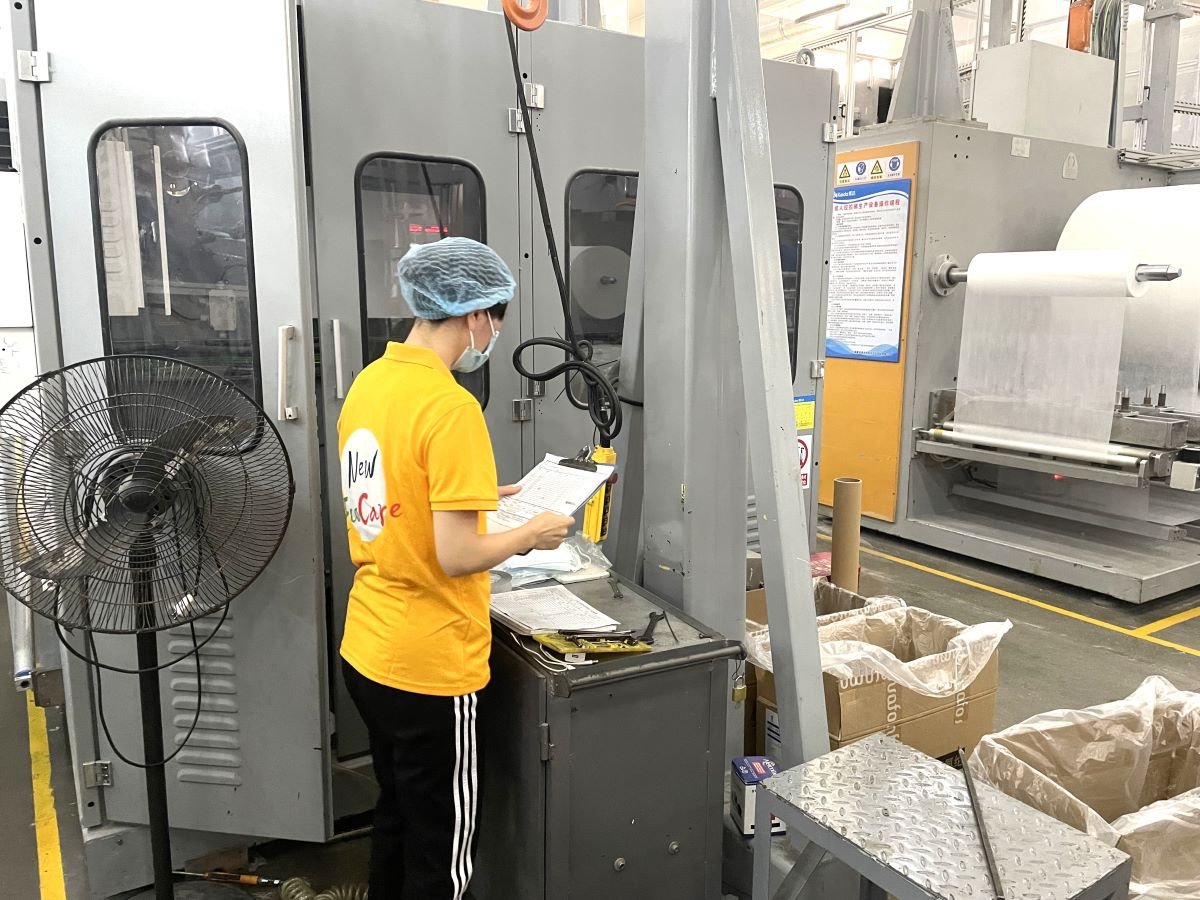
On the production floor, ISO-driven workflows establish clear checkpoints for quality verification. Machine settings, material changeovers, and line speed adjustments are logged and approved according to defined procedures. Operators are trained not only to run equipment but also to recognize early signs of abnormal variation, such as uneven core distribution or inconsistent sealing strength.
Quality inspections are no longer random or reactive. ISO systems require defined inspection frequencies, sampling plans, and acceptance criteria. For example, absorbency testing, rewet performance, and visual defect checks are conducted according to documented methods, ensuring that results are comparable over time.
Traceability is another key operational impact. Each diaper batch can be traced back to specific raw material lots, production lines, and shift records. If an issue is identified, the affected scope can be quickly isolated without disrupting unrelated orders. For B2B buyers managing multiple SKUs under private label programs, this level of traceability is critical for risk control.
ISO standards also influence maintenance and equipment management. Preventive maintenance schedules, calibration records, and machine validation processes are integrated into the quality system. This reduces unplanned downtime and ensures that production equipment performs consistently across long production runs.
Equally important is staff involvement. ISO implementation requires structured training programs, competency assessments, and clear role definitions. Operators, quality inspectors, and supervisors all understand their responsibilities within the quality system. This shared accountability reduces dependence on individual experience and supports scalable growth.
Στο Νέα EcoCare, ISO standards are not treated as an external requirement but as an internal operating discipline. They allow daily decisions to be made based on data, not assumptions, creating a stable foundation for OEM production.
Buyer Benefits
For B2B buyers sourcing diapers through OEM or private label manufacturing, ISO standards deliver practical, measurable benefits that go far beyond certificates displayed on a website.
First, ISO systems improve consistency across orders. Buyers often scale gradually, starting with trial orders before moving to larger volumes. ISO-controlled processes ensure that performance remains stable as order quantities increase, reducing the risk of quality drift during expansion.
Second, ISO standards support smoother buyer audits and compliance reviews. Many brand owners and distributors conduct factory assessments before finalizing long-term partnerships. An established ISO quality management system demonstrates readiness, transparency, and professional manufacturing capability, reducing onboarding friction.
Third, ISO-driven documentation supports regulatory alignment across multiple regions. While market-specific regulations may vary, ISO traceability and record-keeping make it easier to prepare compliance files, technical documentation, and quality reports when entering new markets.
Another major benefit is risk reduction. When quality issues occur, ISO systems provide clear root cause analysis and corrective action processes. Buyers receive structured explanations, preventive measures, and documented follow-ups rather than informal assurances. This builds trust and long-term cooperation.
From a commercial perspective, ISO standards also protect brand reputation. End consumers may never see the factory, but they experience product performance every day. Stable absorbency, reliable fit, and consistent packaging quality all contribute to positive brand perception, which ultimately benefits both the brand owner and the manufacturer.
Για το private label diaper programs, ISO quality management becomes a silent partner, working behind the scenes to support predictable outcomes, repeat orders, and sustainable growth.
Continuous Improvement
One of the most valuable aspects of ISO standards is their emphasis on continuous improvement. Quality is not treated as a fixed target but as an evolving system that adapts to new materials, technologies, and customer requirements.
ISO frameworks require regular internal audits, management reviews, and performance evaluations. These activities identify gaps, inefficiencies, and improvement opportunities across production, procurement, and quality control functions.
In diaper manufacturing, continuous improvement may involve optimizing SAP ratios, improving core distribution uniformity, or reducing material waste without compromising performance. Data collected through ISO systems provides the evidence needed to support these decisions.
Customer feedback also plays a formal role. Complaints, suggestions, and performance data from B2B clients are analyzed systematically and fed back into process improvements. This ensures that buyer expectations are not only met but progressively refined.
As product requirements evolve, ISO systems allow manufacturers to adapt without losing control. New SKUs, customized specifications, or packaging variations can be introduced through controlled change management processes, reducing launch risks for OEM customers.
At New EcoCare, continuous improvement is viewed as a shared journey with our partners. ISO standards provide the structure, but real progress comes from long-term collaboration, transparent communication, and a commitment to doing things better with each production cycle.

Συμπέρασμα
Implementing ISO quality standards across diaper production is not about formality or certification alone. It is about building a manufacturing system that delivers consistency, traceability, and reliability at scale.
For B2B buyers seeking private label and OEM diaper manufacturing services, ISO standards offer reassurance that quality is controlled, risks are managed, and improvement never stops. In a competitive global market, this level of discipline separates dependable manufacturing partners from short-term suppliers.
At New EcoCare, ISO quality management is integrated into every layer of production. It supports our role as a long-term OEM partner for brands and distributors who value stability, transparency, and professional manufacturing standards.

 Greek
Greek  English
  Spanish
  Russian
  Arabic
  German
  French
  Italian
  Portuguese