
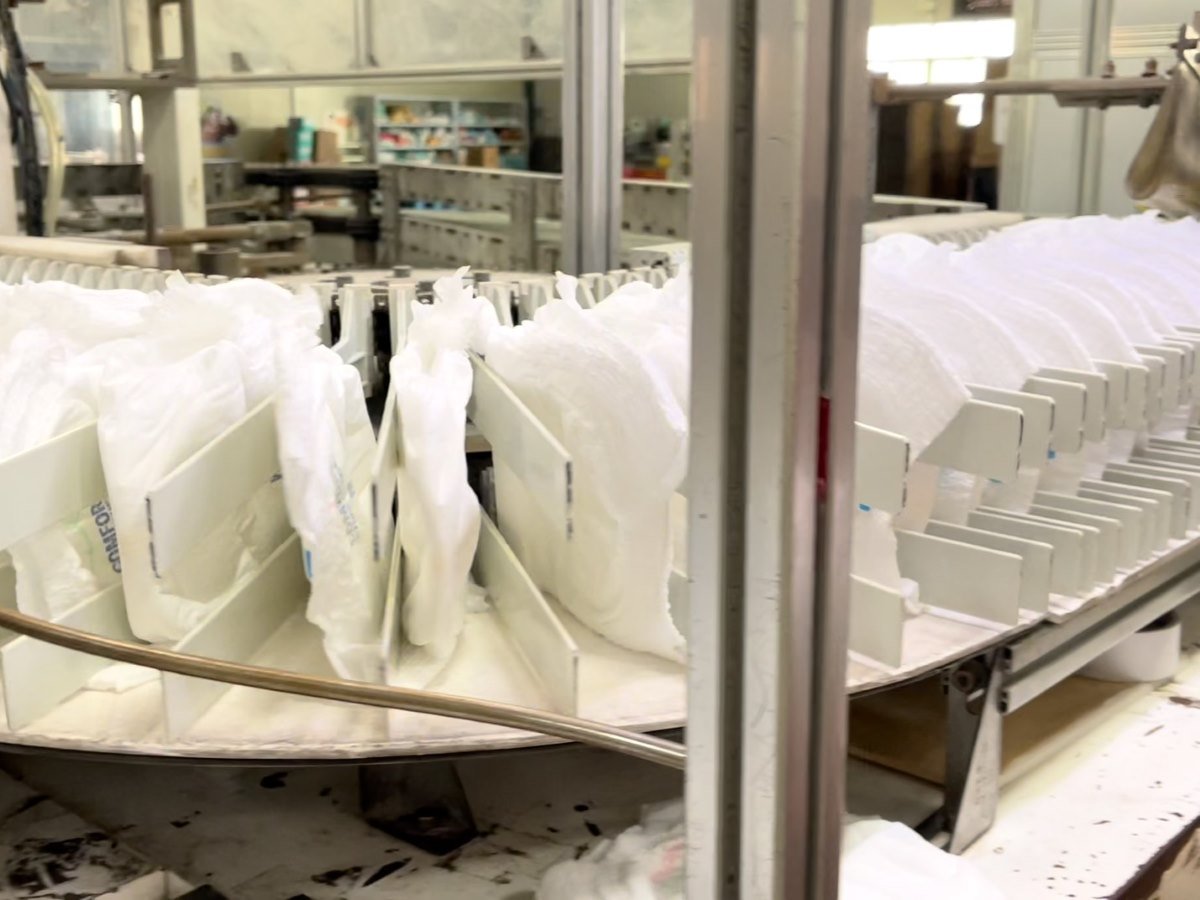
Πίνακας περιεχομένων
Εισαγωγή
Choosing an OEM baby diaper manufacturer is only the beginning of a successful private label project. Before approving mass production, experienced buyers know that every product claim—from absorbency and leakage protection to softness and fit—must be verified through objective testing rather than marketing materials.
Many first-time importers assume that reviewing product specifications or requesting a few samples is enough to evaluate a diaper. In reality, product performance can vary significantly between production batches, raw material suppliers, and manufacturing processes. A diaper that performs well during initial sampling may not deliver the same results once mass production begins if quality control is inconsistent.
For brand owners, distributors, and procurement managers, overlooking this verification stage can lead to customer complaints, costly recalls, damaged brand reputation, and long-term business losses. On the other hand, establishing a structured product validation process before mass production helps minimize sourcing risks while ensuring the finished product consistently meets market expectations.
This guide explains how professional OEM buyers evaluate baby diaper performance beyond supplier claims. Rather than focusing only on raw materials or production equipment, we’ll explore the practical testing methods used to verify whether a diaper is truly ready for commercial launch.
Explore our complete Baby Care Knowledge Center to learn more about diaper materials, manufacturing processes, OEM solutions, and product development.

Why Product Performance Verification Matters
When sourcing private label baby diapers, many purchasing decisions are influenced by quotations, product catalogs, certifications, or factory presentations. While these factors are important, none of them directly confirm how the finished diaper will perform in real-world use.
Parents don’t judge diapers by the type of SAP used or the production line that manufactured them. They evaluate whether the diaper keeps their baby dry overnight, prevents leaks during active movement, feels comfortable against sensitive skin, and maintains its shape after several hours of wear.
This difference between manufacturing specifications και actual product performance is exactly why performance verification should become part of every buyer’s sourcing process.
Professional importers typically validate products before confirming mass production because they understand that product quality depends on the entire manufacturing system—not just individual materials. Factors such as core construction, adhesive application, elastic positioning, production speed, humidity control, and quality inspection procedures can all influence the final product.
Instead of asking a supplier, “Is your diaper highly absorbent?”, experienced buyers ask more measurable questions:
- How is absorbency tested?
- What testing standards are followed?
- How consistent are results between production batches?
- What quality control checkpoints are implemented during manufacturing?
- How does the diaper perform after prolonged use rather than only during laboratory testing?
These questions shift the conversation from marketing claims to measurable product performance.
The Five Performance Indicators Every OEM Buyer Should Verify
Although every market has slightly different consumer preferences, most successful baby diaper brands evaluate products using five core performance indicators before approving production.
These indicators provide a balanced assessment of product quality while helping buyers compare different suppliers using consistent criteria.
1. Absorbency Efficiency
Absorbency remains one of the most important purchasing factors for both parents and retailers. However, absorbency is often misunderstood.
Many buyers automatically associate higher SAP content with better performance. In reality, the amount of SAP alone does not determine how well a diaper performs. The overall core design, SAP distribution, fluff pulp ratio, liquid acquisition layer, and core compression all influence how efficiently liquid is absorbed and retained.
A well-designed diaper should quickly draw liquid away from the baby’s skin, distribute moisture evenly throughout the absorbent core, and minimize liquid returning to the surface under pressure.
When evaluating samples, buyers should pay attention to questions such as:
- How quickly does the diaper absorb multiple liquid applications?
- Does liquid remain concentrated in one area or spread evenly?
- Does the surface stay relatively dry after absorption?
- Does the absorbent core maintain its structure when saturated?
These observations often reveal more about product performance than simply comparing diaper thickness.
2. Leakage Protection
A diaper’s primary purpose is not only to absorb liquid but also to contain it effectively under different conditions.
Leakage protection depends on multiple design elements working together, including leg cuffs, standing leak guards, waistband elasticity, core dimensions, and the overall fit of the diaper.
During product evaluation, buyers should avoid focusing solely on vertical absorption tests performed under ideal laboratory conditions. Real-life use involves movement, pressure, changing sleeping positions, and repeated wetting over several hours.
Instead, consider evaluating whether:
- Side leak guards maintain their shape after movement.
- Elastic leg openings remain snug without causing discomfort.
- The diaper performs consistently during repeated liquid loading rather than a single large application.
- Moisture remains contained even when the absorbent core approaches its practical capacity.
A product that performs well under realistic usage conditions is more likely to generate positive consumer reviews after launch.
3. Surface Dryness
Parents rarely think about absorbent polymer technology—they notice whether their baby’s skin feels dry.
Surface dryness directly influences comfort and can also affect consumer perception of product quality.
Even if two diapers absorb a similar amount of liquid, the one that leaves less moisture on the top sheet generally provides a better user experience.
When reviewing samples, buyers should compare:
- Surface moisture after repeated absorption.
- Touch perception immediately after loading.
- Moisture remaining after light pressure is applied.
- Dryness consistency across multiple samples.
Products with faster liquid acquisition and lower rewet values generally provide a more comfortable wearing experience, particularly during overnight use.
4. Fit and Structural Stability
High absorbency alone cannot compensate for poor product fit.
As diapers become saturated, structural weaknesses often become more visible. Some products sag excessively, lose their original shape, or shift during movement, increasing the likelihood of leakage even when absorbent capacity remains available.
A reliable OEM supplier should design diapers that maintain structural integrity throughout the expected wearing period.
Key areas buyers should observe include:
- Waistband recovery after stretching.
- Elastic consistency around the legs.
- Core stability after multiple liquid applications.
- Adhesive bonding between layers.
- Overall shape retention during simulated movement.
These factors contribute not only to leakage prevention but also to the baby’s overall comfort and freedom of movement.
5. Production Consistency
Perhaps the most overlooked performance indicator is consistency.
A supplier may produce excellent prototype samples while struggling to maintain the same quality during large-scale manufacturing.
For brand owners, inconsistent production often creates greater business risks than average product performance.
Rather than evaluating only one sample, buyers should compare multiple diapers selected from different packages or production batches whenever possible.
Consistent weight, dimensions, absorbency, appearance, and material quality across samples often indicate a mature manufacturing process supported by stable quality management systems.
At this stage, we’ve focused on what should be verified before approving production. However, knowing which performance indicators matter is only half of the evaluation process.
The next question every professional buyer should ask is far more practical:
How can these performance indicators actually be tested before placing a large OEM order?
In the next section, we’ll examine the testing methods commonly used by experienced procurement teams to evaluate absorbency, leakage resistance, comfort, material safety, and production consistency before mass production begins.
How Buyers Can Verify Product Performance Before Mass Production
Understanding which performance indicators matter is only the first step. The next challenge is determining how to evaluate those indicators in a way that reflects real production quality rather than isolated sample performance.
Professional procurement teams rarely rely on a single sample review before approving production. Instead, they combine laboratory data, practical evaluations, and manufacturing process verification to build a more complete understanding of product performance.
The objective is not simply to confirm that one diaper performs well, but to determine whether the factory can consistently manufacture the same quality at commercial scale.
Step 1: Conduct Multi-Cycle Absorbency Testing
One of the most common mistakes inexperienced buyers make is evaluating absorbency using a single liquid application.
In reality, babies urinate multiple times over several hours. A diaper should therefore be assessed under repeated loading conditions rather than one-time saturation.
During product validation, procurement teams often observe:
- How quickly liquid disappears after each application.
- Whether absorption speed decreases over time.
- How evenly liquid spreads throughout the absorbent core.
- Whether the diaper continues to perform after several loading cycles.
This approach provides a much more realistic indication of overnight performance than measuring maximum absorbent capacity alone.
Another useful observation involves comparing the shape of the absorbent core after repeated wetting. A well-designed core should remain relatively uniform instead of forming hard clumps that reduce wearing comfort.
The efficiency of repeated absorbency testing is closely related to the absorbent core structure and raw material selection. If you’d like to understand how SAP, fluff pulp, and nonwoven materials influence diaper performance, explore our guide to Essential Materials for Baby Diapers.
Step 2: Evaluate Leakage Under Simulated Movement
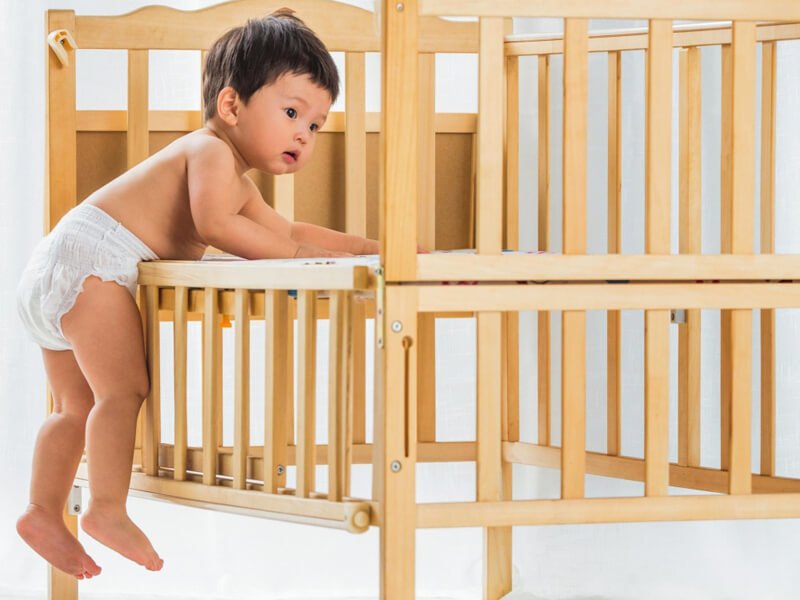
Leakage rarely occurs when a baby remains completely still.
Most leakage happens while crawling, walking, rolling over during sleep, or sitting for extended periods.
For this reason, experienced buyers assess leakage resistance under conditions that better resemble daily use.
Key observations include:
- Whether standing leak guards remain upright after movement.
- Whether elastic leg cuffs continue sealing against the legs.
- Whether the waistband maintains sufficient support after the diaper becomes heavier.
- Whether liquid migrates toward the sides after repeated movement.
Factories may also perform internal movement simulations during product development to optimize product structure before mass production.
While exact testing methods vary among manufacturers, buyers should understand how the factory evaluates leakage performance rather than assuming all diapers are tested the same way.
Leakage performance is closely linked to the overall diaper structure rather than a single component. To better understand how standing leak guards, elastic leg cuffs, and core placement work together, you may also find our article Σκέψεις σχεδιασμού στην κατασκευή πάνες helpful.
Step 3: Assess Surface Dryness Instead of Absorbency Alone
High absorbency does not automatically create a better user experience.
Parents are far more likely to notice whether the diaper feels dry than how many milliliters of liquid it can theoretically absorb.
Surface dryness directly affects comfort and consumer satisfaction, especially during overnight use.
After liquid has been absorbed, buyers should examine whether:
- Moisture quickly disappears from the topsheet.
- The surface remains comfortable to the touch.
- Additional pressure causes noticeable liquid to return.
- Different areas of the diaper maintain similar dryness.
Products that combine efficient liquid distribution with low rewet performance generally provide a better balance between absorbency and skin comfort.
Step 4: Verify Material Safety and Product Consistency
Performance testing should never focus solely on absorbency.
Material quality also influences product reliability, skin compatibility, and manufacturing consistency.
Before approving production, buyers should confirm that the supplier maintains stable sourcing standards for major raw materials, including absorbent polymers, fluff pulp, nonwoven fabrics, elastic components, and adhesives.
Equally important is verifying that incoming materials are inspected before entering production rather than relying entirely on supplier documentation.
A structured incoming material inspection process reduces the likelihood of unexpected quality variations during mass production and demonstrates that the manufacturer follows consistent quality management practices.
Step 5: Review Production Process Controls
Even excellent raw materials cannot compensate for unstable manufacturing processes.
A factory’s production control system determines whether product quality remains consistent from the first carton to the last.
During supplier evaluations, buyers should ask practical questions such as:
- Which production parameters are monitored continuously?
- How are defective products identified and removed?
- How frequently are in-process inspections conducted?
- What happens if production measurements fall outside acceptable limits?
- How are production records maintained for traceability?
These questions help buyers understand whether quality assurance is integrated throughout manufacturing or limited to final inspection only.
Factories with mature process control systems are generally better positioned to maintain product consistency as order volumes increase.
If you’re interested in learning how these quality control procedures fit into the complete manufacturing workflow, our Ολοκληρωμένος οδηγός για την κατασκευή βρεφικών πάνες και τη χονδρική επιχείρηση provides a broader overview of the OEM production process.
Building a Complete Validation Process
Rather than viewing each test independently, experienced procurement teams combine multiple evaluations into a structured approval process.
A typical validation workflow may include:
- Review technical specifications provided by the manufacturer.
- Evaluate sample appearance and construction.
- Conduct absorbency and dryness assessments.
- Observe leakage performance under realistic conditions.
- Review material consistency and manufacturing controls.
- Confirm quality documentation and production readiness.
- Approve pilot production before full-scale manufacturing.
This systematic approach provides a more comprehensive understanding of product quality than relying on any single performance indicator.
More importantly, it helps identify potential risks before they become expensive problems after commercial launch.
As sourcing projects move closer to production approval, buyers should also remember that technical performance is only one part of a successful OEM partnership. Long-term product quality depends equally on how consistently a manufacturer applies these standards throughout every production run—a topic we’ll explore in the final section.

Common Mistakes Buyers Make When Evaluating Baby Diapers
Even experienced buyers can overlook important details during supplier evaluations, especially when comparing multiple manufacturers under tight sourcing timelines.
In many cases, poor purchasing decisions are not caused by a lack of technical knowledge but by relying on incomplete evaluation methods.
Below are some of the most common mistakes procurement teams should avoid before approving mass production.
Focusing Too Much on Price
Competitive pricing is naturally an important consideration, but selecting a supplier based solely on cost often leads to higher expenses later.
A lower quotation may reflect differences in raw materials, production controls, inspection procedures, or quality management systems. These factors may not be immediately visible during initial discussions but can significantly affect product consistency after launch.
Rather than asking, “Which supplier offers the lowest price?”, buyers should consider the broader question:
Which supplier provides the best balance between product performance, manufacturing reliability, and long-term value?
Assuming Sample Quality Represents Mass Production
One of the most common sourcing risks is assuming that approved samples accurately represent future production.
In reality, maintaining consistent quality across thousands or millions of diapers requires far more than producing several well-made samples.
Before placing large orders, buyers should understand how the manufacturer controls:
- Raw material consistency
- Machine calibration
- In-process inspections
- Finished product testing
- Ιχνηλασιμότητα παρτίδων
- Corrective action procedures
A supplier with mature production management is generally more capable of delivering consistent quality over the long term.
Ignoring Consumer Experience
Laboratory data is valuable, but it should never replace real-world user experience.
Parents evaluate diapers differently from engineers.
While technical specifications may indicate excellent absorbency, consumers are more likely to remember whether the diaper leaked overnight, felt bulky after use, or remained comfortable during active movement.
Whenever possible, buyers should combine laboratory evaluations with practical wear testing to better understand how the product performs under everyday conditions.
This balanced approach often provides more meaningful insights than relying exclusively on technical reports.
Treating Product Testing as a One-Time Event
Product validation should not end once samples are approved.
Successful private label brands continue monitoring product performance throughout the manufacturing process by reviewing production records, inspecting finished goods, and periodically re-evaluating samples.
Continuous quality verification helps identify potential issues before they reach consumers and supports long-term brand consistency.
For growing brands, this ongoing approach is often a key difference between maintaining customer trust and facing repeated quality complaints.
Building a Long-Term Quality Partnership
A reliable OEM relationship extends beyond manufacturing products that meet technical specifications.
The strongest partnerships are built on transparency, consistent communication, and a shared commitment to continuous improvement.
Manufacturers should be willing to explain their testing methods, discuss production controls, and provide clear documentation when questions arise. Likewise, buyers should communicate performance expectations early, define measurable quality requirements, and establish realistic validation procedures before production begins.
When both parties approach quality as an ongoing collaboration rather than a final inspection step, the result is not only better products but also a more resilient supply chain capable of supporting long-term brand growth.
Τελικές σκέψεις
Selecting an OEM baby diaper manufacturer is only one part of building a successful private label business. Understanding the overall OEM development process is equally important when evaluating long-term manufacturing partners. If you’re new to private label sourcing, our guide to Understanding OEM Baby Diapers provides a broader overview before moving into product validation. Equally important is verifying that every product consistently performs as promised before it reaches consumers.
By evaluating absorbency, leakage protection, surface dryness, structural stability, material quality, and production consistency through a structured validation process, buyers can make sourcing decisions based on measurable performance rather than assumptions.
This proactive approach reduces quality risks, strengthens supplier relationships, and helps brands deliver products that earn consumer confidence in increasingly competitive markets.
For businesses looking to build a sustainable diaper brand, performance verification should never be viewed as an additional step—it should be considered an essential part of responsible product development.
Continue Exploring
Βασικά υλικά για βρεφικές πάνες: Ποιότητα και άνεση
Understand how SAP, fluff pulp, and nonwoven fabrics affect diaper performance.

Ολοκληρωμένος οδηγός για την κατασκευή βρεφικών πάνες και τη χονδρική επιχείρηση
Explore the complete OEM diaper manufacturing workflow.

Πώς οι πιστοποιήσεις και η καινοτομία διασφαλίζουν την ασφάλεια και την ποιότητα στην κατασκευή πάνες
Learn how certifications support consistent diaper quality.
Συχνές ερωτήσεις
1. Why isn’t absorbency alone enough to evaluate a baby diaper?
Absorbency is only one aspect of overall performance. Leakage protection, surface dryness, fit, comfort, structural stability, and manufacturing consistency all contribute to the user experience. A diaper with high absorbent capacity may still perform poorly if liquid is not distributed efficiently or if the product loses its shape during use.
2. How many samples should buyers evaluate before approving production?
Rather than relying on a single sample, buyers should request multiple samples from different production batches whenever possible. Comparing consistency across samples provides a more accurate indication of manufacturing capability.
3. Can certifications replace product performance testing?
No. Certifications demonstrate that a manufacturer follows certain quality management systems or regulatory requirements, but they do not guarantee how a specific diaper will perform in practical use. Product validation remains essential before mass production.
4. What is the biggest mistake first-time OEM buyers make?
Many first-time buyers focus heavily on pricing while overlooking production consistency and quality verification. Choosing the lowest-cost supplier without validating performance can lead to customer complaints, higher return rates, and long-term damage to brand reputation.
5. How often should product performance be reviewed?
Performance verification should begin before mass production and continue throughout the manufacturing partnership. Periodic sample evaluations and quality reviews help ensure product consistency over time.
Call to Action
Looking for a Reliable OEM Baby Diaper Manufacturing Partner?
Στο Νέα EcoCare, we help global brands, distributors, and importers develop high-quality private label baby diapers backed by consistent manufacturing, strict quality control, and flexible OEM customization.
Whether you’re launching a new diaper brand or expanding an existing product line, our experienced team can support you from product development and sample validation to mass production and international delivery.
Επικοινωνήστε μαζί μας σήμερα to discuss your project or request product samples tailored to your market requirements.

 Greek
Greek  English
  Spanish
  Russian
  Arabic
  German
  French
  Italian
  Portuguese