
Free tools support early-stage product planning by helping OEM buyers estimate costs, understand compliance, plan product design, and communicate clearly with manufacturers.
In personal care manufacturing, especially in categories like baby diapers, adult incontinence products, wet wipes, and disposable hygiene items, OEM product development often starts long before samples are made or machines are switched on.
For brand owners, distributors, and private label buyers, the earliest decisions—cost targets, compliance direction, product structure, and supplier collaboration—can determine whether a project moves smoothly or stalls before launch.
While OEM manufacturing itself requires deep technical expertise, many early-stage planning tasks can be supported by free digital tools. When used correctly, these tools help buyers communicate more clearly with manufacturers, reduce development risk, and speed up decision-making.
This article shares practical, free tools and resources that support OEM product development in personal care—and explains how they fit into a professional OEM workflow.
Índice
Cost Estimation Tools
Cost clarity is often the first question in OEM discussions. While exact pricing always depends on materials, specifications, order volume, and factory capabilities, early-stage cost estimation tools help brands define realistic expectations before requesting quotes.
Spreadsheet-Based Cost Modeling
Free spreadsheet tools such as Google Sheets or Excel templates are widely used to create basic OEM cost models. These allow buyers to break down expected costs into clear components, including:
Raw materials (topsheet, backsheet, SAP, fluff pulp, nonwoven fabrics)
Packaging formats and carton requirements
Estimated labor and overhead
MOQ-related cost differences
Logistics assumptions (FOB vs CIF)
For personal care products, even a rough cost framework helps align discussions with OEM manufacturers and avoids unrealistic pricing targets that slow negotiations.
Open-Source Cost Calculators
Some industry platforms and trade organizations publish generic cost calculators designed for consumer goods manufacturing. While not specific to diapers or hygiene products, these tools help buyers understand:
How volume affects unit pricing
Why customization increases per-unit cost
How material selection impacts margins
Used correctly, these calculators don’t replace formal OEM quotations—but they help buyers ask better questions and make informed trade-offs.
Why Cost Tools Matter in OEM Projects
From an OEM perspective, cost estimation tools improve communication efficiency. When buyers arrive with structured cost expectations, discussions move faster toward material optimization, specification alignment, and scalable production planning—instead of repeated revisions.
Compliance Resources
Compliance is not optional in personal care manufacturing. Whether selling into North America, Europe, the Middle East, or emerging markets, products must align with relevant safety, material, and labeling standards.
Free compliance resources play a critical role during early product planning.
Regulatory Reference Databases
Many government and international organizations provide free access to regulatory guidance, including:
General product safety frameworks
Material restriction lists
Labeling and traceability requirements
Import and market access guidelines
These references help brands understand what compliance pathway applies to their target market before engaging in OEM development.
Certification Body Knowledge Centers
Major certification organizations often publish free educational content explaining standards such as:
ISO quality management principles
Hygiene product testing concepts
Material safety evaluation processes
While certification itself is not free, these resources help buyers define which certifications are necessary and which are optional, avoiding over-specification.
Internal Compliance Checklists
Simple checklist tools—created using free document platforms—are often overlooked but highly effective. A compliance checklist may include:
Target market regulations
Required test reports
Packaging and labeling language needs
Traceability and batch control expectations
For OEM manufacturers, buyers who use structured compliance checklists are easier to support and reduce development delays caused by late-stage requirement changes.

Design Planning
Design planning is where many OEM projects either gain momentum or lose clarity. Free design tools allow buyers to organize ideas, communicate expectations, and align with manufacturers before sampling begins.
Product Specification Templates
Basic product specification templates, created using free document tools, help define:
Product type (tape diaper, pull-up pants, underpad, wipes)
Size range and absorbency targets
Core structure preferences
Material priorities (softness, breathability, skin contact areas)
Packaging format and branding direction
Even a simple spec document dramatically improves OEM efficiency by reducing assumptions on both sides.
Free Wireframing and Layout Tools
Visual planning tools—commonly used in product and packaging design—can be adapted for personal care OEM projects. Buyers can outline:
Diaper layer structure
Tape placement and waistband concepts
Packaging layout and information hierarchy
These visuals are not final designs, but they help OEM teams quickly understand intent and assess feasibility.
Absorbency and Performance Benchmarking
Some open industry resources publish general performance benchmarks for hygiene products, such as absorbency ranges or structural comparisons. These references help buyers set realistic performance goals that align with manufacturing capabilities.
From an OEM standpoint, early design clarity reduces trial-and-error during sampling and shortens development cycles.
OEM Integration
The most effective use of free tools happens when they are integrated into a structured OEM workflow—not used in isolation.
Supplier Communication Platforms
Free communication and collaboration tools help streamline OEM integration by allowing:
Centralized document sharing
Version control for specifications
Clear tracking of feedback and revisions
For personal care OEM projects, organized communication reduces misalignment between sales, technical, and production teams.
Sample Feedback Frameworks
Instead of informal feedback, many successful buyers use simple evaluation frameworks to review OEM samples. These may include:
Fit and comfort assessment
Absorbency and leakage observation
Material feel and odor evaluation
Packaging integrity checks
Structured feedback helps OEM manufacturers refine products faster and align improvements with buyer priorities.
Long-Term OEM Alignment
Free tools support early development, but their real value is in building long-term OEM relationships. Buyers who document decisions, track changes, and share structured feedback are more likely to achieve:
Stable product quality
Faster repeat orders
Easier line extensions
Lower development costs over time
From a manufacturer’s perspective, these buyers become strategic partners rather than one-time customers.
How New EcoCare Supports OEM Product Development
At New EcoCare, we regularly work with B2B clients who use early-stage tools to clarify their product vision before OEM production begins. Our role is to translate those inputs into manufacturable, scalable personal care products.
We support OEM and private label projects across:
Baby diapers and calzoncillos para bebés
Adult diapers and ropa interior para incontinencia de adultos
- Sanitary napkins y menstrual pants
Disposable underpads and care pads
Toallitas húmedas and related hygiene products
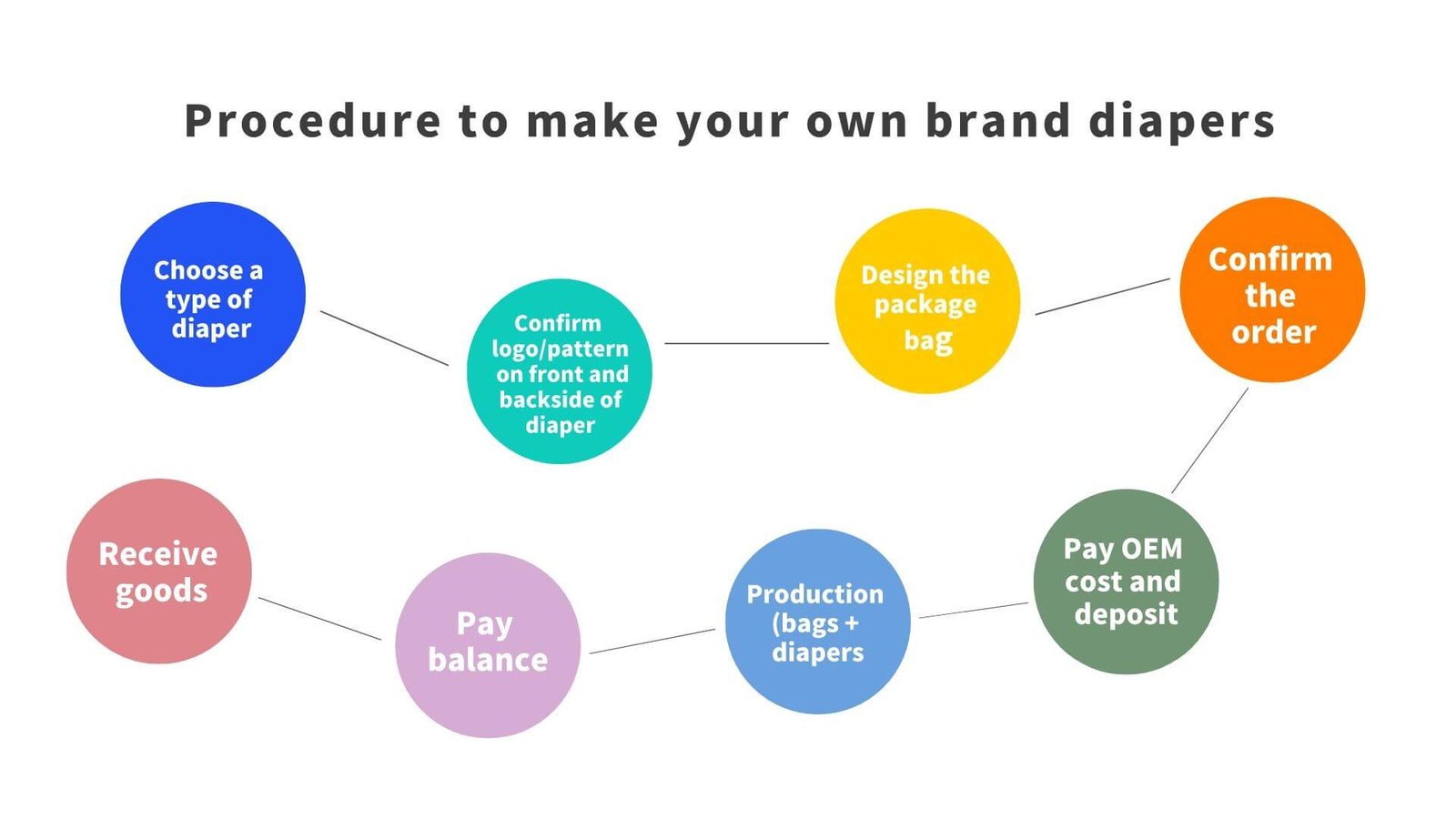
Our OEM team helps clients move from early planning tools to real production by:
Validating cost assumptions against actual materials and processes
Aligning product design with compliance requirements
Optimizing specifications for stable mass production
Supporting brand differentiation through controlled customization
Free tools start the process—but experienced OEM manufacturing completes it.
Reflexiones finales
Free tools play an important role in modern OEM product development for personal care. They help brands and distributors:
Prepare more effectively before contacting manufacturers
Reduce miscommunication and development delays
Make informed decisions early in the process
However, tools alone do not replace OEM expertise. The most successful projects combine structured early planning with a manufacturer that understands materials, machinery, compliance, and long-term scalability.
For B2B buyers exploring private label or OEM personal care manufacturing, the right preparation—combined with the right partner—makes all the difference.

 Spanish
  English
  Russian
  Arabic
  German
  French
  Italian
  Portuguese
  Greek
Greek