
Environmental regulations increasingly influence diaper material selection. OEM flexibility helps brands adapt without supply disruption.
Environmental policy is no longer a distant concern for hygiene product manufacturers. Over the past few years, shifting environmental laws have started to directly influence how disposable diapers are designed, sourced, and manufactured. For brand owners, distributors, and private label buyers, material compliance has become a strategic issue—not just a technical one.
At New EcoCare, we work closely with B2B partners who need to balance regulatory compliance, product performance, cost control, and long-term supply stability. In this article, we’ll explain how environmental laws are reshaping diaper material choices and what that means for OEM and private label projects.
Indice dei contenuti
Regulatory Pressure on Plastics
Plastic reduction policies are accelerating worldwide. Governments are targeting single-use plastics, non-recyclable packaging, and materials with long environmental persistence. While disposable diapers are classified as hygiene products rather than simple packaging, many of their components fall within broader plastic-related regulations.
The pressure mainly affects:
Polyethylene (PE) back sheets
Polypropylene (PP) nonwoven layers
Plastic packaging bags
Adhesive systems containing petroleum-based compounds
Some regulatory trends influencing diaper manufacturers include:
Extended Producer Responsibility (EPR) – Brands may be required to contribute to waste management programs.
Plastic taxation policies – Additional costs applied to non-recyclable plastic components.
Restrictions on certain additives – Especially materials with questionable environmental or health impact.
Recyclability and material disclosure requirements – Greater transparency expected from manufacturers.
For B2B buyers searching for a compliant diaper OEM manufacturer o un sustainable diaper private label supplier, regulatory awareness has become a decision-making factor. Retailers and importers increasingly request documentation regarding material composition, MSDS files, and sustainability statements before onboarding new suppliers.
This regulatory pressure does not mean that traditional diaper structures are obsolete. However, it does mean that manufacturers must offer flexible material frameworks and clear compliance documentation.
Material Substitution Strategies
When environmental regulations tighten, the most immediate question is: what can replace conventional plastic-based materials without compromising absorption performance, comfort, and leakage protection?
Material substitution in diaper manufacturing usually focuses on the following areas:
1. Back Sheet Alternatives
Traditional PE film back sheets provide excellent leakage resistance and breathability when microporous. However, some brands are exploring:
Bio-based PE films
PLA (polylactic acid) films
Hybrid breathable composite films
Thinner downgauged PE structures to reduce plastic weight
Each option comes with trade-offs in cost, durability, and large-scale supply stability. For OEM projects, the key is feasibility at industrial production speeds.
2. Nonwoven Fabric Adjustments
Nonwoven top sheets and acquisition layers are typically polypropylene-based. Under sustainability pressure, alternatives include:
Bamboo fiber blended nonwovens
Bio-based spunbond materials
Reduced-GSM engineered fabrics
Material engineers must ensure skin-friendliness, softness, and consistent liquid penetration rates. Poor substitution can directly affect rash prevention performance.
3. Core Optimization
The absorbent core contains fluff pulp and super absorbent polymer (SAP). Environmental discussions increasingly focus on:
Reducing fluff pulp weight via thinner core designs
Using FSC-certified pulp sources
Improving SAP efficiency to reduce total material usage
Rather than fully replacing SAP (which remains technically irreplaceable for performance), many manufacturers optimize structure to reduce overall resource consumption.
4. Packaging Redesign
Plastic packaging is often more heavily regulated than internal diaper components. Brands are exploring:
Reduced plastic thickness
Recyclable mono-material packaging
Paper-based outer cartons
Printing ink compliance upgrades
For B2B distributors looking for a custom diaper packaging OEM factory, this area often requires the fastest adaptation.
Cost Implications
One of the most common questions we hear from brand owners is simple: “How much will regulatory-driven material change increase our cost?”
The honest answer is: it depends on the level of substitution.
Here are the main cost drivers:
Raw Material Premium
Bio-based or specialty materials typically cost more than conventional petroleum-based plastics. Pricing also fluctuates depending on global feedstock availability.
Production Efficiency
New materials may:
Run slower on high-speed diaper machines
Require different temperature or bonding adjustments
Increase waste during early production phases
These factors influence per-piece manufacturing cost.
Supply Chain Stability
Traditional PE and PP materials benefit from large-scale global supply chains. Alternative materials sometimes have limited suppliers, increasing procurement risk and potentially longer lead times.
Certification and Testing
Compliance testing, documentation, and third-party certifications add indirect cost. However, these costs are often necessary for import approvals and retailer onboarding.
For B2B buyers comparing OEM diaper manufacturers in China, cost transparency becomes critical. A professional supplier should provide:
Material substitution cost comparison sheets
MOQ adjustments for specialty materials
Clear explanation of price-impact per diaper piece
Risk assessment for large-volume production
At New EcoCare, we approach material transition with a performance-first mindset. We avoid recommending changes that compromise leakage control or user comfort just for marketing claims.
OEM Adaptation Capabilities
Environmental regulations do not move slowly. Policies can shift within a year, sometimes faster. This creates pressure on brands that rely on a single rigid production structure.
An experienced OEM partner must demonstrate four key adaptation capabilities:
1. Flexible Raw Material Sourcing
A strong supplier network allows quick switching between conventional and alternative materials. This reduces the risk of supply interruption when new rules take effect.
For brands searching for a flexible diaper OEM partner, sourcing diversity is often more important than marketing claims.
2. Modular Product Design
Instead of redesigning an entire diaper, modular engineering allows component-level substitution. For example:
Upgrading only the back sheet material
Adjusting only packaging compliance
Optimizing only the core weight
This approach controls cost while maintaining core performance stability.
3. Compliance Documentation Support
Regulatory adaptation is not just about materials—it is also about paperwork. OEM partners should support:
Technical data sheets
MSDS files
Product composition declarations
Export documentation
Labeling compliance guidance
Many distributors underestimate how important documentation support is during customs clearance.
4. Capacità produttiva scalabile
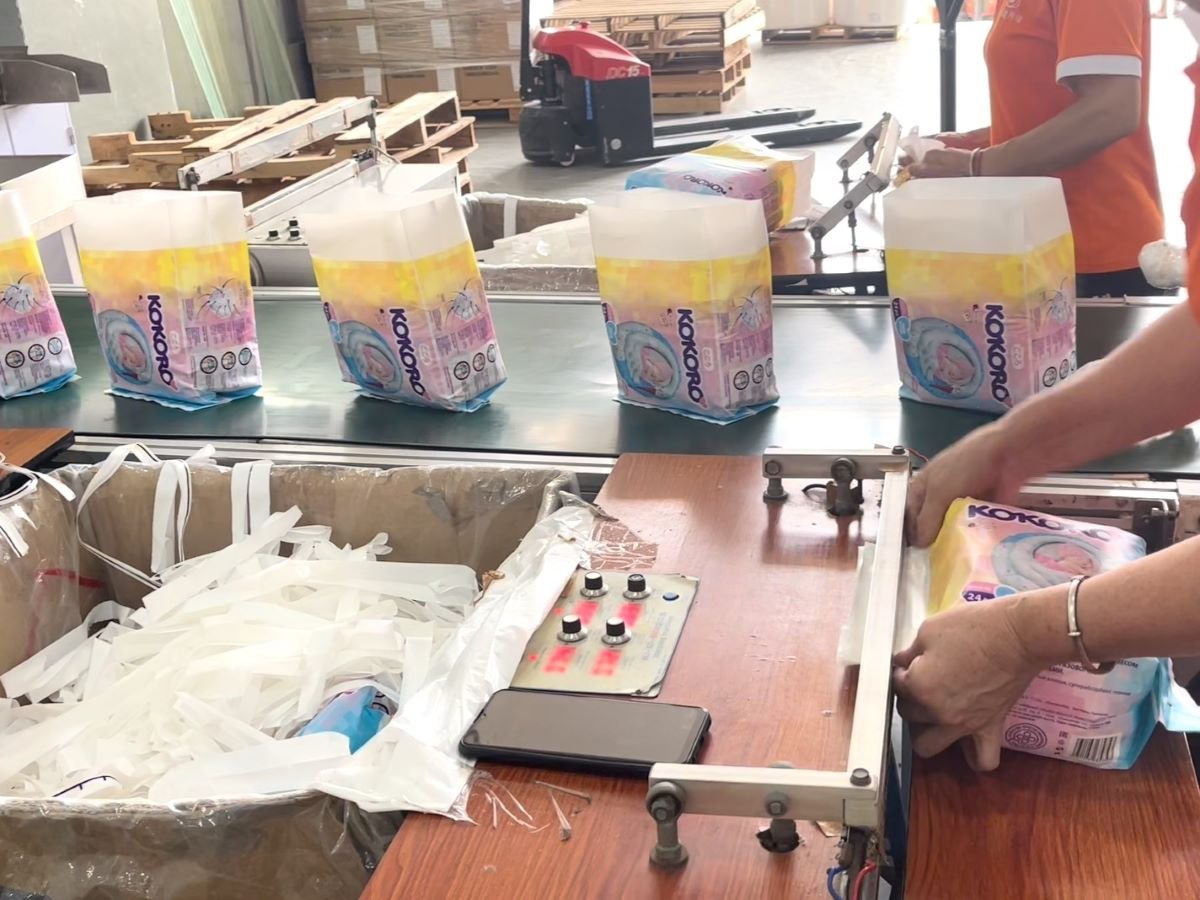
Pilot samples are easy. Scaling to container-level production is more complex.
A qualified OEM manufacturer must demonstrate:
Stable monthly output capacity
Quality control systems
Traceability procedures
Consistent material batch management
Without scale capability, sustainable material claims remain theoretical.
Strategic Advice for Brand Owners and Distributors
If you are a brand owner, importer, or distributor evaluating your next diaper product line, consider the following practical steps:
Map your target market’s environmental regulations early.
Waiting until shipment stage increases risk.Request material composition transparency from your OEM supplier.
Ask for structured data, not just marketing descriptions.Avoid extreme substitutions without performance validation.
Environmental positioning must not sacrifice user satisfaction.Calculate long-term cost impact, not only initial unit price.
Consider tax implications, packaging waste compliance, and logistics.Work with an OEM partner experienced in regulatory transition projects.
Why This Matters for Private Label Buyers
Retail buyers and online platforms are increasingly asking for environmental positioning statements. Even when not legally required, sustainability language influences shelf access and online ranking.
For private label brands, working with an adaptable OEM factory offers advantages:
Faster product relaunch when regulations change
Lower risk of inventory becoming non-compliant
Easier expansion into new export markets
Stronger negotiation position with retailers
In today’s market, environmental compliance is not just a legal topic—it is part of brand competitiveness.
New EcoCare’s Approach
At New EcoCare, we focus on structured OEM collaboration. We do not treat sustainability as a marketing slogan. Instead, we approach it through:
Material evaluation based on technical feasibility
Risk-controlled substitution strategy
Clear cost analysis for B2B clients
Stable high-speed production capability
Transparent documentation support
Per eco-friendly baby diaper projects, we offer options such as bamboo-based nonwoven layers and responsibly sourced pulp. For pannolino per adulti lines, we prioritize compliance, performance, and cost efficiency while ensuring material transparency.
Our goal is to help private label brands and distributors navigate environmental regulations without disrupting supply chains or losing market competitiveness.
Conclusione
Changing environmental laws are directly shaping diaper material choices. Plastic reduction policies, documentation requirements, and sustainability expectations are now central to product development decisions.
For B2B buyers, the real challenge is not simply “going green.” It is managing regulatory change while maintaining product performance, price stability, and supply reliability.
OEM flexibility is the bridge between compliance and commercial success.
If you are planning a new diaper private label launch or adjusting your existing product to meet new environmental standards, choosing the right OEM partner will determine how smoothly you adapt.

 Italian
  English
  Spanish
  Russian
  Arabic
  German
  French
  Portuguese
  Greek
Greek