

Emerging markets present strong growth opportunities for baby diapers, but each region comes with unique pricing expectations, compliance requirements, and OEM customization needs. B2B buyers should align product strategy with local demand and manufacturing capabilities.
Оглавление
Введение
The global baby diaper market is no longer driven only by mature regions like North America and Western Europe. In recent years, the fastest growth has shifted toward emerging markets, where rising birth rates, urbanization, and improving living standards are reshaping demand.
For B2B buyers—especially brand owners, importers, and distributors—this shift creates new opportunities. But entering these markets is not simply about exporting existing products. Each region has its own expectations around pricing, product structure, compliance, and packaging.
На сайте Новый EcoCare, we’ve supported clients across multiple regions with OEM baby diaper manufacturing and private label development. One pattern is clear: the most successful brands are those that adapt their strategy to local market realities, rather than applying a one-size-fits-all approach.
In this article, we break down the key export markets with strong growth potential—and what B2B buyers should consider before entering them.
Regional Demand Drivers
Understanding why demand is growing in certain regions is the first step in building a successful export strategy.
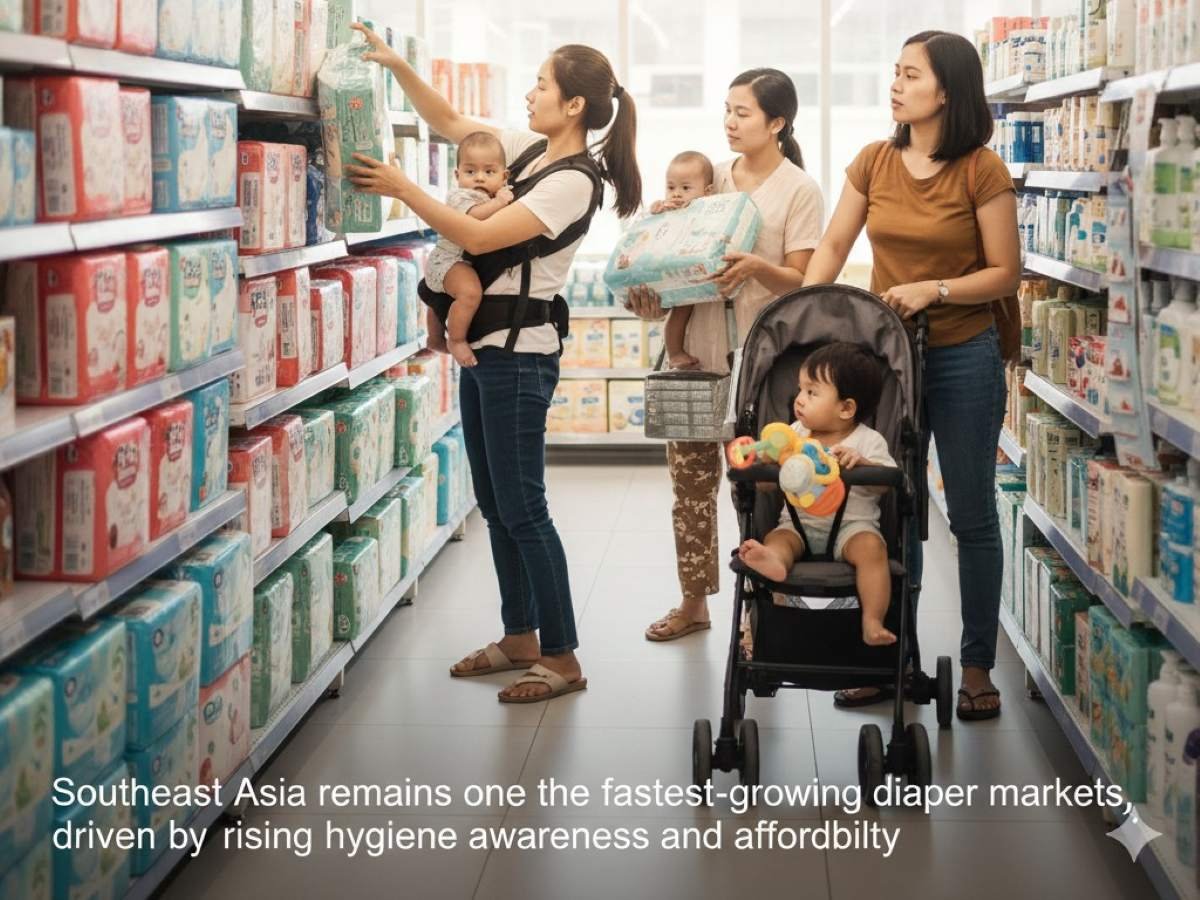
1. Southeast Asia: Rapid Urbanization and Brand Transition
Countries like Indonesia, Vietnam, and the Philippines are experiencing steady growth in diaper usage.
Key drivers include:
- Expanding middle-class population
- Increasing awareness of hygiene products
- Shift from traditional cloth to disposable diapers
In these markets, many consumers are using branded diapers for the first time. This creates opportunities for private label diaper suppliers to enter with competitive pricing and reliable quality.
However, brand loyalty is still developing, which means product performance and pricing must be well balanced.
2. Middle East & Africa: High Birth Rates, Untapped Potential
Regions such as West Africa and parts of the Middle East offer some of the highest growth rates globally.
Demand is driven by:
- High birth rates
- Limited local manufacturing capacity
- Growing import reliance
For B2B buyers, this creates strong demand for bulk diaper export solutions and long-term supply partnerships.
However, logistics, currency fluctuations, and regulatory differences must be carefully managed.
3. Latin America: Stable Growth with Competitive Pressure
Markets like Mexico, Colombia, and Peru show consistent demand growth, but competition is more intense.
Key characteristics:
- Presence of both global brands and local players
- Increasing demand for mid-range products
- Growing retail and e-commerce channels
For OEM-focused buyers, differentiation often comes from cost-performance optimization and localized branding strategies.
4. Eastern Europe & Central Asia: Value-Oriented Expansion
These regions are seeing gradual growth, with a strong focus on affordability.
Demand drivers include:
- Price-sensitive consumers
- Expanding retail infrastructure
- Demand for reliable, no-frills products
For suppliers, this means offering stable quality at competitive pricing, rather than premium positioning.
Pricing Sensitivity
Pricing is one of the most critical factors in emerging markets—and it directly influences product design.
1. Entry-Level vs Mid-Range Segments
In many high-growth regions, the majority of consumers fall into:
- Entry-level segment: Highly price-sensitive, focused on basic functionality
- Mid-range segment: Looking for better comfort and leakage protection
Premium segments exist, but they are smaller and concentrated in urban areas.
For B2B buyers, this means working with an OEM diaper factory that can offer multiple product tiers.
2. Cost Structure Optimization
To stay competitive, buyers must carefully manage:
- Raw material selection (SAP ratio, nonwoven quality)
- Product weight and thickness
- Packaging configuration (pieces per pack)
Опытный baby diaper OEM supplier can help adjust these variables without compromising core performance.
3. Price vs Performance Balance
One common mistake is over-reducing costs, which leads to:
- Leakage complaints
- Poor absorption
- Weak brand reputation
In emerging markets, word-of-mouth and distributor trust are extremely important. A slightly higher-quality product often performs better in the long run.
Compliance Differences
Regulatory requirements vary significantly across regions, and overlooking them can lead to delays or rejected shipments.
1. Product Standards and Certifications
Different markets may require:
- Safety and hygiene certifications
- Material composition disclosures
- Import registration documents
Например:
- Some regions require strict labeling in local languages
- Others focus more on documentation for customs clearance
Working with a professional diaper manufacturer for export helps ensure these requirements are handled correctly.
2. Packaging and Labeling Requirements
Packaging is not just a branding tool—it’s also a compliance requirement.
Key considerations include:
- Language requirements (Arabic, Spanish, etc.)
- Clear size and weight labeling
- Manufacturer and importer details
Mistakes in packaging can lead to customs issues, even if the product itself meets quality standards.
3. Environmental and Material Regulations
Some markets are beginning to introduce:
- Restrictions on certain materials
- Guidelines for eco-friendly products
- Waste management considerations
While these regulations are not yet universal, they are becoming more common—especially in higher-income regions.

OEM Readiness
Entering high-growth export markets requires more than just demand—it requires operational readiness.
1. Flexible Manufacturing Capabilities
Different markets require different product specifications.
An OEM partner should be able to support:
- Multiple size ranges
- Adjustable absorbency levels
- Customized packaging formats
At New EcoCare, we often help clients develop market-specific diaper solutions rather than generic products.
2. MOQ and Scalability
For new market entry, buyers often need:
- Lower minimum order quantities (MOQ) for testing
- Ability to scale quickly if demand increases
A reliable private label diaper manufacturer should offer both flexibility and production stability.
3. Supply Chain Stability
Consistency is critical in export markets.
Buyers should evaluate:
- Raw material sourcing stability
- Production lead times
- Shipping and logistics support
Delays or inconsistent quality can quickly damage a brand’s position in competitive markets.
4. Product Development Support
Many B2B buyers are not manufacturers—they rely on suppliers for technical guidance.
A strong OEM partner should provide:
- Product structure recommendations
- Cost optimization strategies
- Packaging and branding advice
This collaborative approach is often the difference between a successful launch and a failed one.
Заключение
The global baby diaper market is evolving, with emerging regions driving much of the growth. For B2B buyers, this presents significant opportunities—but also new challenges.
Each market comes with its own:
- Demand drivers
- Pricing expectations
- Compliance requirements
- Product preferences
Success depends on aligning your product strategy with these local realities—and working with an experienced Поставщик подгузника младенца OEM who understands how to adapt.
На сайте Новый EcoCare, we focus on helping our partners navigate these complexities, from product development to large-scale production. Whether you’re entering a new market or expanding your existing product line, having the right manufacturing partner can make a measurable difference.

 Russian
  English
  Spanish
  Arabic
  German
  French
  Italian
  Portuguese
  Greek
Greek