When parents buy a pack of baby diapers, they expect one thing above all else: safety.
They trust that every diaper has been made from suitable materials, performs consistently, and is gentle on a baby’s skin. What many consumers never see, however, is that product safety begins long before a diaper reaches a store shelf.
For global brands, importers, retailers, and private label companies, quality isn’t something they simply inspect after production. Instead, experienced procurement teams spend weeks—or even months—verifying potential manufacturing partners before placing the first purchase order.
This proactive approach helps reduce quality risks, avoid costly supply disruptions, and protect brand reputation.
At New EcoCare, we’ve worked with distributors, retailers, and private label brands from many markets around the world. We’ve found that the most successful buyers don’t just compare prices—they build a complete supplier verification process before production ever begins.
In this guide, we’ll explore how professional buyers evaluate baby diaper manufacturers and why these steps matter for long-term business success.
Inhaltsübersicht
Why Supplier Verification Matters More Than Final Inspection
Final product inspection remains important, but by the time defects are discovered, significant time and resources have already been invested.
If quality problems appear after production, brands may face:
- delayed product launches
- replacement costs
- additional freight expenses
- retailer complaints
- damaged consumer confidence
Professional sourcing teams therefore focus on preventing problems rather than fixing them later.
This shift from reactive inspection to proactive verification has become one of the biggest differences between experienced global brands and companies that source purely based on price.
Instead of asking, “Can this factory make diapers?”
They ask,
“Can this factory consistently manufacture the same quality for years?”
Step 1: Understanding the Manufacturer’s Quality System
One of the first things buyers evaluate isn’t the diaper itself—it’s the factory’s management system.
Reliable OEM manufacturers typically operate with documented production procedures, defined inspection standards, and traceable manufacturing records.
Rather than relying on verbal promises, procurement teams usually request documentation showing how quality is managed throughout production.
Questions often include:
- How are production records maintained?
- Are raw materials traceable?
- How are production deviations handled?
- How are customer complaints investigated?
- How is continuous improvement documented?
These questions reveal how mature a manufacturer’s operations really are.
A well-organized factory generally produces more stable results than one relying solely on operator experience.
Step 2: Looking Beyond Product Samples
Many suppliers can produce an impressive sample.
The real question is whether they can reproduce that same performance thousands—or millions—of times.
Professional buyers therefore evaluate manufacturing consistency instead of judging only one sample.
They want to understand:
- batch-to-batch consistency
- production repeatability
- process stability
- quality trend monitoring
Consistency becomes especially important for private label brands because consumers expect every package they purchase to perform exactly the same.
Even small variations may increase customer complaints over time.
Step 3: Evaluating Raw Material Management
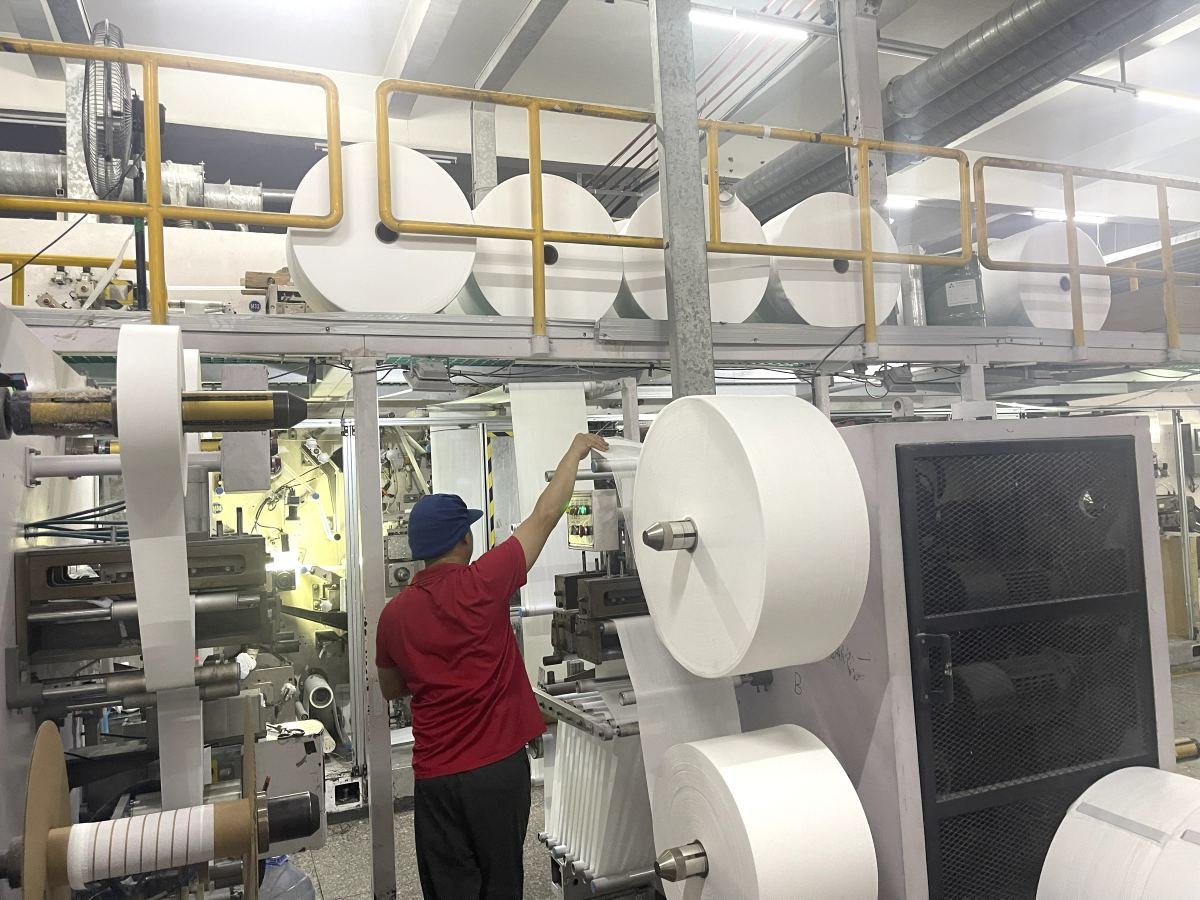
Raw materials form the foundation of every diaper’s performance.
Experienced sourcing teams don’t simply ask which materials are used—they also want to understand how those materials are managed.
Typical areas of interest include:
- supplier qualification procedures
- Materialeingangskontrolle
- storage conditions
- inventory rotation
- material identification
- traceability records
Strong material management helps reduce variability before production even starts.
Rather than switching suppliers based only on short-term pricing, many established manufacturers prioritize stable sourcing relationships that support long-term consistency.
Step 4: Assessing Manufacturing Risk
Large international buyers often perform what procurement professionals call a “risk assessment.”
Instead of assuming everything will run smoothly, they identify potential risks in advance.
Examples include:
Produktionskapazität
Can the factory maintain delivery schedules during peak seasons?
Equipment Stability
How is preventive maintenance managed?
Supply Chain Resilience
Are alternative material suppliers available if disruptions occur?
Workforce Stability
Does the manufacturer maintain experienced production and quality teams?
Understanding these risks helps buyers build more reliable sourcing strategies instead of reacting after problems occur.
Step 5: Reviewing Traceability Systems
Traceability has become increasingly valuable for global brands.
If an issue is ever reported, brands need to identify:
- when the product was produced
- which production line manufactured it
- which materials were used
- which production batch is affected
Good traceability allows manufacturers to investigate efficiently while limiting unnecessary disruptions.
It also supports continuous quality improvement because production data can be reviewed whenever trends emerge.
For long-term OEM partnerships, traceability demonstrates operational maturity rather than simply regulatory readiness.
Step 6: Verifying Communication During the Evaluation Stage
One aspect that’s often overlooked is communication.
Many sourcing projects succeed—or fail—before production even begins.
Professional buyers observe:
- response speed
- technical knowledge
- problem-solving ability
- documentation accuracy
- project coordination
Clear communication reduces misunderstandings during product development, packaging approval, and production planning.
An experienced OEM partner should be able to explain technical information in a straightforward manner rather than relying on vague marketing language.
Step 7: Factory Audits Are About Processes, Not Showrooms
Many people imagine factory audits as simple facility tours.
In reality, experienced auditors spend much more time reviewing operational systems than looking at equipment.
During supplier evaluations, buyers may examine:
- document control
- production workflow
- warehouse organization
- corrective action procedures
- employee training
- inspection records
A modern building alone doesn’t guarantee product quality.
Instead, buyers look for evidence that quality is built into daily operations.
Step 8: Understanding Regulatory Expectations
Different export markets have different documentation requirements.
Experienced manufacturers understand these expectations and prepare accordingly.
Depending on destination markets, buyers may request supporting documentation related to:
- product testing
- material specifications
- manufacturing certifications
- quality management systems
- export documentation
Preparing documentation early helps avoid delays during product registration, customs clearance, or retailer onboarding.
Rather than treating compliance as paperwork, professional manufacturers integrate it into their overall production process.
Step 9: Building Long-Term Supplier Partnerships
Supplier verification shouldn’t end after the first order.
Many successful brands continue evaluating performance throughout the partnership.
Typical performance indicators include:
- termingerechte Auslieferung
- product consistency
- responsiveness
- documentation accuracy
- issue resolution
- continuous improvement
These indicators help both parties identify opportunities for optimization while strengthening long-term cooperation.
The goal isn’t simply to purchase diapers.
It’s to establish a manufacturing partnership capable of supporting business growth over many years.
Questions Every Buyer Should Ask Before Choosing an OEM Baby Diaper Manufacturer
Before selecting a manufacturing partner, consider asking these practical questions:
- How does the factory verify incoming raw materials?
- What systems ensure product consistency across production batches?
- Can production records be traced if quality questions arise?
- How are production changes documented and approved?
- What preventive measures reduce manufacturing risks?
- How does the factory manage communication throughout the project?
- What documentation can support export requirements?
- How does the manufacturer handle continuous quality improvement?
The answers often reveal far more than a quotation sheet ever could.
Why Proactive Verification Creates Better Private Label Brands
Consumers judge a diaper brand by the product they hold in their hands.
Yet the quality of that product depends on hundreds of decisions made long before manufacturing begins.
For private label brands, successful sourcing isn’t simply about finding the lowest quotation.
It’s about selecting a manufacturing partner with reliable systems, transparent communication, stable production processes, and a long-term commitment to quality.
Proactive supplier verification helps reduce uncertainty, strengthen product consistency, and support sustainable brand growth.
At New EcoCare, we believe strong OEM partnerships begin with openness, careful planning, and a shared commitment to quality from the very beginning. By working closely with our global partners throughout supplier evaluation, product development, and production, we aim to help brands launch Babywindeln with greater confidence and build lasting trust with the families who use them every day.

 German
  English
  Spanish
  Russian
  Arabic
  French
  Italian
  Portuguese
  Greek
Greek