
The global demand for produits pour l'incontinence chez l'adulte is climbing fast. As populations age and healthcare awareness improves, more consumers are looking for discreet, comfortable solutions to manage incontinence. For distributors, importers, wholesalers, and private-label brands, this shifting demographic presents a massive market opportunity.
However, building a successful wholesale portfolio involves much more than simply buying a few popular items and hoping they sell. True profitability requires a deep understanding of your specific customer segments, precise product positioning, and a reliable long-term sourcing strategy. Distributors who learn to balance product performance, pricing, and supply chain stability are the ones who ultimately win customer loyalty and protect their margins.
Table des matières

Mapping Your Customer Segments
Before choosing which products to stock, you need a clear picture of who you are selling to. Not every buyer evaluates adult incontinence pants through the same lens, and your wholesale strategy must reflect these differences.
Retail and E-commerce Brands
Retail buyers—whether purchasing for supermarkets, regional pharmacies, or online marketplaces—are highly focused on consumer experience. They look for products that offer retail-ready packaging, exceptional softness, and an underwear-like fit. For e-commerce brands specifically, product differentiation and positive user reviews are life or death. They need premium materials or unique features that stand out on a digital shelf, alongside flexible OEM options for custom branding.
Medical Distributors and Institutional Care
On the other side of the market are hospitals, clinics, and long-term care facilities. These buyers care very little about retail aesthetics; their priority is operational efficiency and clinical reliability. For a nursing home or hospital, a product must deliver stable absorbency, low leakage rates, and skin-friendly materials that prevent bedsores. Because frequent changes increase labor costs for caregivers, institutions look for high-capacity overnight products that reduce the daily workload. Once a product proves it can perform reliably, medical buyers are highly loyal and rarely switch suppliers over a few cents.
Architecting a Balanced Product Portfolio
To successfully serve these diverse segments, your inventory should be structured into clear, easy-to-understand tiers. We recommend organizing your incontinence pants wholesale line into five core categories.
💡 Quick Overview: The 5 Pillars of a Profitable Portfolio
| Product Tier | Core Technical Focus | Target Market Value |
| [Premium Series] | High SAP, ultra-soft nonwoven fabrics | Maximum comfort and premium pricing |
| [Overnight Series] | Maximum capacity (1,800ml+), leak guards | Institutional care and nightwear contracts |
| [Standard Series] | Balanced cost-to-performance ratio | Core volume driver for retail & pharmacy |
| [Economy Series] | Reliable basic absorbency, breathable backsheet | Price-sensitive bulk wholesale & tenders |
| [Specialty/Bariatric] | XXL / XXXL extended sizes, custom cuts | Niche high-margin market with low competition |
1. The Economy Series
This is your entry-level option, designed primarily for price-sensitive wholesale markets, bulk tenders, or government procurement projects. The focus here is affordability, but it must still maintain reliable basic performance—such as a breathable backsheet, a comfortable elastic waistband, and standard absorbency.
2. The Standard Series
This category will likely drive the highest sales volume for your business. It serves as the baseline for mainstream retail and everyday pharmacy sales. Compared to the economy line, standard pants offer improved absorbency, softer top sheets, and better overall leak protection, making them the ideal middle-ground for the average user.
3. The Premium Series
Premium pants target consumers who are willing to pay more for absolute confidence and comfort. These products feature higher Super Absorbent Polymer (SAP) content, ultra-soft nonwoven fabrics, a faster Acquisition Distribution Layer (ADL) for rapid dryness, and advanced odor control. While the sales volume might be lower than the standard line, premium products yield much healthier profit margins.
4. The Overnight Protection Series
Nighttime leakage is one of the biggest anxieties for users and a major pain point for caregivers. An overnight series addresses this directly with heavily reinforced leak guards, a wider absorbent core, and maximum fluid retention capacity. This is a must-have category for securing long-term contracts with nursing homes and healthcare providers.
5. Bariatric and Specialty Products
Finally, offering specialty items like XXL and XXXL sizes, high-waist cuts, or gender-specific designs allows you to capture niche markets. Because fewer competitors stock these specialty sizes, they face far less direct price competition and offer excellent margins.
The Anatomy of a High-Performing Incontinence Pant
While dividing your portfolio into tiers is crucial, you also need to know exactly what features make a product sell. When evaluating samples from manufacturers, keep these five pillars of product design in mind:
Absorbency & Retention: The core is the engine of the product. High-quality fluff pulp combined with the right ratio of SAP ensures that liquid is not just absorbed quickly, but locked away tightly to prevent rewetting.
Santé de la peau : Because users wear these pants for hours at a time, breathability and soft, non-irritating top sheets are vital for preventing friction and skin breakdown.
Anatomical Fit & Leak Barriers: Active users require flexibility. Double leak guards, elastic leg cuffs, and a 360-degree stretch waistband ensure the product moves with the body without gaping.
Discretion: Modern consumers want incontinence pants that look and feel like regular underwear. Silent, cloth-like outer covers that don’t rustle under clothing drastically improve user compliance and satisfaction.
How OEM Customization Creates True Competitive Advantage
Sourcing off-the-shelf, standard products is a quick way to enter the market, but it frequently leads to a dead end of intense price wars. If you are selling the exact same specifications as three other distributors in your region, your only leverage is lowering your price.
Partnering with a flexible OEM manufacturer allows you to break out of this cycle by tailoring products precisely to your target market’s needs and localized preferences.
Precise Absorbency Targeting
Instead of offering a generic solution, you can customize fluid capacities based on exactly where the product will be sold:
| Target User Segment | Recommended Absorbency Range | Ideal Sales Channel |
| Light Incontinence | 500 – 800 ml | Grocery Retail & Daywear |
| Moderate Incontinence | 800 – 1,200 ml | Pharmacies & Daily Home Care |
| Heavy Incontinence | 1,200 – 1,800 ml | Medical Supply & Clinical Use |
| Overnight Protection | 1,800 ml or above | Institutional Care & Nightwear |
Material and Size Optimization
Customization also means you control the bill of materials. You can adjust the SAP ratio, choose premium cotton-soft topsheets for a luxury brand line, or opt for high-durability materials to win a nursing home contract. Furthermore, expanding your size range to include specialized bariatric sizes (XXL/XXXL) ensures you don’t leave revenue on the table for your competitors to grab.
Packaging and Compliance
A product is only as good as its market readiness. True OEM customization extends to branding—offering retail bags, bulk hospital packaging, custom artwork, and multilingual printing. More importantly, an experienced manufacturing partner ensures that your custom products arrive with all necessary international certifications (such as ISO 9001, ISO 13485, CE, or FDA registration support) already cleared, dramatically shortening your time-to-market.
Common Portfolio Pitfalls to Avoid
As you scale your product range, it is easy to make missteps that drain your capital. Keep these three major pitfalls on your radar:
1. SKU Proliferation
Adding more products doesn’t always mean adding more profit. If your “Standard” and “Premium” lines perform almost identically, you are simply competing with yourself, fracturing your buying power, and complicating your inventory management. Keep your tiers distinct and easily identifiable.
2. Ignoring Local Market Nuances
A portfolio that thrives in Europe might fail in Southeast Asia. European buyers often place a massive premium on eco-friendly, highly breathable, cloth-like materials. Conversely, developing markets may prioritize strict cost-per-piece affordability. Always audit local purchasing habits before finalizing your specs.
3. Sacrificing Quality for the Lowest Quote
In the hygiene industry, a cheap product always comes back to haunt you. Low-grade SAP or poor elastic design leads to leaks, skin rashes, and immediate customer complaints. The money you save on the initial factory quotation will quickly be swallowed up by product returns, damaged brand reputation, and lost distribution contracts.
What to Look for in an OEM Partner
Your portfolio is only as strong as the factory backing it. When evaluating an adult incontinence pants manufacturer, look past the initial price sheet and audit their holistic operational capabilities.
Critical Check: The 3 Pillars of an Ideal OEM Partner
| 🌟 1. Consistent Quality Control | 🔬 2. Future-Proof R&D Roadmap | 🌍 3. Turnkey Export Savvy |
• Strict testing on incoming raw materials • Real-time in-line camera monitoring • Random batch verification before shipping | • Innovation in ultra-thin core structures • Premium eco-friendly bamboo nonwovens • Advanced odor-locking tech integration | • Multi-size container loading optimization • Seamless international customs paperwork • Compliant regional branding & labels |
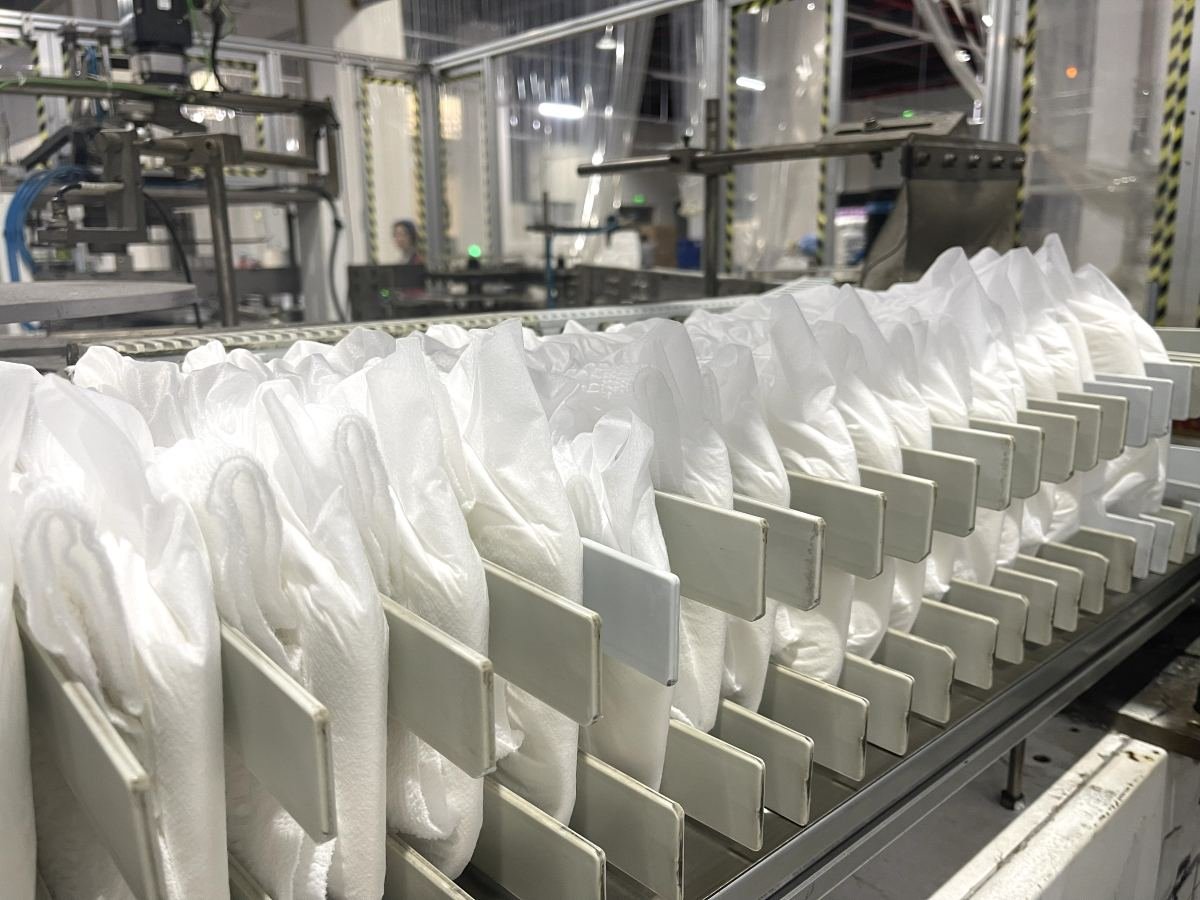
End-to-End Quality Control: Reliable suppliers don’t just inspect the finished box. They enforce strict quality gates at every stage—from testing incoming raw materials to in-line camera monitoring during production.
Active R&D and Innovation: The market moves fast. Your manufacturer should actively invest in the next generation of materials—whether that means thinner core structures, eco-friendly bamboo nonwovens, or advanced odor-locking technologies—helping you stay ahead of market trends.
Logistics and Export Expertise: For international distributors, shipping delays and customs mix-ups are massive hidden costs. A seasoned exporter understands container loading optimization, maritime documentation, and regional compliance labels, ensuring a seamless supply chain.
Building a Smarter Supply Chain with New EcoCare
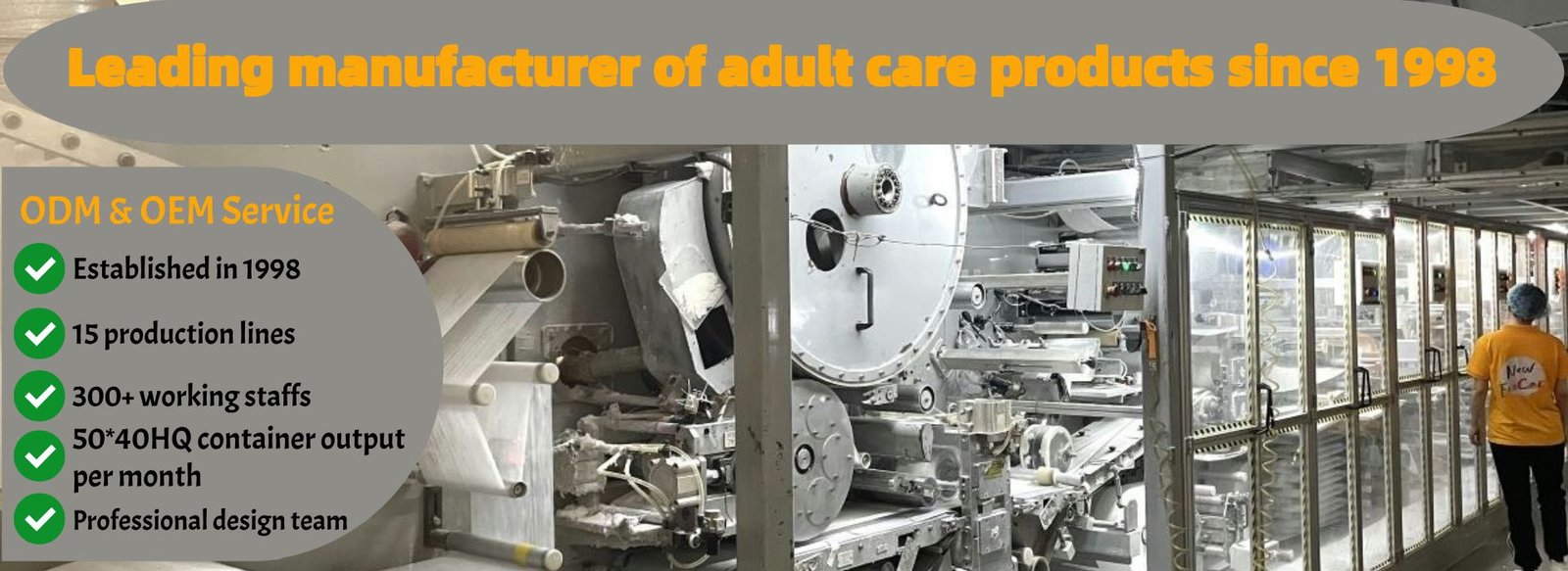
Au Nouveau EcoCare, we believe that the most profitable relationships aren’t transactional—they are strategic. For decades, we have partnered with global distributors, importers, retail brands, and healthcare providers to develop high-margin, market-ready hygiene portfolios.
We provide comprehensive OEM and private label manufacturing across a wide range of categories, including:
Premium and standard adult incontinence pants
Traditional adult diapers and light incontinence pads
Eco-friendly baby and bamboo diapers
Specialized wet wipes and customized hygiene solutions
- Sanitary napkins and period pants for ladies
We support your growth by offering flexible production runs, deep material customization, expert packaging design, and complete international compliance documentation. Whether you are looking to revitalize an existing product line or launch a brand-new private label brand from scratch, our team works side-by-side with you to build a portfolio tailored to your unique business goals.
Ready to optimize your product strategy? Contact the New EcoCare team today, and let’s discuss how to build a high-performance, highly profitable incontinence portfolio for your market.

 French
  English
  Spanish
  Russian
  Arabic
  German
  Italian
  Portuguese
  Greek
Greek