
If you have contacted an OEM manufacturer with a product idea, one of the first questions you may have is: What happens next?
Before mass production starts, there is usually a development stage where your requirements are turned into a physical product sample. This is the part of the OEM manufacturing process where buyers can evaluate whether the proposed product actually matches their expectations.
For disposable hygiene products such as baby diapers, adult diapers, and wet wipes, OEM product sampling is more than simply receiving a sample in the mail. It is a structured process that may involve requirement confirmation, product development, testing, feedback, revisions, and final approval.
A typical workflow looks like this:
Requirement → Initial Development → Sample → Testing → Feedback → Revision → Approval → Mass Production
Understanding each step can help brand owners, procurement managers, importers, and product development teams make decisions earlier and reduce avoidable changes later.
Índice
1. Why OEM Sampling Matters
A product specification on paper does not always tell the whole story.
You may specify a target size, material, absorbency level, packaging format, or product feature, but the actual product needs to be evaluated as a complete system.
For example, a diaper may meet the requested dimensions but still require adjustment to fit, elasticity, thickness, or leakage protection. A wet wipe may use the requested substrate but require further evaluation of softness, moisture level, packaging, or overall user experience.
This is why the sample stage is important.
For an OEM manufacturer, the sample is an opportunity to translate the buyer’s requirements into a manufacturable product. For the buyer, it is an opportunity to check whether the proposed solution is commercially and technically suitable before moving into larger-scale production.
The goal is not to create endless sample revisions. The goal is to reach a clear product specification that both sides understand and can consistently reproduce.
2. What Information Does a Buyer Need to Provide?
Good OEM product development starts with a clear brief.
You do not need to know every technical detail before contacting a manufacturer. However, the more useful information you can provide at the beginning, the easier it is for the manufacturer to recommend an appropriate solution.
A basic OEM sampling brief may include:
- Product category and product type
- Target market or country
- Target customer
- Product positioning
- Desired sizes or dimensions
- Performance expectations
- Preferred materials, if any
- Functional features
- Formato da embalagem
- Pieces per pack
- Expected order quantity
- Target price range
- Expected launch timing
- Existing product samples or references
If you already have a product from another supplier that you want to match or improve, providing a physical sample can also make communication more precise.
For a new brand, however, it is usually more useful to explain the business goal rather than simply specifying individual materials.
For example, instead of saying, “We want the thickest absorbent core,” explain the intended use, target positioning, and expected performance. The OEM manufacturer’s technical team can then evaluate how the product structure should be developed.
3. How the First Sample Is Developed
Once the requirements are clear, the manufacturer begins OEM sample development.
The exact approach depends on the product and the level of customization required.
Some projects start from an existing product structure that can be adjusted to meet the buyer’s requirements. Others require more extensive development involving changes to materials, product structure, dimensions, functional features, or packaging.
For disposable hygiene products, development may involve several components.
Product Structure
For diapers, the manufacturer may review the absorbent core, topsheet, backsheet, acquisition layer, elastic components, leg cuffs, waistband, and fastening system, depending on the product type.
Materiais
Material selection can influence softness, absorbency, breathability, strength, and overall product performance.
Product Dimensions
Size and dimensions need to be considered together with the intended fit and product structure.
Functional Features
Depending on the product, buyers may discuss features such as wetness indicators, elastic components, leak guards, fastening systems, or breathable materials.
Embalagem
Private label projects may also involve packaging design, pack configuration, printing, and product information.
The important point is that these decisions are connected.
Changing one specification can sometimes affect another. For example, changing product dimensions may affect packaging dimensions, while changing pack quantity can affect carton configuration and shipping requirements.
That is why experienced hygiene product OEM manufacturers normally review the complete requirement rather than treating each specification as an isolated decision.
4. What Buyers Should Evaluate
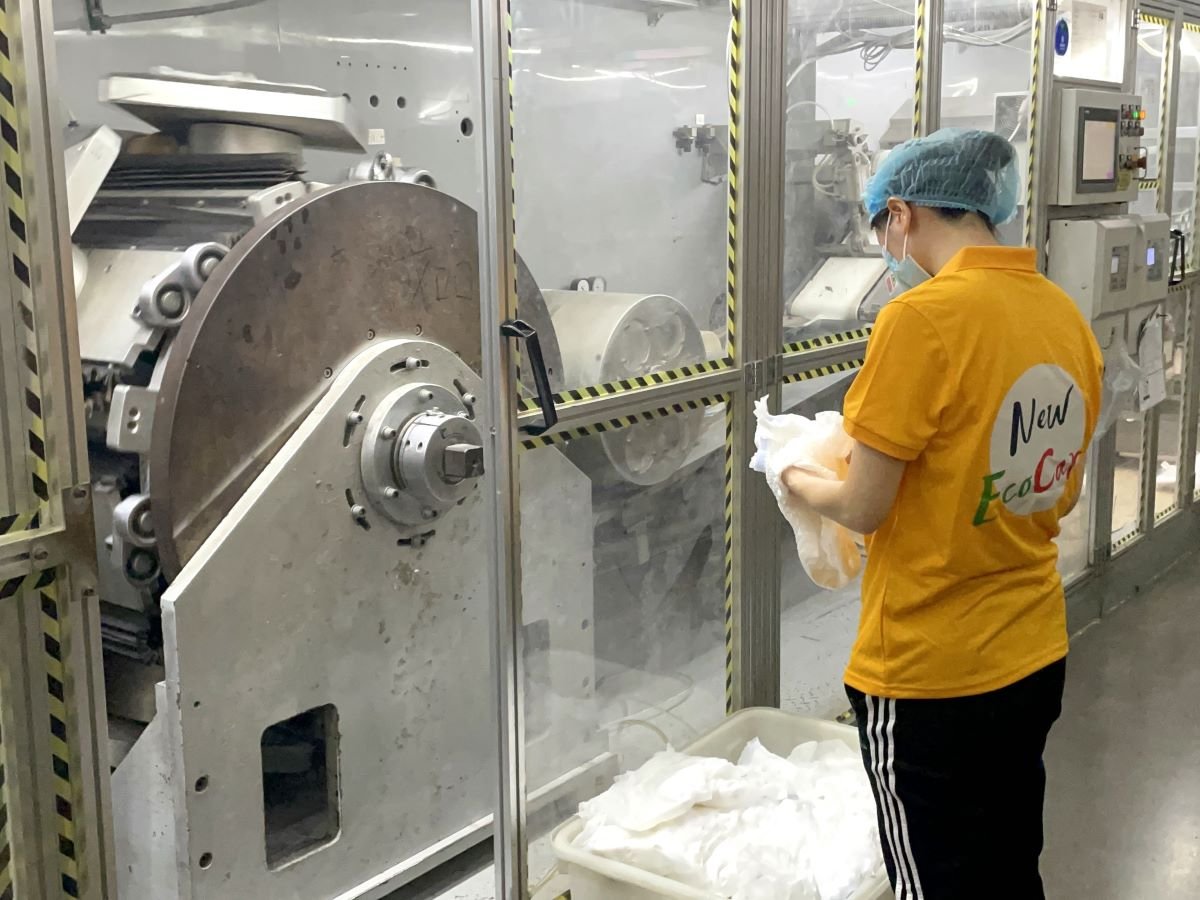
When the first sample arrives, avoid judging it only by appearance.
A professional sample review should consider both physical characteristics and expected product performance.
For diapers, buyers may evaluate:
- Size and dimensions
- Fit and overall construction
- Suavidade
- Espessura
- Absorção
- Desempenho do Rewet
- Proteção contra fugas
- Elasticity
- Waistband and leg cuff construction
- Fastening performance for taped diapers
- Overall appearance
For wet wipes, the evaluation may focus on different factors, such as:
- Nonwoven substrate
- Softness and texture
- Moisture level
- Formula or lotion requirements
- Odor
- Pack format
- Lid or seal performance
- Sheet dimensions
- Overall packaging
For buyers developing [toalhetes húmidos], the same sampling principle applies, although the testing and evaluation criteria will differ from absorbent hygiene products such as diapers.
The evaluation criteria should reflect the product category and the agreed requirements.
For buyers developing a new [fralda de bebé] product line, reviewing the available product structures and customization options can help clarify the sample requirements.
Most importantly, buyers should compare the sample against a defined product brief, rather than making decisions based only on personal preference.
For example, saying “This feels different” is less useful than saying “The surface feels less soft than the reference sample” or “The sample appears thicker than the agreed specification.”
Specific observations are easier for an OEM manufacturer to investigate and correct.
5. Product Testing and Sample Verification
Physical evaluation is only one part of sample verification.
Depending on the product and target market, buyers may require additional testing before product sample approval.
For diapers, testing may include performance-related checks such as:
- Absorção
- Rewet
- Proteção contra fugas
- Dimensions
- Product construction
- Elastic performance
For wet wipes, verification may involve:
- Material characteristics
- Moisture content
- Formula requirements
- Packaging integrity
- Microbiological or other applicable testing
The specific testing program should be agreed according to the product, intended market, and applicable requirements.
Buyers can also review our [Controlo de qualidade e conformidade] resources when evaluating how quality requirements are managed throughout OEM production.
This is an important distinction: not every OEM sample requires the same testing procedure.
A professional sampling process should therefore define what needs to be checked and what constitutes acceptance before the project moves forward.
For buyers developing baby diapers specifically, the sample-testing stage can be connected with a more detailed performance evaluation. The existing [How to Verify Baby Diaper Performance Before Mass Production] guide provides a useful reference for this part of the buyer journey.
6. Giving Effective Feedback to an OEM Manufacturer
Feedback is one of the most important parts of OEM sample development.
However, vague feedback can slow the process down.
Instead of:
“The diaper is not right.”
Try to identify the specific issue:
- “The waist feels too loose compared with the reference.”
- “The sample is thicker than our target.”
- “The absorbency needs to be improved.”
- “The topsheet feels different from the approved reference.”
- “The packaging artwork needs to be adjusted.”
- “The leg cuff structure does not match the agreed specification.”
It is also helpful to separate feedback into three categories:
Must Change
Issues that prevent the sample from being approved.
Preferred Change
Improvements that would make the product closer to the buyer’s expectations but may not prevent approval.
No Change Required
Features that are already acceptable and should remain unchanged.
This makes communication much more efficient.
For international OEM projects, written feedback is particularly useful because product development often involves multiple people, including procurement, product development, quality, packaging, and the manufacturer’s technical team.
A clear feedback record helps everyone work from the same reference.
7. When Are Sample Revisions Necessary?
Not every project needs multiple rounds of sampling.
If the initial requirements are clear and the manufacturer’s proposed structure is close to the target, the first sample may require only minor adjustments.
Revisions are more likely when:
- Product requirements change
- The sample does not meet the agreed performance target
- Materials need to be changed
- Size or fit needs adjustment
- Packaging specifications change
- A functional feature needs modification
- Testing identifies an issue
- The buyer changes the product positioning
There is nothing unusual about making reasonable revisions during development.
The important issue is knowing porquê a revision is being made.
A good OEM development process should gradually reduce uncertainty rather than repeatedly changing different specifications without a clear objective.
This is also where production consistency becomes important. Once the product is approved, the manufacturer needs to reproduce the agreed specifications consistently during mass production.
Buyers interested in this topic can also review [Reducing Production Variance: Best Practices for OEM Partners] to understand why process control and specification management matter after development.
8. Final Sample Approval
The sample should not be considered approved simply because the buyer says, “Looks good.”
Before final approval, it is better to confirm the key specifications in writing.
Depending on the project, the approved specification may include:
- Product type
- Size and dimensions
- Product structure
- Materiais
- Absorbency or performance requirements
- Functional features
- Product artwork
- Design de embalagens
- Pieces per pack
- Carton configuration
- Other agreed requirements
The approved sample should serve as a practical reference for production.
This step is especially important for private label product samples, because the buyer is not only approving the physical product. They are establishing the standard that the manufacturer is expected to reproduce under the buyer’s brand.
For this reason, buyers should keep a clear record of the final approved sample and corresponding specifications.
9. Moving From Approved Sample to Mass Production
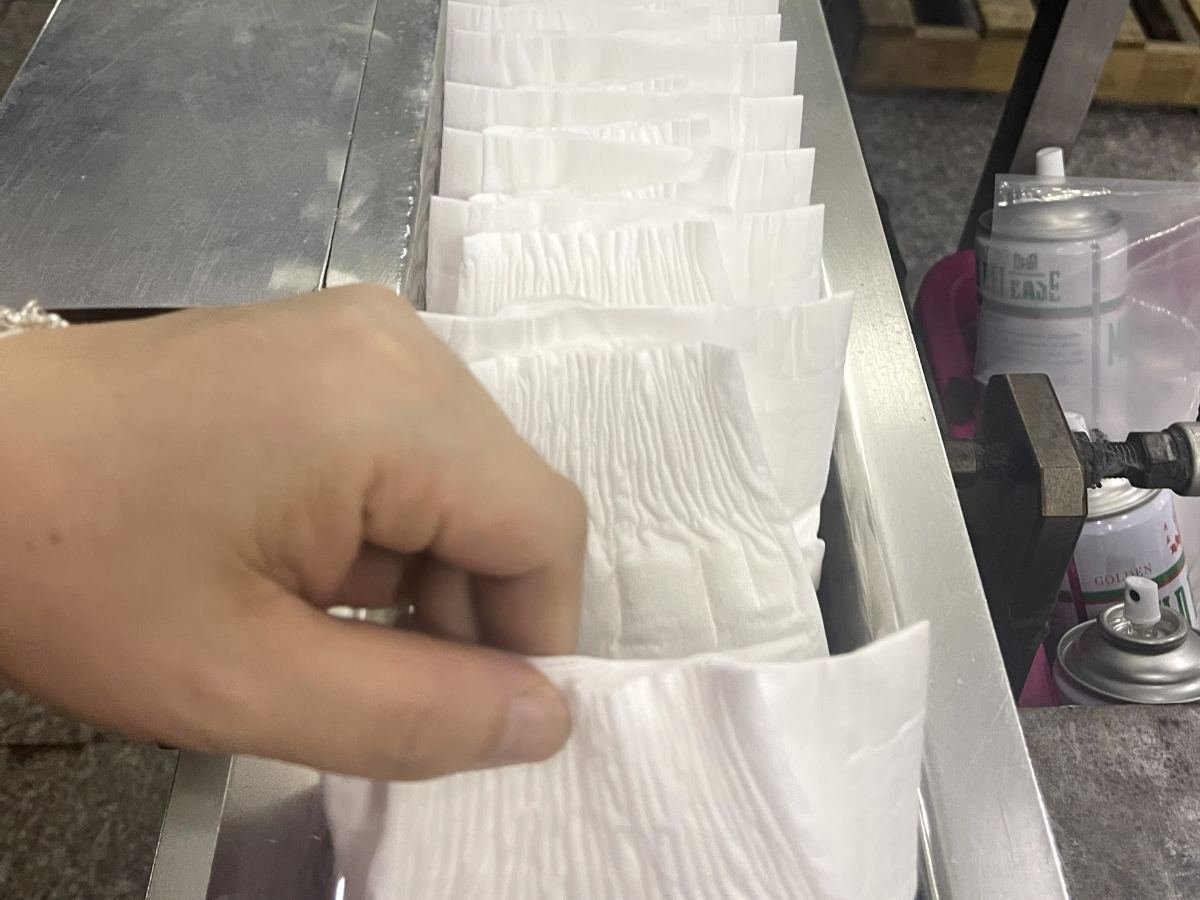
Once the sample and specifications are approved, the project can move toward mass production.
This does not mean the factory immediately starts producing the complete order.
There may still be production preparation, including:
- Raw material purchasing
- Inspeção de material recebido
- Packaging preparation
- Production planning
- Production line scheduling
- Final specification confirmation
- Quality planning
This is where the sampling stage connects with the broader OEM manufacturing process.
The purpose of a well-managed sample stage is to make sure the manufacturer knows exactly what needs to be produced before significant quantities are manufactured.
For buyers, this can also make procurement planning easier because product specifications, packaging requirements, and production expectations are clearer before the order enters full production.
If you want to understand the broader journey from product requirements through manufacturing and delivery, see the [OEM Manufacturing Knowledge Center] and its OEM Manufacturing Process section.
10. Common Sampling Mistakes Buyers Should Avoid
OEM sampling can be much more efficient when buyers avoid a few common mistakes.
1. Starting With Too Many Requirements
Trying to customize every component at once can make the development process unnecessarily complicated.
Focus first on the specifications that matter most to your target market.
2. Evaluating Only the Appearance
A sample can look good but still require changes to performance, fit, construction, or packaging.
Evaluate the product against measurable requirements wherever possible.
3. Changing Requirements Too Frequently
If the product concept changes after every sample, the manufacturer has no stable target to develop toward.
Finalize the key requirements before starting development whenever possible.
4. Giving Vague Feedback
“Not good enough” does not tell the manufacturer what needs to change.
Specific feedback is much more useful.
5. Approving Without Documenting Specifications
A physical sample alone may not capture every agreed requirement.
Document the final materials, dimensions, performance expectations, packaging, and other important specifications.
6. Treating Sampling as Separate From Production
The approved sample should connect directly to the mass-production specification.
Otherwise, there can be a gap between what was approved and what is eventually manufactured.
A Practical OEM Sampling Checklist
Before approving your sample, ask:
Produto
- Does the product match the requested type and structure?
- Are the dimensions correct?
- Are the materials consistent with the agreed requirements?
Performance
- Does it meet the agreed performance expectations?
- Have the relevant tests been completed?
- Are any remaining issues documented?
Conceção
- Is the product artwork correct?
- Is the packaging design approved?
- Are all product details and languages correct?
Commercial
- Is the pack quantity confirmed?
- Is the SKU structure finalized?
- Are production and packaging requirements clear?
Produção
- Can the approved specification be reproduced consistently?
- Has the final specification been documented?
- Is both sides’ understanding aligned before mass production?
Considerações finais
OEM product sampling is the bridge between a product idea and a production-ready specification.
The process usually follows a simple logic:
Requirement → Development → Sample → Testing → Feedback → Revision → Approval → Production
For B2B buyers, the most important thing is not simply receiving a sample quickly. It is making sure the sample gives both the buyer and manufacturer a clear understanding of what needs to be produced.
A good sampling process helps identify issues early, improves communication, and creates a documented reference for mass production.
Whether you are developing baby diapers, produtos para incontinência de adultos, wet wipes, or another disposable hygiene product, the same principle applies: define the requirements clearly, evaluate the sample systematically, give specific feedback, and document the approved specification.
At New EcoCare, OEM and private label projects can cover product development, customization, sampling, quality control, packaging, and production support. If you are preparing a new hygiene product project, start with your target market, product requirements, and expected order volume, then discuss the development path with an experienced manufacturing partner.
Ready to discuss your product requirements? Contact the New EcoCare OEM team to start your project.

 Portuguese
  English
  Spanish
  Russian
  Arabic
  German
  French
  Italian
  Greek
Greek