
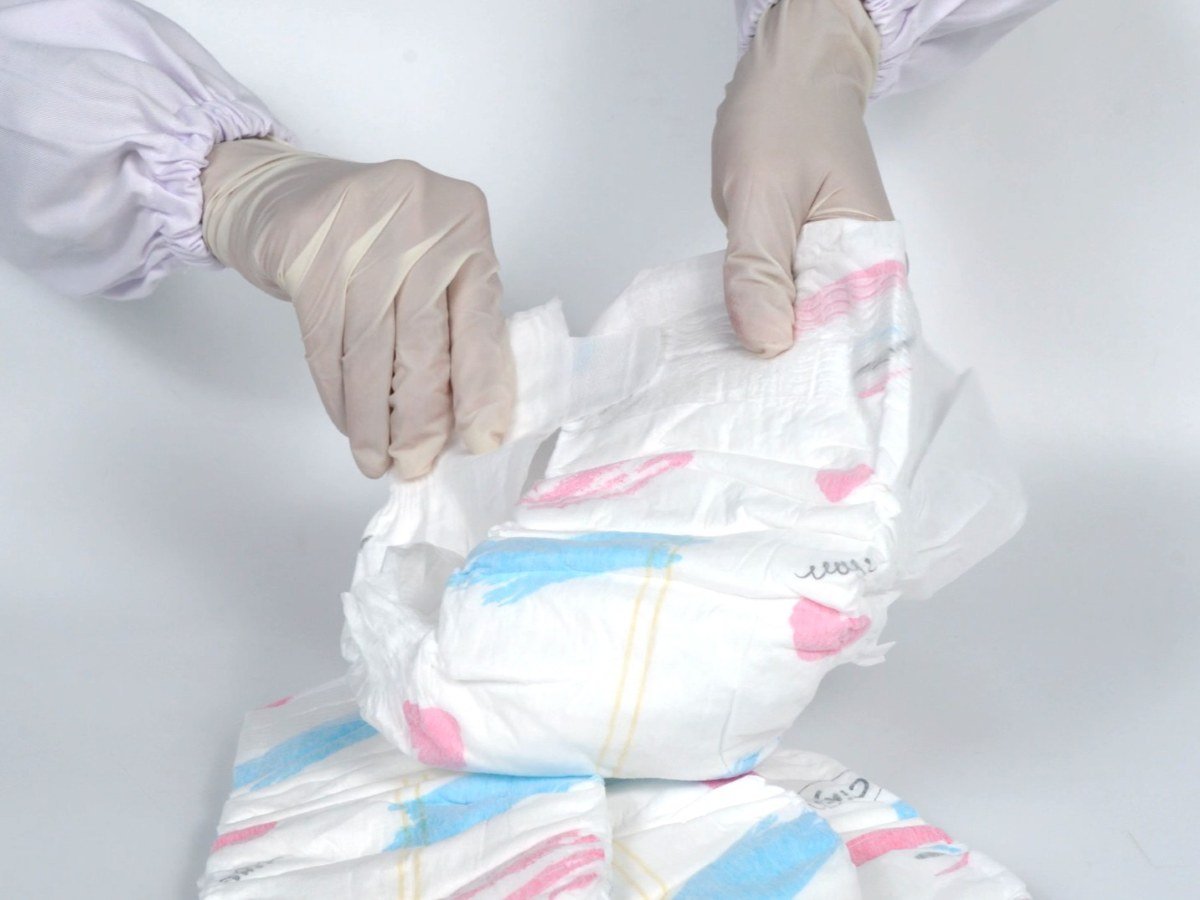
A baby diaper can have excellent absorbency, soft materials, and strong leak protection — and still perform poorly if the fit is wrong.
For OEM buyers, this is an important point to consider during product development. Diaper fit is not simply about whether a diaper looks comfortable. It affects how the product sits around the baby’s waist and legs, how well it moves with the body, and how effectively the diaper helps contain liquid.
This is why baby diaper fit should be evaluated before mass production, alongside absorbency, material performance, breathability, and quality control.
For brands developing Fraldas de bebé OEM ou fraldas de bebé de marca própria, a well-designed fit can help reduce leakage complaints, improve comfort, and create a more consistent user experience across different sizes.
Índice
1. Why Diaper Fit Matters Beyond Comfort
When buyers evaluate diaper performance, absorbency is often one of the first specifications they look at.
But absorbency alone does not determine whether a diaper performs well in real use.
Imagine a diaper with a highly absorbent core. If the leg openings are too loose, liquid may escape before it reaches the absorbent area. If the waistband is too tight, the diaper may leave pressure marks or feel restrictive. If the crotch is too wide or too narrow, the absorbent core may not stay in the right position during movement.
In other words, fit determines how well the diaper’s different components work together on the body.
A good fit should provide:
- Secure contact around the waist
- Appropriate sealing around the legs
- Enough room for natural movement
- Stable positioning of the absorbent core
- Comfortable elasticity without excessive pressure
- Consistent coverage for the intended size range
For OEM buyers, this means fit should be treated as a product-development specification rather than something checked only after production.
This topic is part of New EcoCare’s Baby Care Knowledge Hub, where OEM buyers can explore related guidance on diaper performance, materials, testing, and manufacturing.
2. What Makes a Baby Diaper Fit Well?
There is no single measurement that determines good fit.
Instead, several design elements work together.
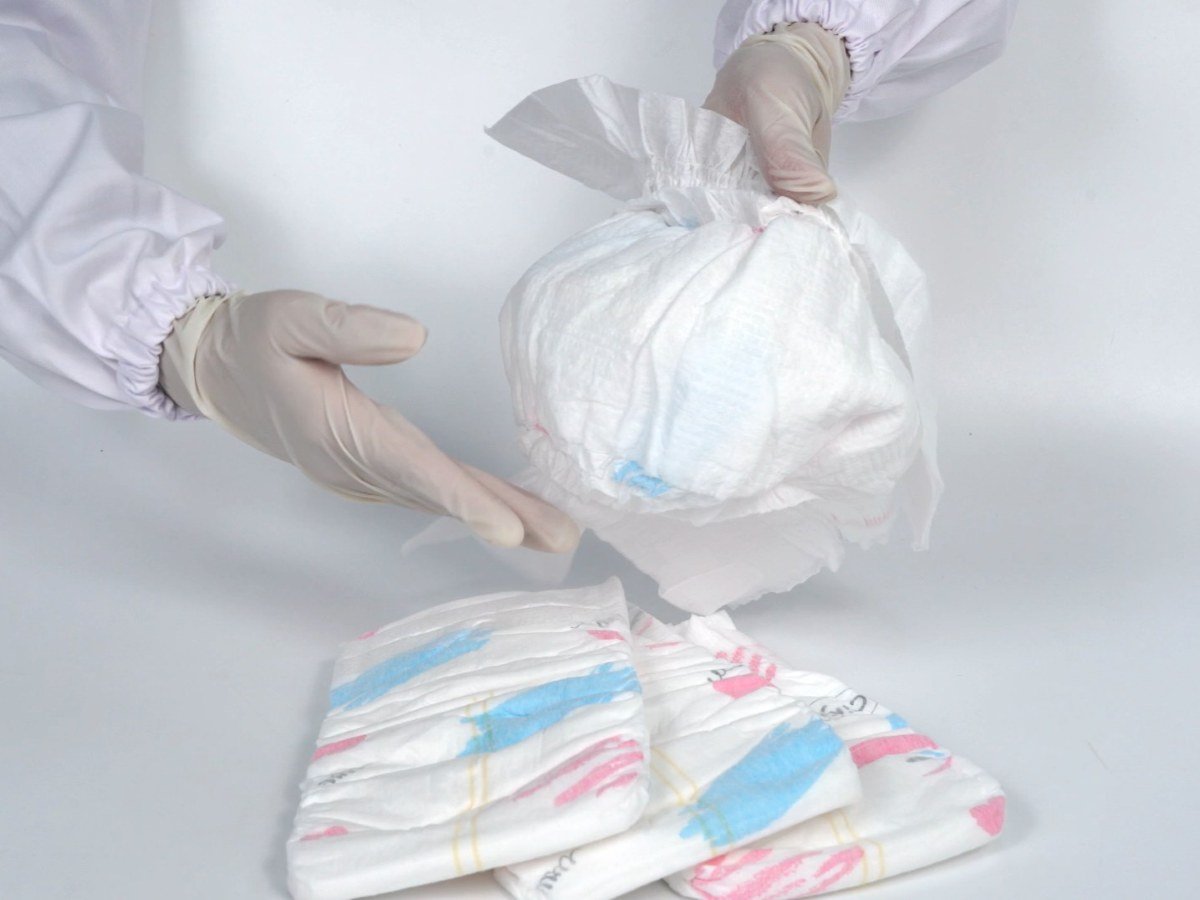
A well-fitting diaper should follow the baby’s body without creating excessive gaps or pressure points. The diaper should remain reasonably stable when the baby moves, while the absorbent core stays positioned where it is needed.
The most important areas to evaluate are the waist, legs, crotch, elastic components, and overall diaper shape.
This is also where baby sizing becomes important.
A size should not be evaluated only by the printed size label. The actual dimensions, elastic recovery, shape, and coverage need to work together for the intended weight and body range.
For OEM development, the goal is not simply to make a diaper “bigger” or “smaller.” The goal is to develop a balanced structure for each size.
3. Key Areas to Evaluate
Waist Fit
The waistband helps keep the diaper securely positioned around the baby’s body.
A waistband that is too loose may create gaps between the diaper and the baby’s waist. A waistband that is too tight may create unnecessary pressure and reduce comfort.
OEM buyers should therefore look at:
- Waistband width and position
- Elasticity and recovery
- Waist circumference after fitting
- Whether the diaper stays in position during movement
- Whether there are visible gaps or excessive compression
The right balance is important. The waistband should provide enough tension to keep the diaper stable without making the product feel restrictive.
Leg Fit
The leg area is one of the most important parts of diaper fit because it is closely related to leak protection.
The leg openings need to follow the baby’s body while allowing enough flexibility for movement.
If the leg opening is too loose, gaps may develop around the thighs. If it is too tight, the diaper may create excessive pressure or become uncomfortable.
OEM buyers should check whether the leg elastics recover consistently and whether the leak guards remain properly positioned.
A useful evaluation is to observe the diaper both in a static position and after simulated movement.
Crotch Width
Crotch width influences both comfort and performance.
If the crotch is too wide, the diaper may feel bulky and may not follow the baby’s body effectively. If it is too narrow, coverage can become insufficient and the absorbent core may not provide adequate protection in the intended area.
The crotch should therefore be evaluated together with the core width, leg openings, and overall diaper shape.
This is particularly important when developing different diaper sizes because the proportions should remain balanced as the product scales from one size to another.
Elasticity
Elastic components provide flexibility and help the diaper maintain contact with the body.
But stronger elasticity does not automatically mean better fit.
What matters is the relationship between:
- Resistência elástica
- Elastic recovery
- Elastic placement
- Diaper dimensions
- Material flexibility
- Intended size range
During diaper fit testing, buyers should pay attention to whether the elastic returns to its intended position after stretching and whether the diaper remains stable after movement.
Overall Shape
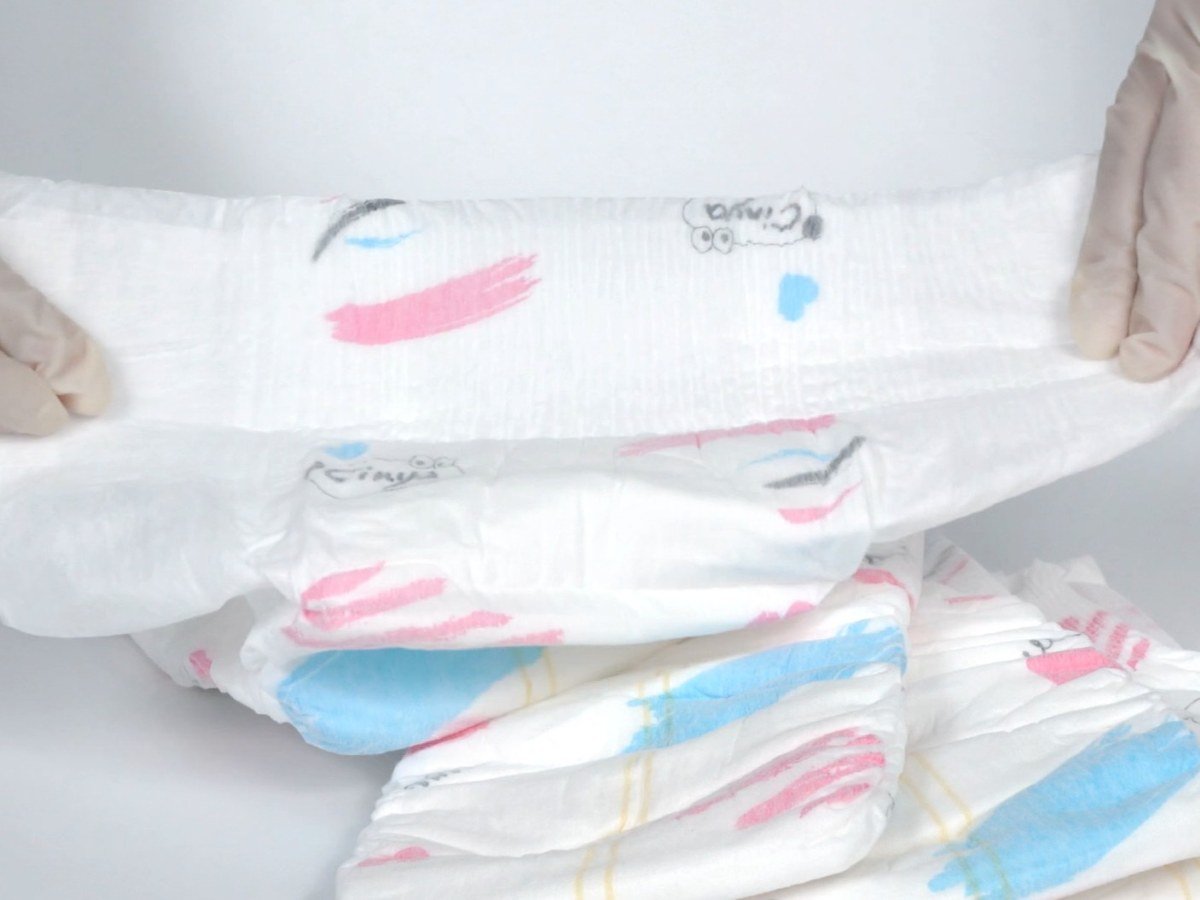
A diaper’s overall shape affects how all of these components work together.
The front, back, waist, leg openings, crotch, absorbent core, and fastening system should form a coordinated structure.
This is why simply changing one measurement may not solve a fit problem.
For example, increasing the overall width may create more coverage but could also make the product bulkier. Increasing elastic tension may improve stability but could affect comfort.
Good diaper design requires these variables to be evaluated together.
4. How Poor Fit Can Increase Leakage Risk
Leakage is often associated with absorbency, but fit can also play an important role.
A diaper’s absorbent core can only manage liquid effectively when the liquid reaches the absorbent structure and the product remains correctly positioned.
Poor fit may contribute to leakage in several ways.
Gaps around the legs:
If the leg opening does not maintain sufficient contact with the body, liquid may escape through the gap.
Movement-related displacement:
If the diaper moves out of position during crawling, sitting, walking, or other activities, the absorbent core and leak guards may no longer be positioned optimally.
Poor crotch positioning:
If the crotch structure does not follow the body correctly, liquid distribution may become less predictable.
Insufficient coverage:
A diaper that is too small for the intended body range may not provide adequate front, back, or side coverage.
This is why baby diaper leakage should not automatically be treated as an absorbency problem.
When a leakage issue appears during development, OEM buyers should ask whether the root cause is related to absorbency, fit, structure, materials, or a combination of factors.
For a deeper look at overall diaper performance evaluation, buyers can also refer to New EcoCare’s Baby Diaper Performance Testing Guide.
5. Fit vs. Absorbency: Why Both Matter
Fit and absorbency are closely connected, but they are not the same thing.
A diaper with high absorbency may perform well under controlled conditions but still experience leakage if the product does not stay correctly positioned.
This is particularly important when developing ultra-thin baby diapers, where buyers need to consider not only the reduced profile but also the relationship between the absorbent core, elastic components, crotch structure, and overall fit.
At the same time, a well-fitting diaper cannot compensate for an absorbent core that does not meet the product’s performance requirements.
For OEM buyers, the better approach is to evaluate both:
Fit performance
- Waist stability
- Leg sealing
- Crotch positioning
- Elastic recovery
- Overall coverage
- Movement stability
Desempenho de absorção
- Liquid absorption
- Acquisition speed
- Rewet control
- Core distribution
- Leakage resistance
These factors should be considered together during product development.
Novos EcoCare's Moisture Management Technologies in Baby Diapers article provides a more detailed look at how absorption, rewet control, and other moisture-management factors influence diaper performance.
6. How OEM Manufacturers Evaluate Baby Diaper Fit
A professional OEM development process should evaluate fit during the sample stage rather than waiting until mass production.
The process normally starts with the product specification.
The buyer and manufacturer should define the target size range, intended weight range, diaper structure, materials, absorbency requirements, and key design features.
The manufacturer can then develop samples and evaluate the physical dimensions and structure.
Important measurements may include:
- Overall diaper length
- Front and back width
- Crotch width
- Waist dimensions
- Leg opening dimensions
- Elastic placement
- Core dimensions
- Fastening position
The sample should then be evaluated as a complete product rather than by individual measurements alone.
For example, a diaper may meet the target crotch width but still have poor fit if the leg elastics or overall shape are not properly balanced.
This is why experienced OEM manufacturers treat diaper design as a system.
You can learn more about the broader development workflow in How Does the OEM Baby Diaper Manufacturing Process Work?.
7. Fit Testing During Sample Development
Fit should be checked during several stages of sample development.
Stage 1: Initial Sample
The first sample helps identify obvious design issues.
The OEM team can review the diaper’s dimensions, shape, elasticity, fastening system, coverage, and general positioning.
At this stage, the goal is not necessarily to finalize every specification. It is to identify major adjustments before moving forward.
Stage 2: Revised Sample
After feedback, the manufacturer can adjust dimensions, elastic placement, shape, or other design parameters.
The revised sample should be compared with the previous version rather than evaluated independently.
This makes it easier to understand whether a change actually improves the product.
Stage 3: Performance Confirmation
Once the fit is considered acceptable, it should be evaluated together with other performance characteristics such as absorbency, rewet, leakage resistance, softness, and breathability.
This prevents a situation where improving one characteristic unintentionally creates a problem somewhere else.
8. What Brand Owners Should Check Before Mass Production
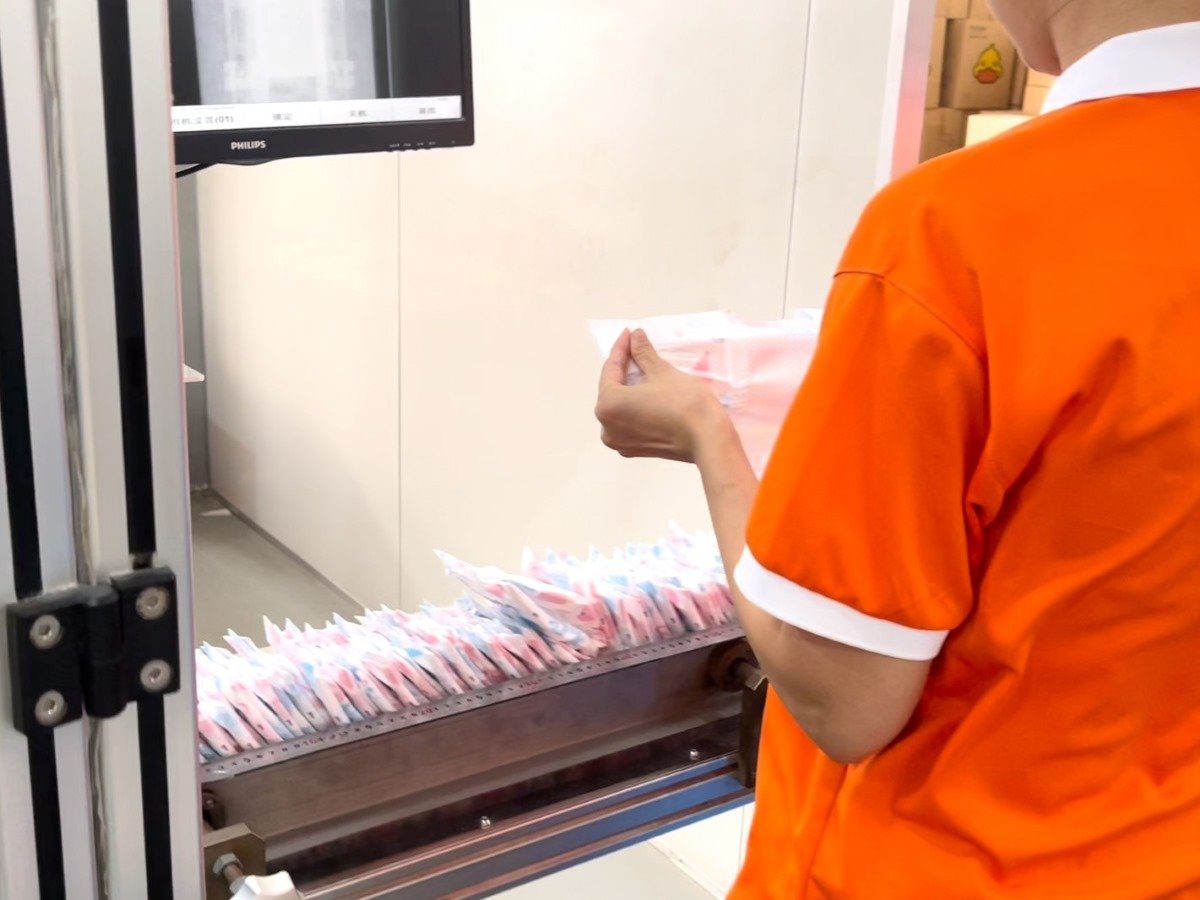
Before approving a diaper for mass production, OEM buyers should have a clear fit checklist.
1. Confirm the target size range
Make sure each size has a clearly defined intended weight or body range.
2. Review actual product dimensions
Do not rely only on the size name. Check the actual dimensions of the approved sample.
3. Check waist and leg elasticity
The elastic should provide stable contact without excessive tension.
4. Evaluate the crotch structure
Check whether the crotch width and absorbent core position provide adequate coverage without unnecessary bulk.
5. Compare multiple sizes
A design that works well in one size may not automatically scale perfectly to another size.
Each size should be reviewed individually.
6. Check fit together with leakage performance
If leakage occurs during testing, investigate whether the issue is related to fit, absorbency, structure, or material performance.
For brands developing customized Fraldas de bebé OEM, New EcoCare can support product development from diaper structure and sizing to materials, absorbency, packaging, and private label customization.
7. Freeze the approved specification
Once the sample is approved, the final dimensions and key specifications should be clearly documented.
This becomes an important reference for production consistency and future quality control.
For buyers developing customized products, New EcoCare’s Fraldas para bebé OEM page explains the available customization options, including size, absorbency, materials, and packaging.
9. Questions to Ask Your OEM Manufacturer
Before starting mass production, brand owners should ask their OEM partner specific questions about fit.
Here are several practical questions to include in your development discussion:
- How do you evaluate baby diaper fit during sample development?
- What dimensions do you measure for each size?
- How do you determine the appropriate waist and leg elasticity?
- How do you evaluate fit together with leakage performance?
- Are different sizes developed and checked separately?
- What happens if the approved sample shows a fit issue?
- Can the diaper shape, crotch width, or elastic placement be customized?
- How are the final approved dimensions documented?
- How do you ensure the mass-produced diapers remain consistent with the approved sample?
If you are also developing calças para bebés, it is worth asking your OEM manufacturer how waistband elasticity, leg openings, sizing, and movement-related fit are evaluated for pull-up styles.
A manufacturer that can clearly explain these points is generally better positioned to support long-term OEM product development.
Final Takeaway
Baby diaper fit should be evaluated as a complete product-performance factor, not simply as a comfort feature.
For OEM buyers, the key areas to review include waist fit, leg fit, crotch width, elasticity, overall shape, coverage, and stability during movement.
Most importantly, fit should be evaluated alongside absorbency and leakage performance during sample development.
A diaper that absorbs well but does not stay properly positioned may still create a poor user experience. Likewise, a comfortable shape cannot compensate for inadequate absorbency or moisture management.
For brands developing fraldas de bebé de marca própria, the best approach is to define fit requirements early, evaluate samples systematically, document the approved specifications, and work with an OEM manufacturer that can adjust product structure based on actual development results.
When fit, absorbency, materials, and manufacturing consistency are developed together, the final product has a much stronger foundation for reliable performance in the market.

 Portuguese
  English
  Spanish
  Russian
  Arabic
  German
  French
  Italian
  Greek
Greek