If you are planning to launch your own baby diaper brand, understanding how diapers are actually manufactured can help you make better decisions about suppliers, product specifications, quality, pricing, and production timelines.
Many brand owners begin by contacting an OEM manufacturer with a simple request: “I need private label baby diapers.” But professional OEM production involves much more than putting a logo on an existing product.
Сайт OEM baby diaper manufacturing process normally starts with understanding the brand’s requirements and continues through material selection, product development, sample approval, production preparation, manufacturing, quality control, packaging, and shipment.
Understanding each stage helps brand owners communicate more effectively with suppliers and avoid common problems before mass production begins.
This guide walks through the typical baby diaper manufacturing process and explains what buyers should expect at each stage.
Оглавление
What Is OEM Baby Diaper Manufacturing?
OEM, or Original Equipment Manufacturing, means that a manufacturer produces a product according to a customer’s specifications, brand requirements, or agreed product concept.
For a baby diaper brand, OEM manufacturing can include much more than producing the diaper itself.
Depending on the project, an OEM manufacturer may support:
- Product structure selection
- Выбор материала
- Absorbency requirements
- Diaper sizing
- Product customization
- Packaging development
- Sample production
- Контроль качества
- Finished product inspection
- Mass production
- Shipment preparation
This is why choosing an experienced manufacturing partner is important.
If you are still comparing suppliers, you can first read our guide on choosing the right OEM baby diaper manufacturer before starting the production process.
The exact process can vary between manufacturers, but most professional частное производство подгузников projects follow a similar sequence.
Step 1: Understanding the Brand’s Product Requirements
The OEM process begins with a conversation between the brand and the manufacturer.
Before discussing production, the manufacturer first needs to understand what the buyer wants to create.
Typical requirements include:
- Target market
- Target consumer
- Product type
- Diaper sizes
- Expected absorbency
- Product thickness
- Material preferences
- Формат упаковки
- Позиционирование бренда
- Estimated order volume
For example, a premium baby care brand may prioritize softness, comfort, premium packaging, and advanced product features.
A value-focused distributor may instead prioritize reliable performance, competitive cost, and efficient packaging.
Similarly, an environmentally focused brand may be interested in bamboo viscose materials or other sustainability-related product options.
This first stage is important because there is no single diaper structure that is ideal for every market.
The manufacturer needs to understand the business objective before recommending a product solution.
What Should Brand Owners Prepare?
Before contacting a baby diaper factory, it helps to prepare a basic product brief.
You do not need to know every technical detail. A good OEM manufacturer should help you work through those decisions.
However, it is useful to provide:
- Target market or country
- Expected product positioning
- Desired sizes
- Approximate order quantity
- Предпочтения в отношении упаковки
- Target price range
- Existing product references, if available
Clear initial requirements help the development process move forward more efficiently.
Step 2: Selecting Materials and Diaper Structure
Once the brand and manufacturer agree on the product requirements, the next stage is selecting the appropriate materials and diaper structure.
A disposable baby diaper consists of multiple functional layers and components. Each one contributes to comfort, absorbency, leakage protection, fit, or overall product performance.
Key components may include:
- Верхний лист
- Acquisition/distribution layer
- Absorbent core
- SAP
- Пушистая целлюлоза
- Подложка
- Эластичные компоненты
- Манжеты на штанинах
- Пояс на талии
- Fastening system for taped diapers
The choice of materials affects both product performance and manufacturing cost.
For a deeper explanation of the materials used in baby diapers, see our existing guide, baby diaper materials.
Choosing the Right Diaper Structure
For this reason, different brands may choose different product structures.
Например:
Wood-pulp core diapers can provide a traditional absorbent core structure with fluff pulp and SAP.
Ультратонкие подгузники focus on reducing bulk while maintaining effective absorbency and leakage protection.
Bamboo baby diapers can use bamboo viscose in selected components to support a more sustainability-focused product positioning.
The right choice depends on your target market, product positioning, performance requirements, and budget.
For an OEM project, the goal is not simply to select the most expensive materials. It is to create the right balance between performance, comfort, cost, and brand positioning.

Step 3: Product Development and Sample Approval
After the brand and manufacturer discuss the initial specifications and materials, the manufacturer can begin product development and sample preparation.
This stage turns the product concept into a physical sample that the brand owner can evaluate.
The brand owner can review the sample for:
- Size and fit
- Мягкость
- Впитываемость
- Толщина
- Elasticity
- Защита от утечек
- Overall appearance
- Packaging concept
For new brands, however, this stage is particularly important because product specifications that look good on paper may still need adjustments after physical evaluation.
Why Sample Approval Matters
Mass production should not begin simply because the basic product specifications have been discussed.
The brand owner and manufacturer should first agree on a final sample or specification standard.
Once the brand approves the sample, both sides can use it as a reference for subsequent production.
This helps both sides establish a clear understanding of what the final product should look and perform like.
If your project requires extensive product differentiation, it is also useful to review customization options for private label diapers before finalizing the product.
Step 4: Production Preparation and Packaging Readiness
Once the brand approves the product specifications and samples, the manufacturer moves into production preparation.
This stage involves more than simply arranging a production date. Before the manufacturer schedules production, the team confirms all key materials, equipment, specifications, and packaging requirements.
The preparation normally includes:
- Raw material preparation
- Packaging material preparation
- Production specification confirmation
- Equipment inspection and adjustment
- Production scheduling
- Packaging method confirmation
Packaging Materials Need to Be Ready Before Production
For baby diaper production, packaging is not necessarily a separate process that takes place after manufacturing is completed.
Packaging forms the final stage of the production line. Therefore, the required packaging materials must be ready before the manufacturer can schedule production.
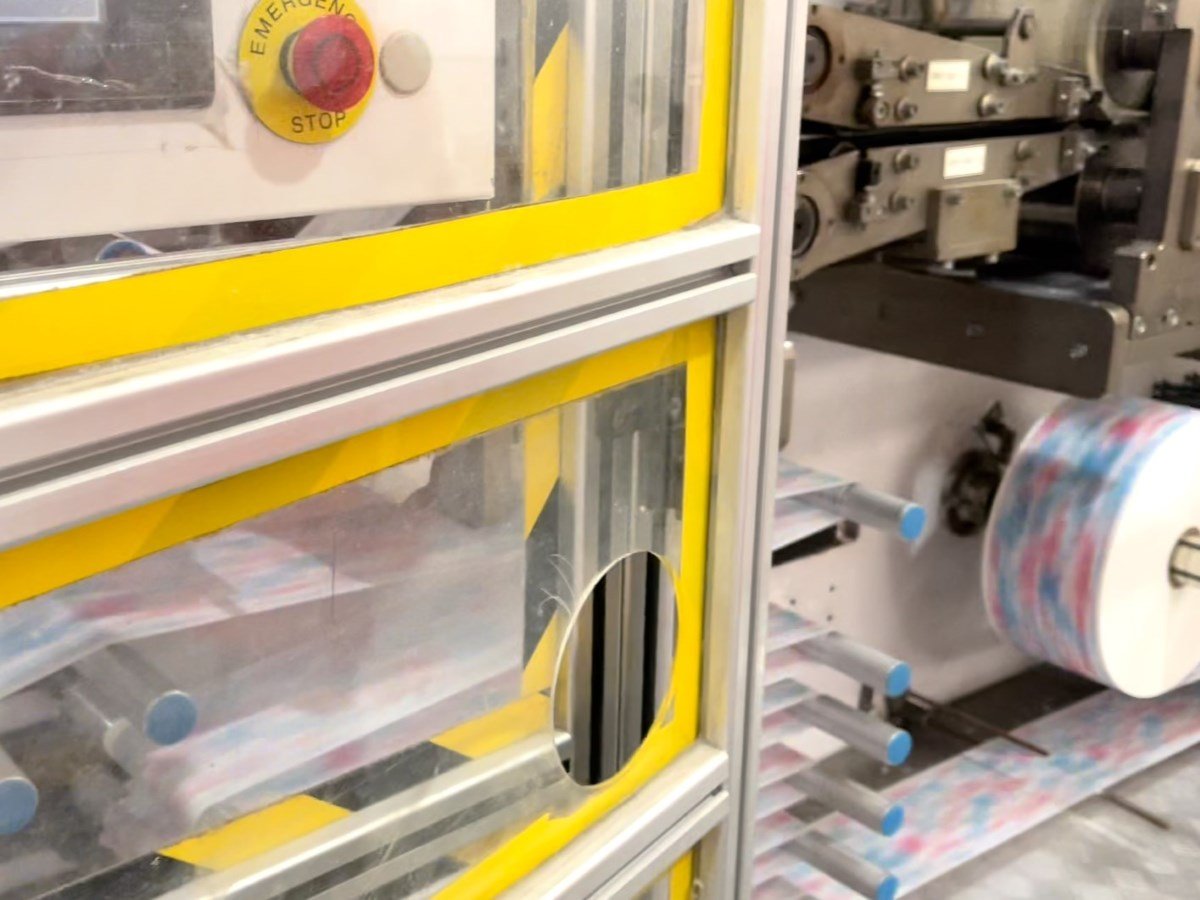
Depending on the product and packaging specifications, the production team may use automatic or manual packaging.
For example, smaller packaging formats and suitable pack counts may work well with automatic packaging equipment. However, a large packaging format may exceed the equipment’s supported range. If the bag height is too large for the equipment, the production team may need to use manual packaging instead.
As a result, packaging specifications can affect not only the appearance of the final product but also the production method and efficiency.
For brand owners, it is therefore important to confirm packaging size, pack count, bag format, and other packaging requirements early in the OEM development process.
Once the required materials and packaging are ready, the team inspects and adjusts the equipment before confirming the production schedule.
Step 5: Baby Diaper Manufacturing
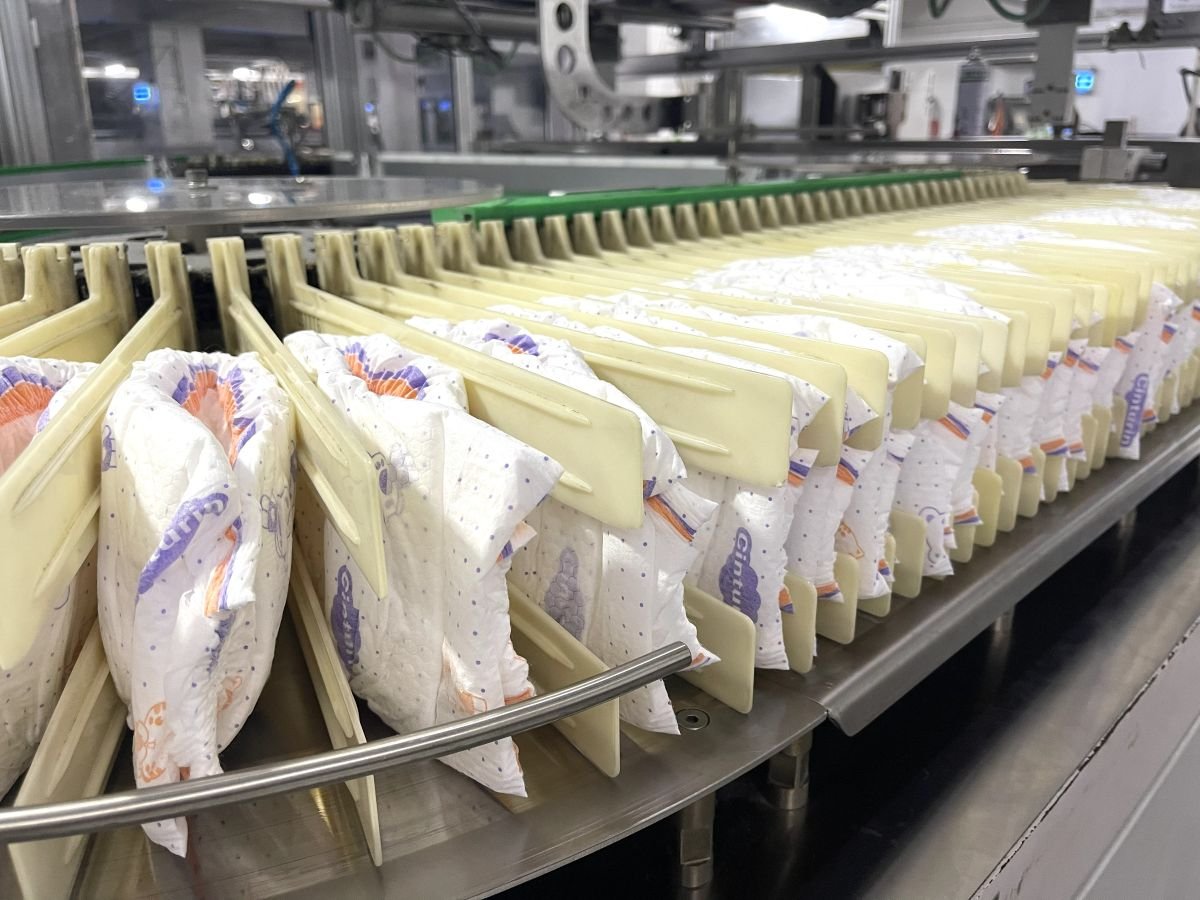
After the production team completes the preparation, the baby diapers enter the manufacturing process.
While the exact equipment configuration varies depending on the diaper type and production line, the general process involves multiple stages that combine the different materials into the finished diaper.
A simplified production flow can be described as:
Raw Materials → Diaper Formation → Cutting & Shaping → Folding → Automated Detection → Packaging
During production, the production line combines different components according to the approved product specifications. These may include the topsheet, absorbent core, SAP, backsheet, elastic components, and other functional materials.
The production line then shapes, cuts, and folds the diapers before sending them through automated detection systems and into the packaging stage.
Packaging is completed as the final stage of the production line, either through automatic packaging equipment or manual packaging depending on the packaging specifications.
Because production, detection, and packaging are closely connected, the team inspects and adjusts the production line before manufacturing begins.
For this reason, the brand and manufacturer should confirm the approved product specifications and packaging requirements before production starts.
Step 6: Quality Control and Testing
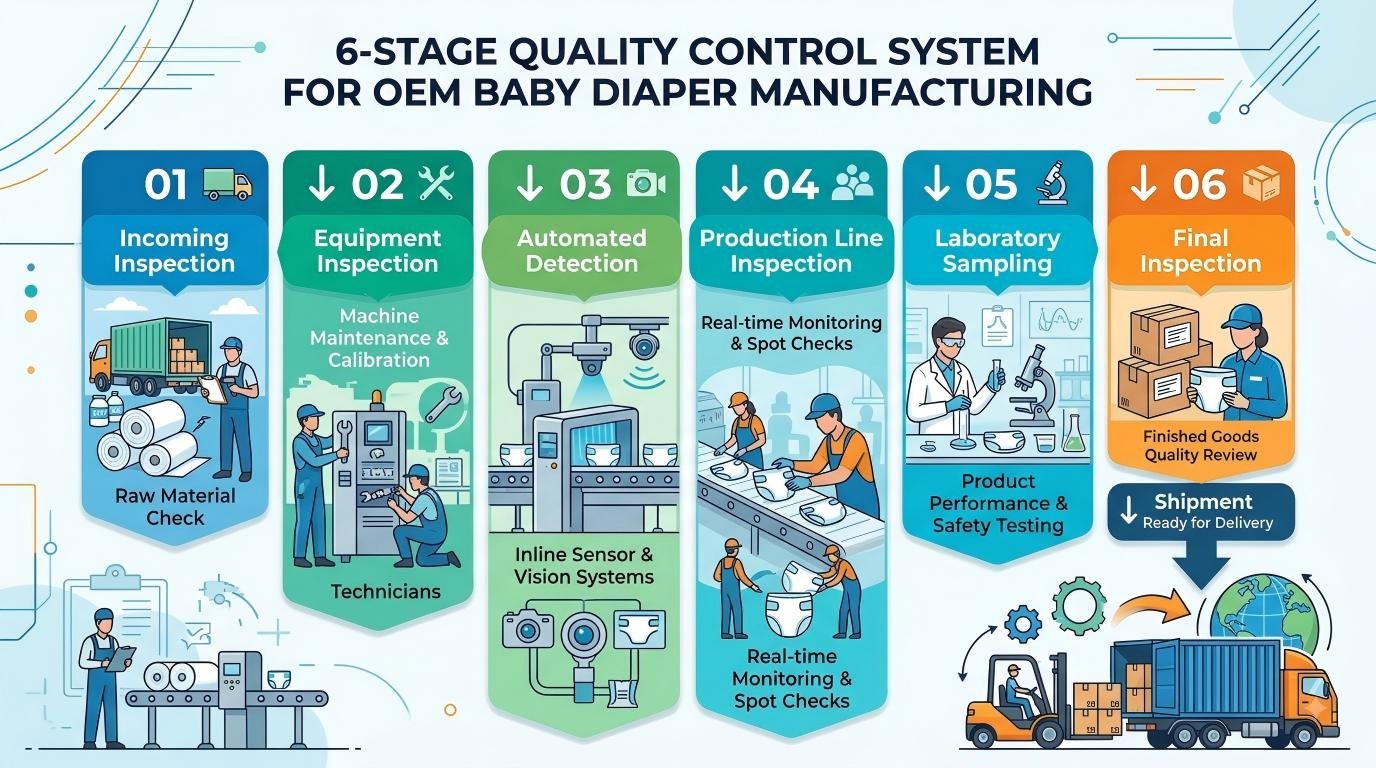
Quality control is integrated throughout the OEM baby diaper manufacturing process rather than being limited to a final inspection.
At New EcoCare, quality control covers multiple stages, from incoming raw materials to finished products before shipment.
1. Incoming Inspection
The QC team carefully inspects all incoming raw materials before accepting them into the warehouse.
The team accepts only materials that meet the required specifications for production.
This helps prevent non-conforming raw materials from entering the manufacturing process in the first place.
2. Equipment Inspection Before Production
Before production begins, the team inspects and adjusts the production equipment according to the product requirements.
The team checks the equipment settings before production. They start production only after the equipment produces diapers that meet the agreed order specifications.
This step helps ensure that the production line is ready before mass production begins.
3. Automated Inspection During Production
New EcoCare’s production lines feature four automated detection channels designed to monitor products throughout the manufacturing process.
The automated detection systems include:
- Stain detection
- Infrared detection
- Location detection
- Metal detection
The precision equipment achieves a 99.99% defect detection rate, helping identify and filter out non-conforming products during production. In addition, New EcoCare has continuously upgraded these systems to improve detection accuracy and reliability.
Together, these automated checks provide an additional layer of control during continuous production. They help identify potential defects that may be difficult to detect through visual inspection alone.
4. Production Line Inspection
Automated detection is supported by professional inspectors who conduct random inspections during production.
Inspectors monitor the production line and randomly check products to verify that they continue to meet the required specifications.
If inspectors find defective products, the team immediately stops the production line to investigate and make adjustments.
This combination of automated detection and professional inspection provides two complementary levels of quality control during production.
5. Laboratory Sampling Inspection
Laboratory testing provides another important quality control stage.
Laboratory technicians randomly select diaper samples from production batches for detailed analysis.
Laboratory technicians evaluate the samples according to the applicable product requirements and testing procedures.
The QC team approves products only after they pass the required laboratory tests.
This stage provides an additional verification of product performance beyond production-line inspection.
6. Product Inspection Before Loading
Before shipment, the QC team conducts another inspection in the finished-goods warehouse.
The inspection may include:
- Sample checks
- Product appearance
- Packaging condition
- Quantity verification
- Carton and labeling checks
- Other agreed product requirements
After the finished goods pass the final inspection, the team releases them for loading and shipment.
A Multi-Stage Approach to Quality Control
Overall, the quality control process follows these six stages:
Incoming Raw Material Inspection → Equipment Inspection → Automated Detection → Production Line Inspection → Laboratory Sampling Inspection → Final Inspection Before Loading
This multi-stage approach helps the team identify potential quality issues early instead of relying only on a final inspection after production.
For brand owners, understanding this process is important when evaluating an OEM supplier. Instead of asking only whether a factory has “quality control,” it is more useful to understand where quality is checked, how products are monitored, and what happens when a non-conforming product is identified.

Step 7: Packaging and Finished Product Inspection
Packaging is an integrated part of the baby diaper production process. It does not begin only after all production and quality checks are complete. Instead, packaging forms the final stage of the production line.
As discussed in the production preparation stage, the required packaging materials must be ready before the manufacturer can schedule production. Packaging forms the final stage of the production line.
Depending on the packaging specifications, the production team may use automatic packaging equipment or manual packaging.
For example, certain pack counts and packaging sizes may work well with automatic packaging. However, a large packaging format may exceed the equipment’s supported range. If the bag height is too large, the production team may need to use manual packaging instead.
Проверка упаковки
During packaging, the manufacturer needs to ensure that the correct products are packed into the correct packaging according to the approved specifications.
Important factors may include:
Product type
Diaper size
Pack count
Packaging artwork
Bag dimensions
Product labeling
Carton specifications
This is particularly important for private label products because packaging errors can directly affect the customer’s brand.
Finished Goods Inspection Before Loading
After production, inspection, and packaging, the team transfers the finished products to the finished-goods warehouse.
Before loading, the QC team conducts another inspection of the finished products.
This final inspection may include:
Sample checks
Product appearance checks
Packaging checks
Quantity verification
Carton checks
Label and packing information checks
This inspection confirms that the finished goods match the approved order requirements before they leave the factory.
After the finished products pass the final inspection, the team releases them for loading and shipment.
This final warehouse inspection provides an additional quality checkpoint between finished production and delivery, helping ensure that the products shipped to the customer match the agreed specifications.
Step 8: Shipment and Ongoing OEM Production
Once the finished products pass the final warehouse inspection, the team releases them for loading and shipment.
Depending on the buyer’s requirements, the manufacturer may coordinate with the customer’s logistics provider or shipping partner.
At this stage, important information includes:
- Final quantity
- Carton dimensions
- Packing list
- Shipping documents
- Container loading
- Delivery arrangements
However, the OEM relationship does not necessarily end after the first shipment.
For successful brands, the first production order is often the beginning of a longer manufacturing relationship.
After the products enter the market, the brand may provide feedback about:
- Consumer preferences
- Характеристики продукта
- Упаковка
- Sales performance
- Market requirements
The manufacturer can use this feedback to improve future production.
A strong OEM relationship therefore becomes an ongoing cycle:
Product Development → Production → Market Feedback → Product Improvement → Repeat Production
What Brand Owners Should Prepare Before Starting OEM Production
If you are preparing to launch a new baby diaper brand, you can make the OEM process more efficient by preparing several things before contacting a manufacturer.
1. Define Your Target Market
Know where you plan to sell the product.
Different markets may have different expectations regarding:
- Характеристики продукта
- Материалы
- Упаковка
- Сертификаты
- Price positioning
2. Define Your Target Customer
Are you targeting:
- Premium consumers?
- Value-conscious families?
- Eco-conscious consumers?
- Retail customers?
- Distributors?
Your target customer influences the product structure you should develop.
3. Prepare a Basic Product Brief
Include the information you already know:
- Product type
- Размеры
- Количество
- Упаковка
- Target positioning
- Preferred materials
You can leave the more technical decisions to the manufacturer’s product development team.
4. Prepare Your Brand and Packaging Information
If you already have:
- Логотип
- Brand guidelines
- Packaging artwork
- Product naming
provide them early in the process.
This can help the manufacturer evaluate packaging requirements and production feasibility.
5. Be Clear About Your Expected Order Volume
Your estimated order quantity affects:
- MOQ
- Material purchasing
- Production planning
- Упаковка
- Pricing
Even if your first order is relatively small, giving the manufacturer a realistic estimate of your future demand can help them recommend a more suitable solution.
How Long Does the OEM Baby Diaper Manufacturing Process Take?
The timeline depends on the complexity of the project.
A straightforward project using an existing product structure may move faster than a highly customized product requiring extensive development.
The main factors affecting the timeline include:
- Product customization
- Разработка образцов
- Material availability
- Дизайн упаковки
- Packaging production
- Order quantity
- Testing requirements
- Production scheduling
This is why brand owners should discuss the complete timeline with the manufacturer before confirming an order rather than assuming that production time equals the total project time.
The actual manufacturing period is only one part of the complete OEM process.
What Is the Difference Between OEM Production and Buying Ready-Made Diapers?
Buying ready-made diapers generally means purchasing an existing product with limited customization.
OEM production provides greater opportunities to customize:
- Product structure
- Материалы
- Performance
- Упаковка
- Brand identity
For a company building a long-term baby care brand, OEM manufacturing can provide greater control over product positioning and differentiation.
However, it also requires more communication and planning.
The benefit is that the final product can be developed around the brand rather than simply selecting whatever product a supplier already has available.
Заключительные размышления
Сайт Подгузник ребенка OEM manufacturing process is a structured journey that begins long before a diaper reaches the production line.
From understanding your product requirements and selecting materials to sample approval, production preparation, manufacturing, quality control, packaging, and shipment, every stage can influence the final product.
For brand owners, understanding this process makes it easier to communicate with manufacturers, evaluate suppliers, plan timelines, and make better decisions about product development.
The right OEM partner should not simply manufacture the product you request. They should help you move from an initial product idea to a reliable, market-ready baby diaper solution.
If you are developing a new private label baby diaper brand, start by defining your market, customer, product positioning, and basic requirements. Then work with an experienced manufacturer to develop the right product structure and production plan.
A well-managed OEM process can turn a product concept into a consistent product that is ready for your market—and ready to grow with your brand.

 Russian
  English
  Spanish
  Arabic
  German
  French
  Italian
  Portuguese
  Greek
Greek