
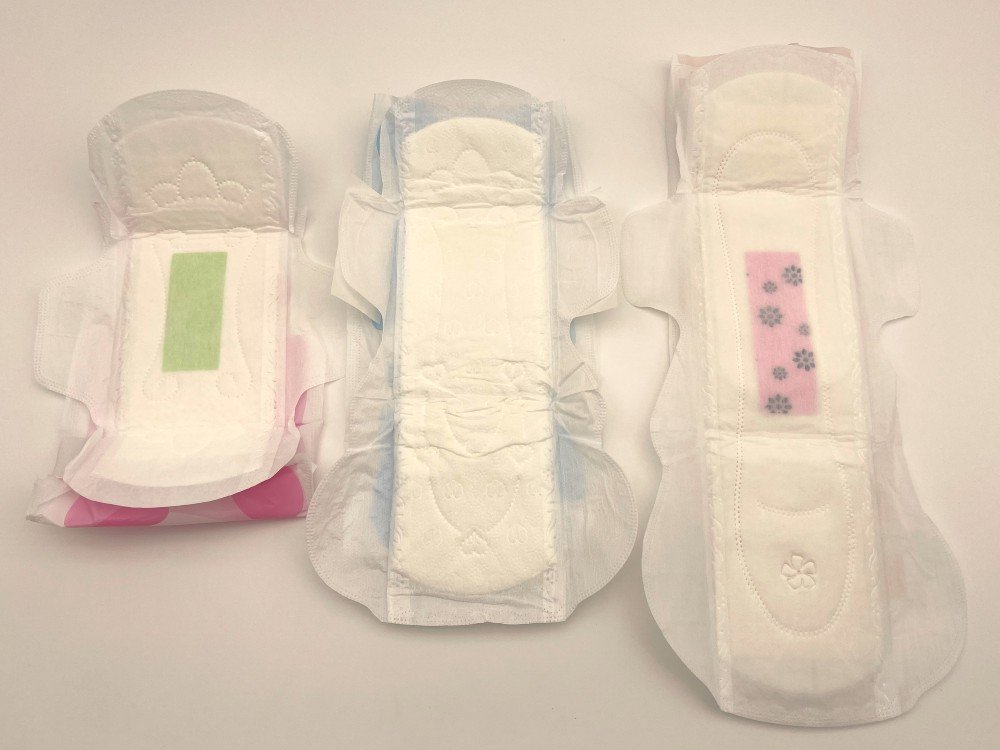
Developing a successful private label sanitary pad product involves more than choosing a size and putting your logo on the packaging. The materials, absorbent core, surface design, product thickness, absorbency level and overall construction all influence how the finished product performs.
For brand owners, importers and distributors, understanding these details before contacting a sanitary napkin manufacturer can make product development much easier. It helps you communicate your requirements clearly, compare different manufacturing proposals and avoid unnecessary changes during sampling and mass production.
At New EcoCare, we work with B2B customers developing customized feminine care products for different markets. In this guide, we explain the main sanitary pad specifications buyers should understand and what to consider when developing private label sanitary pads.
Table des matières
1. Why Product Specifications Matter in Private Label Sanitary Pads
Two sanitary pads may look almost identical but perform differently because of their materials, absorbent core and construction.
For example, a thin pad designed for everyday use may have a different core structure from a longer overnight pad. Similarly, a product with a soft nonwoven topsheet may offer a different surface feel from one developed with a bamboo-based fabric.
For private label brands, these differences matter for several reasons.
Product positioning: Specifications help determine whether a product is positioned as an everyday, premium, overnight or high-absorbency solution.
Market suitability: Different markets have different expectations regarding product length, absorbency, materials, packaging and price positioning.
Product consistency: A clear specification sheet gives the manufacturer an agreed reference for sampling, production and quality inspection.
Cost management: Materials, product dimensions, absorbent capacity and packaging choices all influence manufacturing costs. Defining these requirements early makes quotation and cost comparisons more meaningful.
Before requesting a quotation, buyers should therefore think beyond the product’s appearance and establish what they expect the finished sanitary pad to deliver.
For more guidance on evaluating manufacturing partners, read our article on How to Choose the Right Sanitary Napkin Private Label Partner for Long-Term Brand Growth.
2. Understanding the Basic Structure of Sanitary Pads
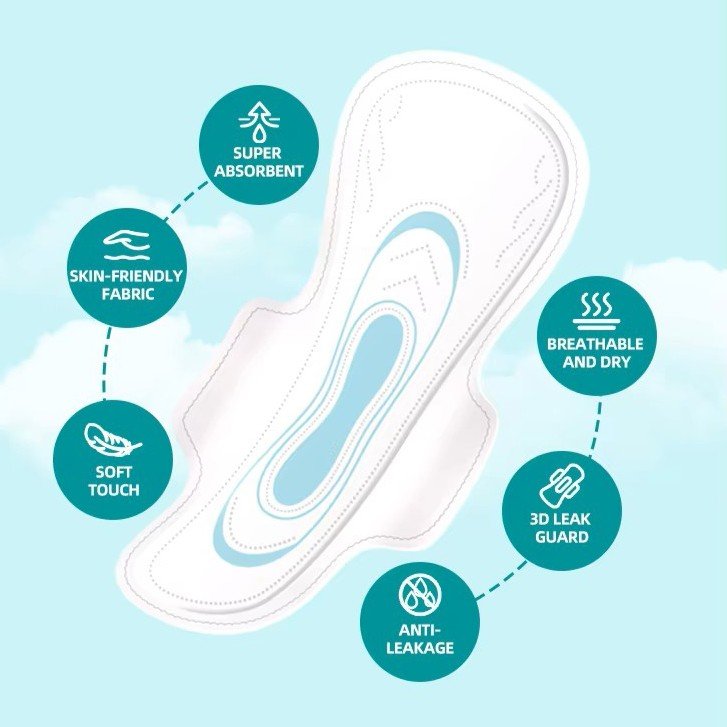
A disposable sanitary pad consists of several functional layers. Each layer has a different role, and their combination determines the product’s overall performance.

1. Topsheet
The topsheet is the upper layer that comes into contact with the skin.
Its main functions are to allow menstrual fluid to pass through to the absorbent core while providing a comfortable surface.
Common material options include:
Soft nonwoven fabric.
Perforated nonwoven materials.
Cotton-feel surface materials.
Bamboo-based fabric options.
When selecting a topsheet, buyers should consider softness, liquid penetration, surface dryness and the overall skin-contact requirements of their target market.
A softer material does not automatically guarantee better performance. The topsheet must also work effectively with the absorbent core underneath.
2. Acquisition and Distribution Layer (ADL)
Some sanitary pads include a separate acquisition and distribution layer between the topsheet and absorbent core.
Its purpose is to receive incoming liquid and help distribute it across the absorbent area.
A well-designed ADL can help reduce localized liquid accumulation and improve the efficiency of the absorbent structure.
However, not every sanitary pad uses a distinct ADL. Whether this layer is necessary depends on the product design and the intended performance.
3. Absorbent Core
The absorbent core is responsible for receiving and retaining menstrual fluid.
Depending on the product design, it may use materials such as fluff pulp, superabsorbent polymer (SAP), or a combination of absorbent materials.
The core’s composition, weight, distribution and shape all influence absorbency, thickness and liquid retention.
For OEM buyers, it is important to understand not only which materials are used but also how the core is designed to work with the other layers.
4. Feuille arrière
The backsheet is the bottom layer of the sanitary pad. Its primary function is to help prevent liquid from passing through to the underwear.
Depending on the product design, the backsheet may use a conventional PE film or a breathable film structure.
Buyers should consider barrier performance, flexibility, noise level, thickness and the desired balance between breathability and leakage protection.
5. Release Paper and Adhesive
The adhesive keeps the sanitary pad in position during use, while the release paper protects the adhesive before the product is used.
Important considerations include adhesive holding performance, release-paper removal, adhesive coverage and compatibility with the intended underwear fabric.
The adhesive should provide sufficient fixation without making the product difficult to remove.
3. Common Materials Used in Sanitary Pad Manufacturing
Material selection is one of the most important decisions when developing custom sanitary napkins.
Different materials offer different characteristics, and the best combination depends on product positioning, performance requirements and budget.
| Matériau | Main function | What buyers should consider |
|---|---|---|
| Tissu non tissé | Topsheet | Softness, liquid penetration and surface feel |
| Bamboo-based fabric | Alternative topsheet option | Fabric composition, processing and supporting claims |
| Pâte à papier | Absorbent core | Absorption and liquid distribution |
| SAP | Liquid retention | Absorption capacity and retention performance |
| Film PE | Feuille d'appui | Liquid barrier and flexibility |
| Breathable film | Feuille d'appui | Breathability and barrier performance |
| Release paper | Adhesive protection | Release performance and printing options |
For brands targeting the natural or environmentally conscious feminine care segment, bamboo-based and cotton-related material options may also be worth evaluating.
However, buyers should distinguish between the origin of a raw material and the environmental properties of the finished product. A product containing a plant-based material is not automatically biodegradable or compostable.
At New EcoCare, our sanitary pad product range includes ultra-thin and wood-pulp designs, as well as different surface material options. The exact material combination should be confirmed according to the selected product design.
4. Key Specifications Buyers Should Consider
Once the basic construction is understood, the next step is defining the actual product parameters.
4.1 Length and Width
Length is one of the most visible differences between sanitary pad products.
Common sanitary pad lengths include:
245 mm: A shorter format commonly considered for regular daytime products.
285 mm: A medium-length option for different daytime or higher-coverage applications.
350 mm: A longer format commonly considered for overnight products.
These are reference options rather than universal market standards.
Width should also be considered, particularly around the central absorbent area and rear section. A wider design may provide more coverage, but the overall shape must still match the intended fit and wearing requirements.
At New EcoCare, we offer sanitary pads in a range of lengths to meet different market requirements, including 245 mm, 285 mm, 320 mm, 330 mm, 350 mm and 410 mm. Buyers can select suitable lengths based on their target product positioning, intended use and coverage requirements. We can also discuss customized dimensions according to specific project needs.
4.2 Thickness
Thickness affects product positioning, appearance and wearing experience.
Ultra-thin sanitary pads are generally developed to provide a slimmer profile, while thicker constructions may use a different absorbent structure.
However, thickness alone does not determine absorbency.
A thin pad can perform well when its absorbent materials and structure are properly designed. Likewise, increasing thickness does not automatically improve leakage protection.
For buyers, it is better to evaluate thickness together with absorbency, retention and rewet performance.
4.3 Absorbency
Absorbency is one of the most important specifications when developing sanitary pads.
At New EcoCare, our sanitary pad range includes different absorbency options, with reference capacities of 60 ml, 80 ml, 100 ml, 120 ml, 150 ml and 200 ml. This allows us to support different product positioning, from regular daily-use pads to higher-absorbency options. The appropriate specification can be discussed according to your target market and product requirements.
Actual absorbency performance depends on the product construction, material combination and testing method. For this reason, we recommend confirming the test method and performance requirements when finalizing your product specifications.
When evaluating sanitary pad absorbency, buyers should distinguish between:
Absorption capacity: The amount of liquid a pad can absorb under a defined test method.
Absorption speed: How quickly liquid passes through the topsheet and enters the absorbent core.
Retention: How effectively the core holds liquid after absorption.
Rewet: The amount of moisture that may return to the surface under pressure.
A pad with a high absorption capacity may still have unsatisfactory surface dryness or liquid distribution.
For this reason, we recommend evaluating several performance indicators rather than selecting a product based on one absorbency figure.
4.4 Core Construction
The absorbent core has a direct influence on the product’s overall performance.
When discussing core specifications with a sanitary napkin manufacturer, buyers should ask about:
Core material composition.
Total absorbent material weight.
SAP and fluff pulp proportions, where applicable.
Core dimensions and shape.
Material distribution.
Whether the core is designed for a thin or thicker product structure.
A clear understanding of these details makes it easier to compare different samples and identify the reason for performance differences.
4.5 Surface Softness and Dryness
Surface comfort depends on more than the topsheet material.
The topsheet, acquisition layer, absorbent core and liquid distribution structure work together to determine how the product feels during use.
When evaluating samples, buyers should check:
Surface softness and texture.
How quickly liquid passes through the topsheet.
Whether liquid remains visible on the surface.
Rewet performance under pressure.
Whether the surface feels consistently dry after absorption.
If a special surface treatment or functional additive is used, buyers should also request relevant material information and supporting documentation.
5. Different Types of Sanitary Pads for Different Market Needs
A private label brand does not necessarily need to launch every sanitary pad format at once.
A better approach is to build a product range around the requirements of its target market.
Day Pads
Day pads are generally developed for regular daytime use. Buyers should focus on suitable dimensions, comfortable fit, absorbency and reliable adhesive performance.
Night Pads
Night pads usually feature a longer design and additional rear coverage. The absorbent core and leakage protection structure should be evaluated together to ensure that the product meets its intended requirements.
Panty Liners
Panty liners are thinner and smaller products designed for lighter daily protection and other specific applications. Their material selection and construction differ from those of regular sanitary pads.
Heavy-Absorbency Pads
These products are developed for customers who require a higher absorbency level. Buyers should pay particular attention to core construction, retention, liquid distribution and leakage performance.
For brands considering a wider feminine care portfolio, it is also worth evaluating whether to introduce period pants alongside traditional sanitary pads.
You can read our related article, Sanitary Pads vs. Period Pants: What Should Your Private Label Brand Offer?, to understand how the two product categories differ.
6. Customization Options for Private Label Sanitary Pads
OEM manufacturing allows brands to develop sanitary pads according to their own product requirements rather than simply choosing an existing product and changing its packaging.
At New EcoCare, customization discussions can cover several areas.
Product Structure
Buyers can discuss the desired product thickness, core construction, absorbent materials, topsheet and backsheet.
Dimensions and Absorbency
Product length, width, absorbency requirements and overall design can be evaluated according to the intended market.
Surface Materials
Different topsheet options can be considered depending on the desired surface feel and product positioning.
Product Appearance
Product shape, wings, embossing and other design details can be discussed during product development, subject to the selected manufacturing configuration.
Emballage et marque
Packaging options may include individual wrapping, printed release paper and customized outer packaging. Artwork, packaging format and product information should be confirmed before mass production.
For more information, please visit our Feminine Care Knowledge Center.
Découvrez nos Sanitary Napkins OEM Product Range to learn more about the sanitary pad solutions available from New EcoCare.
7. Quality and Performance Testing
A sanitary pad specification sheet is only useful when the finished product can consistently meet the agreed requirements.
Before approving mass production, buyers should evaluate product performance through sample testing and clearly defined quality criteria.
Some important areas include:
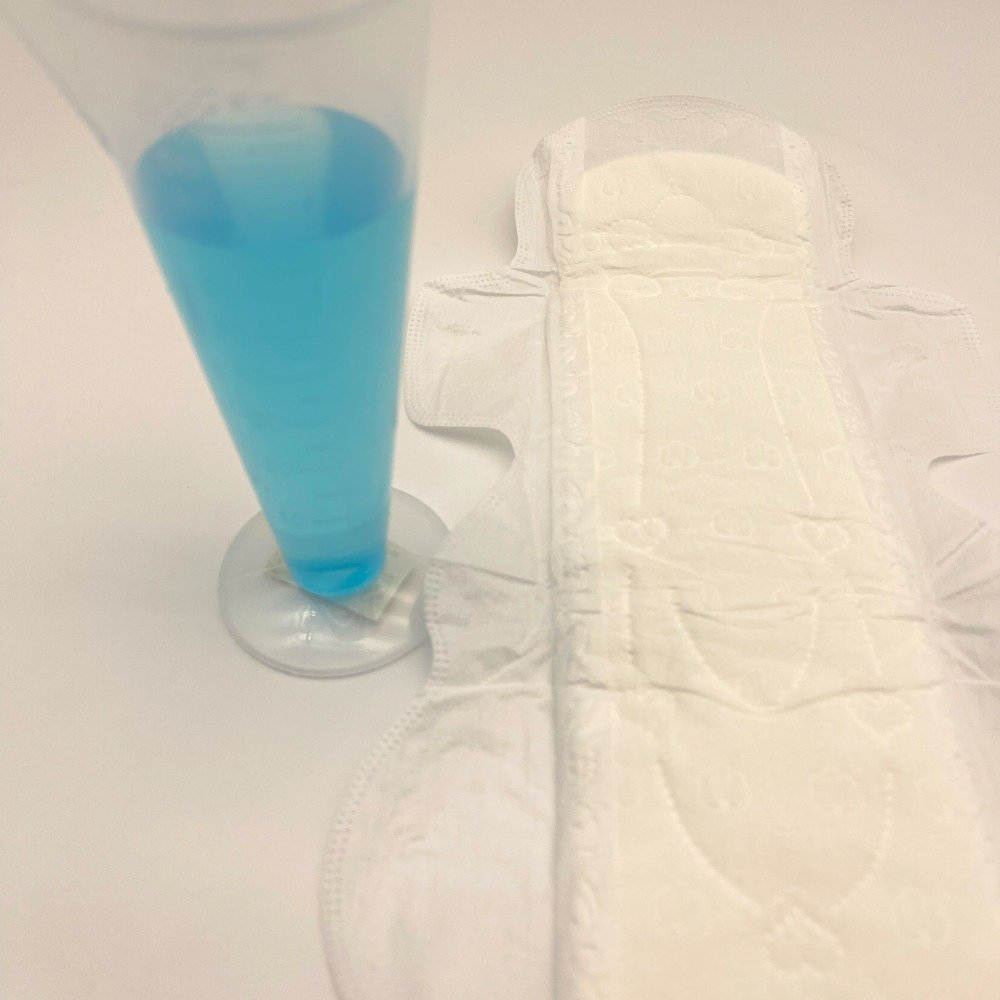
Absorbency Testing
Check the product’s absorption capacity using an agreed liquid, test method and testing conditions.
Absorption Speed and Rewet Testing
Evaluate how quickly liquid enters the core and how much moisture returns to the surface under pressure.
Protection contre les fuites
Assess whether the product can contain liquid without leakage under the intended test conditions.
Adhesive Performance
Check whether the pad remains securely attached to the intended underwear fabric and whether the release paper can be removed properly.
Dimensional and Weight Consistency
Measure product length, width, thickness and weight against the approved specification.
Material and Safety Documentation
Request relevant raw material information, test reports and compliance documentation according to the destination market and product claims.
At New EcoCare, we understand that quality control should not be limited to checking the finished product. Raw material selection, production monitoring, finished-product inspection and packaging checks all contribute to product consistency.
One important point: buyers should agree on the applicable testing methods, acceptance criteria and documentation before mass production. Terms such as high absorbency, antibacterial or skin-friendly should be supported by appropriate evidence rather than used as general marketing descriptions.
8. What Information Should Buyers Provide When Requesting a Quote?
When contacting an OEM sanitary napkin manufacturer, providing a clear product brief can significantly improve communication and quotation accuracy.
Before requesting a quotation, we recommend preparing the following information:
Product type: Day pads, night pads, panty liners or heavy-absorbency pads.
Dimensions: Required length, width and product shape.
Absorption : Target absorption capacity and any specific performance expectations.
Matériaux : Preferred topsheet, absorbent core and backsheet materials, if already decided.
Core construction: Preferred core materials or an existing reference product.
Emballage : Individual wrapping, outer bag or box, and printing requirements.
Order quantity: Estimated order volume and expected product range.
Target market: Destination country and any relevant regulatory or product requirements.
Reference samples: Existing products, specifications or photographs that can help communicate your expectations.
If you do not have all the technical details ready, that is not a problem. You can start with the intended product type, target market, approximate dimensions and desired performance. Our team can then discuss the available options and identify which specifications need further confirmation.
Develop Your Private Label Sanitary Pads with New EcoCare
Choosing the right sanitary pad specifications is an important step in building a competitive feminine care product range.
The best product is not necessarily the thickest, the most absorbent or the one with the most complicated material structure. It is the product whose materials, construction, performance and cost are aligned with your target market.
At New EcoCare, we support international brand owners, importers and distributors with OEM and private label hygiene product development. From discussing material options and product dimensions to coordinating samples, packaging design and manufacturing, our team works with customers to turn their product requirements into practical manufacturing solutions.
Whether you are developing a new sanitary pad brand or expanding an existing feminine care portfolio, we welcome the opportunity to discuss your project.
Contacter New EcoCare to discuss your sanitary pad specifications and request an OEM quotation.

 French
 English
 Spanish
 Russian
 Arabic
 German
 Italian
 Portuguese
 Greek